
Invertebrate
Rusty Millipede
Trigoniulus corallinusAlso known as Common Asian Millipede, Red Millipede
Rusty millipedes thrive in humid microhabitats, breaking down fallen leaf litter and decaying plant matter into nutrient-rich soil. When threatened, they curl into tight defensive spirals and release foul-tasting benzoquinone secretions from side pores to deter predators. Native to the Indo-Malayan region, these vibrant arthropods have successfully colonized tropical and subtropical gardens around the globe.
InvertebrateDetritivoreBurrowing
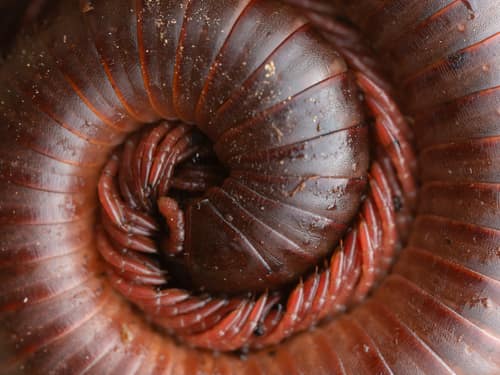
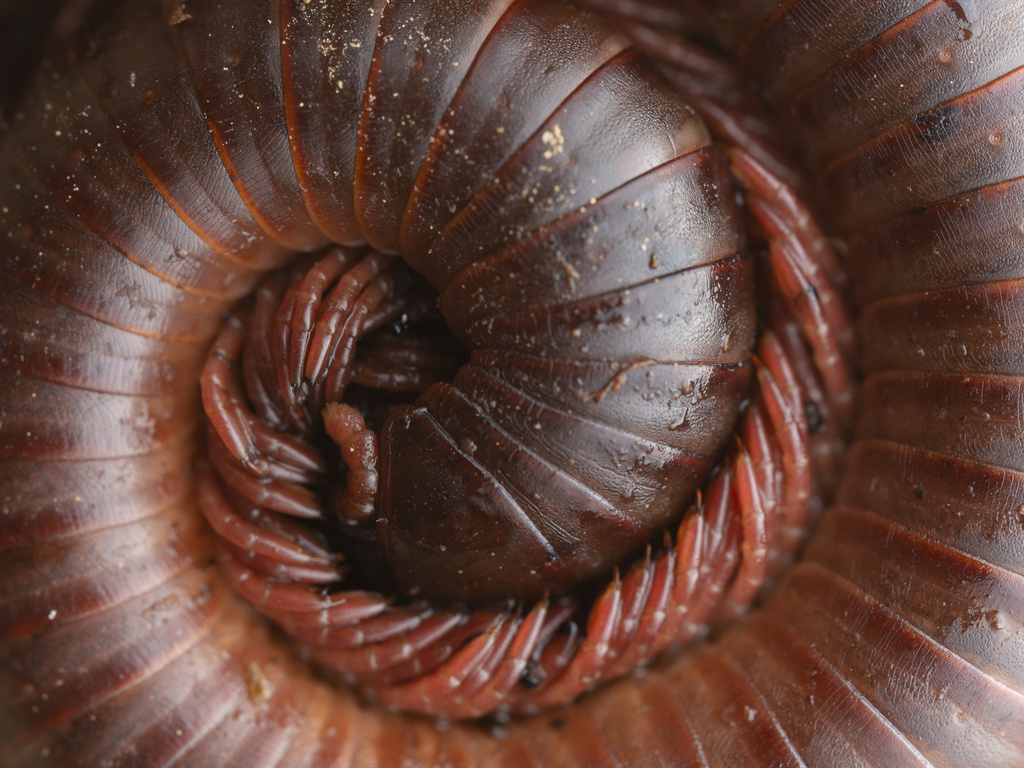
—observations
—countries
—peak records
Not EvaluatedConservation statusIUCN Red List categoriesLCNTVUENCREWEXNot Evaluated — not placed on the risk ladderRed List categories, explained →
Diet & preyDecaying leaves, Fungi, Decomposing bark
Predators
- Toads
- Birds
- Predatory Beetles
ThreatsPesticide runoff, land development
HabitatsLeaf litter, garden mulch, moist soil, forest floors
Life span1–3 years
Classification
- OrderSpirobolida
- FamilyPachybolidae
- GenusTrigoniulus
- SpeciesTrigoniulus corallinus
Range data is not available yet.
Interaction riskLow
- Low
- Moderate
- High
- Very high
- Why interaction risk is low
- Emits defensive chemical fluids that stain skin and irritate eyes; wash hands after touching.
- Why it is dangerous
- Secretes benzoquinone compounds when stressed, causing temporary skin staining and mild burning if rubbed into eyes.
- How to recognize a risky encounter
- Recognized by its uniform brick-red to bright orange-red body and smooth cylindrical segments.
- What to do
- Avoid squeezing or handling roughly, and wash hands promptly after contact.
Responsible observation
- Spotting in Gardens: Turn over damp logs, leaf litter, and potted plant saucers in warm, humid weather.
- Safe Handling: Allow the millipede to walk across an open palm rather than grasping or pinching its body.
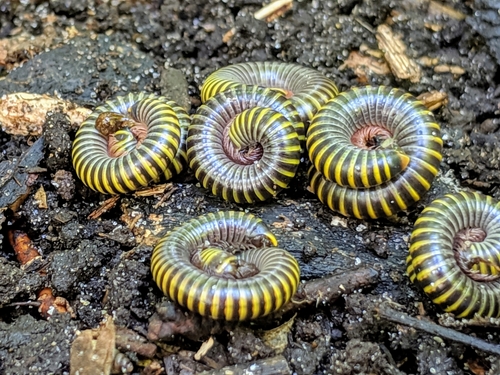
Co-occurring Species (c) Ray Fisher, some rights reserved (CC BY), uploaded by Ray Fisher · cc-by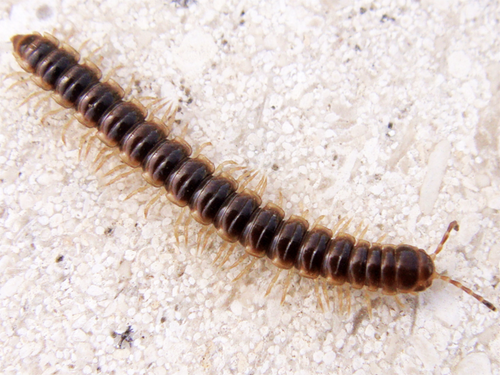
Habitat Competitor JCoelho / CC BY 2.0 · cc-by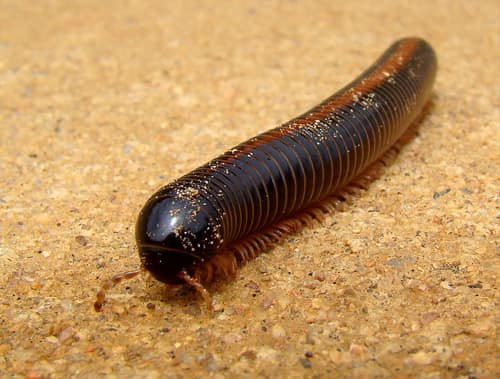
Order Relative Bjørn Christian Tørrissen / CC BY-SA 3.0 · cc-by-sa
Keep collecting in Fauna
Found in Collections
Ecosystem chain Pro
Secret Garden
Rusty Millipede is found in this collection. Identify it in Fauna to fill this slot and continue your progress.
Unlock to track progress
Help improve the field guideSomething wrong?
Checking your Fauna account…Report a name, category, or profile issue for review.