
Invertebrate · GBIF taxon 1025719
Giant African Millipede
Archispirostreptus gigasAlso known as Shongololo, Bongololo, Giant Black African Millipede
These gentle giants spend their nights rummaging through forest leaf litter, using hundreds of synchronized legs to glide smoothly over soil and rotting wood. When threatened, they curl into a tight, protective spiral that shields their softer underside behind heavily calcified armored rings. Often seen carrying clusters of tiny symbiotic mites on their carapaces, they play a crucial ecological role across tropical Africa by breaking down tough organic matter into nutrient-rich humus.
DetritivoreNocturnalBurrower
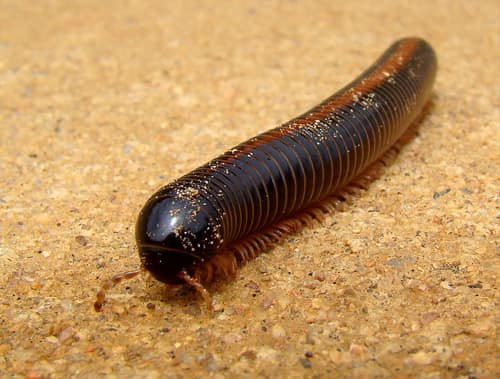
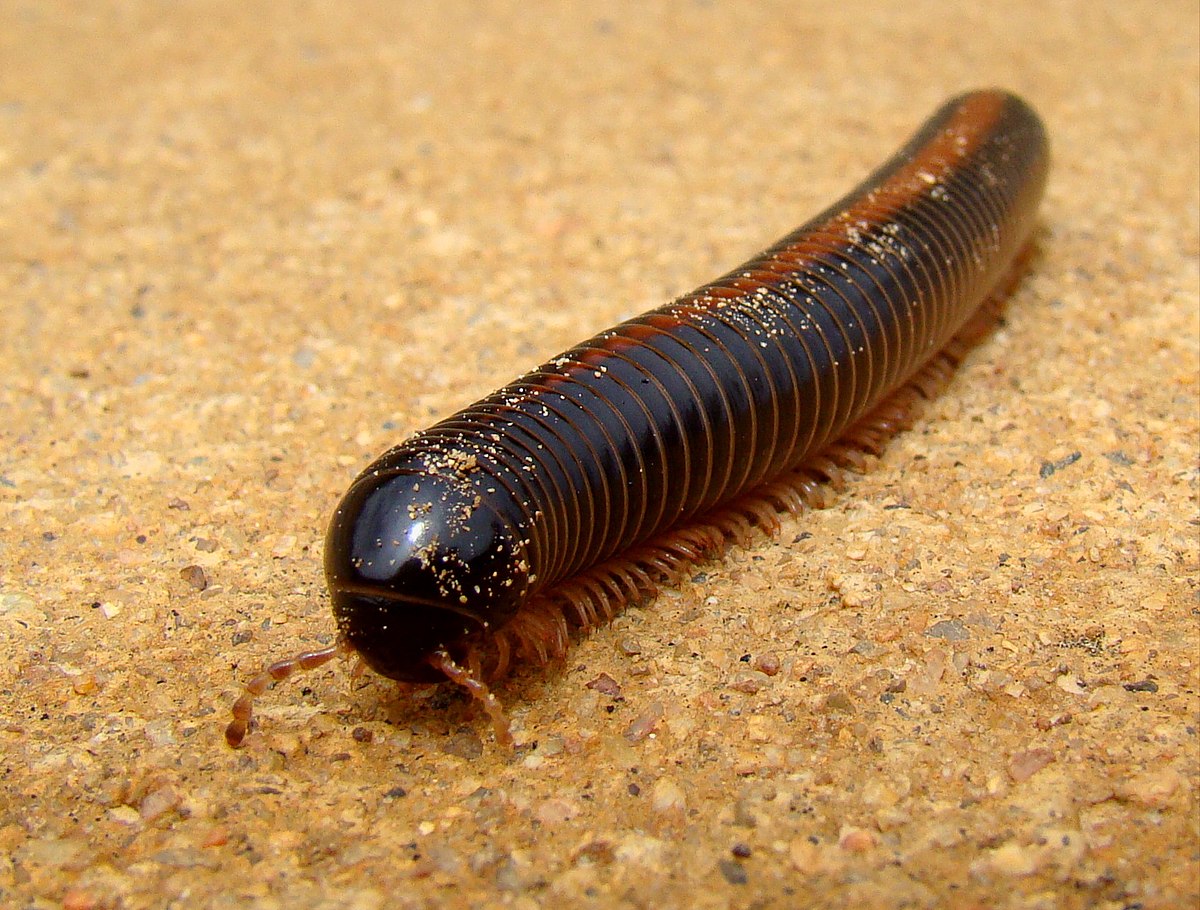
Licensed referenceBjørn Christian Tørrissen / CC BY-SA 3.0 · cc-by-sa
—observations
—countries
—peak records
Not EvaluatedConservation statusIUCN Red List categoriesLCNTVUENCREWEXNot Evaluated — not placed on the risk ladderRed List categories, explained →
Diet & prey
- Decaying Leaves
- Rotting Wood
- Fallen Fruit
Predators
- Banded Mongoose
- Chacma Baboon
- Crested Guineafowl
ThreatsHabitat loss from deforestation and commercial over-collection for the pet trade
HabitatsLowland rainforests, coastal forests, and moist deciduous woodlands
Life span5–10 years
Classification
- FamilySpirostreptidae
- SpeciesArchispirostreptus gigas
Range data is not available yet.
Interaction riskLow
- Low
- Moderate
- High
- Very high
- Why interaction risk is low
- Secretes noxious fluids from lateral pores when alarmed; wash hands promptly and avoid touching your eyes.
- Why it is dangerous
- Produces defensive secretions containing pungent benzoquinones that can cause localized skin staining, burning, and severe eye irritation.
- How to recognize a risky encounter
- Recognizable by its enormous cylindrical, matte-black to dark brown body with hundreds of rhythmic, yellowish-brown legs.
- What to do
- Do not squeeze or drop; wash skin thoroughly with soap and water after contact and keep hands away from face.
Responsible observation
- Spotting Sign: Search beneath rotting fallen logs, flat stones, and deep leaf piles after warm evening rains.
- Gentle Handling: Allow them to crawl onto an open palm rather than squeezing, which triggers their defensive chemical secretion.
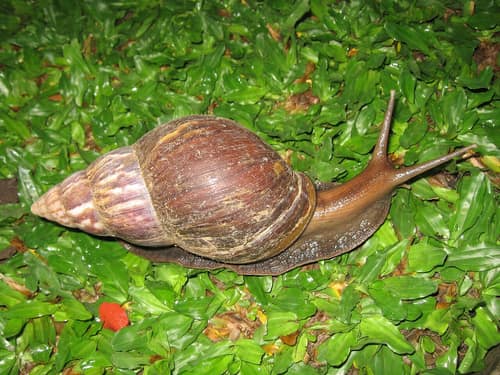
Neighbor Alexander R. Jenner / CC BY-SA 3.0 · cc-by-sa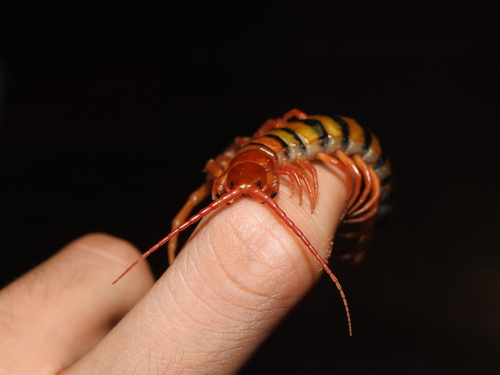
Competitor (c) Jackson Nugent, some rights reserved (CC BY) · cc-by Image unavailable
Same Family
Help improve the field guideSomething wrong?
Checking your Fauna account…Report a name, category, or profile issue for review.