Also known as Japanese Horseshoe Crab, Tri-Spine Horseshoe Crab
Chinese horseshoe crabs are ancient marine chelicerates that patrol muddy sea bottoms using sensitive chelicerae and spiny leg bases to grind food before swallowing. During spring and summer high tides, mating pairs crawl ashore into intertidal zones, where females deposit thousands of eggs in buried sand nests that take weeks to hatch. Slow to mature, individuals spend nearly a decade undergoing successive molts on sheltered mudflats before migrating into deeper offshore waters as armored adults.
Diet & preyPolychaete worms, Bivalves, Small crustaceans
Predators
Shorebirds
Sea turtles
Sharks
ThreatsOverharvesting for biomedical clotting assays and consumption, habitat loss from coastal reclamation, pollution
HabitatsIntertidal mudflats, sandy beaches, estuaries, and shallow coastal waters
Life span20–30 years
Classification
FamilyLimulidae
SpeciesTachypleus tridentatus
Range & activity
Range data is not available yet.
Safe observation
Interaction riskLow
Low
Moderate
High
Very high
Why interaction risk is low
Safe to observe at a normal distance; the stiff tail is used for righting itself and carries no venom.
What to notice
Look for a broad, dark brown horseshoe-shaped prosoma with three sharp spines aligned along the rear margin of the posterior shell.
Support conservation
Avoid stepping on nursery mudflats where juveniles burrow, and report any stranded or entangled adults to local marine conservation authorities rather than disturbing them.
Responsible observation
Righting Stranded Individuals: Never lift by the tail spine, which causes permanent nerve damage, but gently hold the lateral edges of the carapace.
Observe from a Distance: Watch nesting pairs at the high-tide line without shining bright lights directly at them.


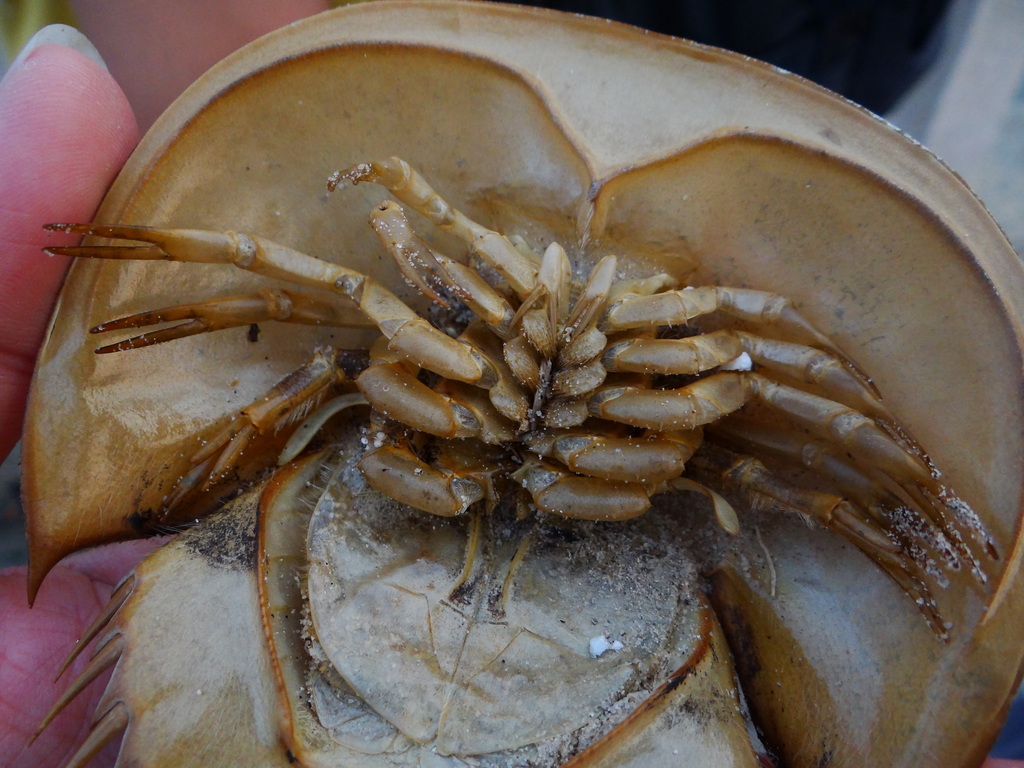
 Image unavailable

