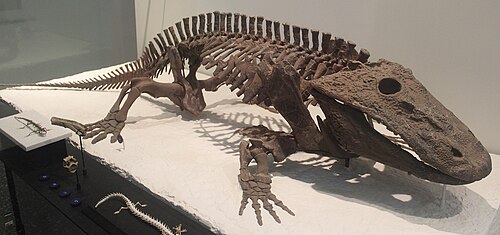
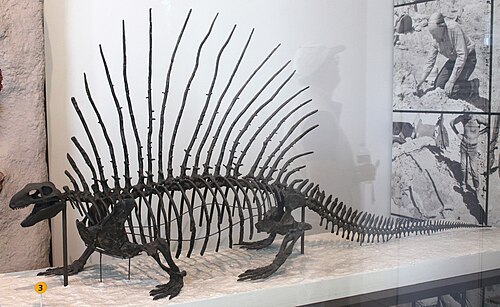
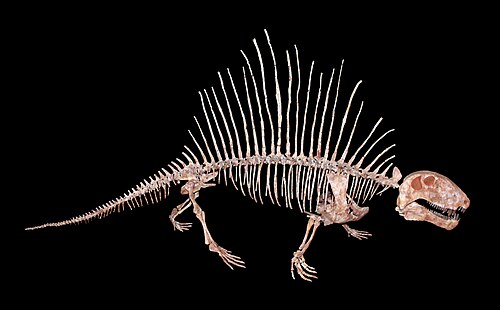
Secodontosaurus obtusidens was an Early Permian sail-backed synapsid distinguished by an unusually long, narrow snout and slender jaws. Unlike its deep-skulled relative Dimetrodon, this predator likely probed riverbanks, burrows, and shallow water for fish and small vertebrates. Its elongated neural spines supported a prominent dorsal sail that may have aided in thermoregulation or visual display.
ExtinctSail-backedCarnivorous
—observations
—countries
—peak records
Not EvaluatedConservation statusIUCN Red List categoriesLCNTVUENCREWEXNot Evaluated — not placed on the risk ladderRed List categories, explained →
Key facts
Diet & preyFreshwater fish, Small amphibians, Small reptiles
Predators
Larger sphenacodontids
Large temnospondyl amphibians
ThreatsExtinct; disappeared during Early Permian climatic and environmental shifts
HabitatsEarly Permian floodplains, river channels, and deltaic wetlands of Texas
Life spanUnknown (extinct fossil species known only from Early Permian strata); likely 10–20 years based on similar synapsids
Classification
FamilySphenacodontidae
SpeciesTheropleura obtusidens
Range & activity
Range data is not available yet.
Safe observation
Interaction riskLow
Low
Moderate
High
Very high
Why interaction risk is low
Extinct fossil species; safe to observe museum specimens and casts at any distance.
Responsible observation
Fossil Identification: Look for the low, elongated snout and relatively uniform, slightly blunt teeth that distinguish it from Dimetrodon.
Geological Context: Remains are recovered from Early Permian red beds of the Wichita and Clear Fork groups in Texas.
Museum Viewing: Skeletons and skull casts are displayed in natural history museums showcasing Permian synapsids.