
Species
Pikaia gracilens
Pikaia gracilensPikaia gracilens swam through Cambrian shallow seas by undulating its ribbon-like body with zigzagging blocks of muscle known as myomeres. Anchored by a stiff dorsal rod, this primitive stem-chordate lacked well-developed eyes or jaws, bearing instead a tiny head equipped with a pair of sensory tentacles. Its soft-bodied remains in fine mudstone formations offer rare anatomical snapshots of the deep evolutionary roots shared by all modern vertebrates.
PrehistoricMarineCambrian
—observations
—countries
—peak records
ExtinctConservation statusIUCN Red List categoriesLCNTVUENCREWEXExtinctRed List categories, explained →
Diet & preyMarine organic particles, Microscopic plankton, Benthic detritus
Predators
- Anomalocaris canadensis
- Opabinia regalis
- Hurdia victoria
ThreatsNatural Cambrian oceanic turnover events and ecological shifts
HabitatsShallow marine sea floors and continental shelf reefs
Life span1–3 years
Classification
- FamilyPikaiidae
- GenusPikaia
- SpeciesPikaia gracilens
Range data is not available yet.
Interaction riskLow
- Low
- Moderate
- High
- Very high
- Why interaction risk is low
- Extinct fossil species; safe to observe in museum collections.
Responsible observation
- Museum Specimens: Examine high-resolution resin casts or museum slab displays to view the faint chevron myomere bands.
- Raking Light: Shine oblique light across fossil slabs to reveal low-relief details of the notochord and tentacles.
- Legal Protection: Note that collecting original fossils within Yoho National Park is strictly prohibited.
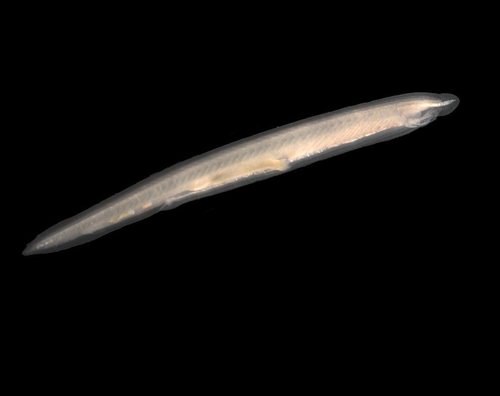
Modern Analog (c) Hans Hillewaert, some rights reserved (CC BY-SA) · cc-by-sa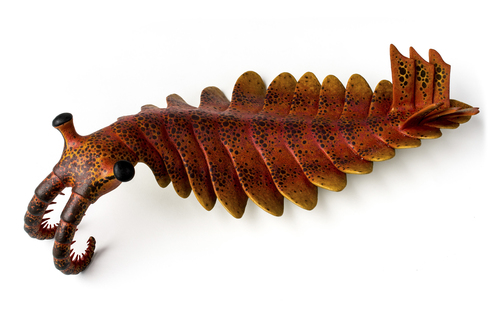
Apex Predator (c) anonymous, some rights reserved (CC BY-SA) · cc-by-sa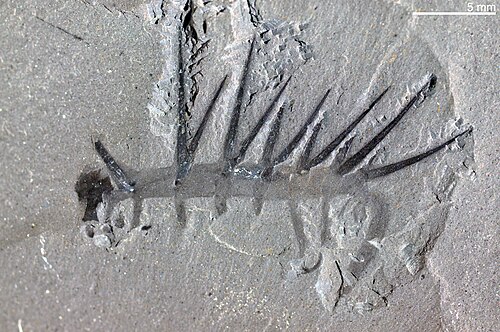
Fossil Bed Co-inhabitant Han Zeng / CC0 · cc0 Image unavailable
Close Relative
Help improve the field guideSomething wrong?
Checking your Fauna account…Report a name, category, or profile issue for review.