Also known as Thai Giant Caryota, Mountain Fishtail Palm
Towering above mid-elevation rainforests in South and Southeast Asia, giant fishtail palms are among the largest solitary palms in the world, recognizable by massive doubly-pinnate leaves that resemble jagged fishtails. They spend two to three decades amassing carbohydrates before expending their entire energy reserve in a spectacular flowering sequence that cascades down the trunk branch by branch. Once the lowest and final fruit cluster ripens, the majestic tree dies, opening a sunny canopy gap where its fallen seeds can sprout.
ThreatsHabitat loss from agricultural clearing and infrastructure development
HabitatsSubtropical montane rainforests, steep forested slopes, and valley ravines
Life span20–30 years
Classification
OrderArecales
FamilyArecaceae
GenusCaryota
SpeciesCaryota obtusa
Range & activity
Range data is not available yet.
Safe observation
Interaction riskHigh
Low
Moderate
High
Very high
Why interaction risk is high
Fruit contains stinging oxalate crystals, and wild fruits carry look-alike risks; never touch barehanded or consume.
Why it is dangerous
Fruit pulp and vascular tissue contain microscopic calcium oxalate raphides that pierce skin and mucous membranes, triggering intense burning, swelling, and severe gastrointestinal distress if chewed.
How to recognize a risky encounter
Look for massive solitary trunks crowned with torn, wedge-shaped leaflets and dangling ropes of bead-like, reddish-purple fruits.
What to do
Do not touch fresh or decomposing fruits without heavy gloves, and thoroughly wash any skin exposed to palm tissues.
Responsible observation
Foliage Viewing: Scan upward along moist mountain gullies to appreciate the enormous, bipinnate fronds shaped like fish fins.
Fruit Caution: Avoid handling fallen fruit clusters, as the raw pulp causes immediate and painful contact dermatitis.
Phenology Tracking: Look for trees displaying top-down flowering spikes, which indicates the final monocarpic phase of life.

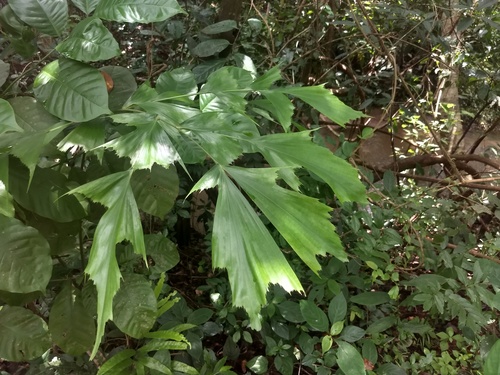
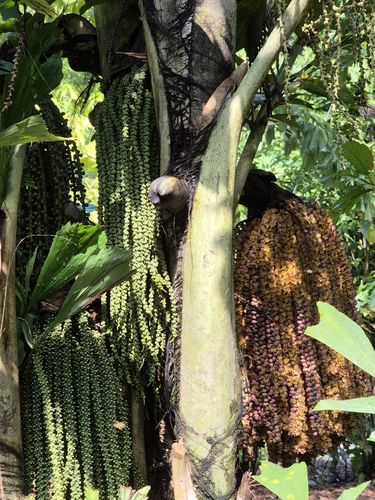
 Image unavailable