
Mammal
Diprotodon optatum
Diprotodon optatumAlso known as Giant Wombat, Pleistocene Giant Wombat
Diprotodon optatum was the largest marsupial known to science, roaming the open woodlands and shrublands of Pleistocene Australia in sizable herbivorous herds. Equipped with inward-turned pigeon-toed feet, chisel-like incisors, and high-crowned molars, it stripped fibrous shrubs and saltbush much like modern rhinos browse tough vegetation. Evidence from trackways and skeletal deposits indicates that individuals made seasonal, round-trip migrations across drying landscapes in search of reliable water sources.
HerbivorePrehistoric
—observations
—countries
—peak records
ExtinctConservation statusIUCN Red List categoriesLCNTVUENCREWEXExtinctRed List categories, explained →
Diet & preyHerbivorous browser and grazer (saltbush, shrubs, sedges, leaves)
Predators
- Marsupial lion (Thylacoleo carnifex)
- Giant monitor lizard (Varanus priscus)
- Early humans
ThreatsSevere climate aridification, drought, fire regime changes, and hunting by early humans
HabitatsPleistocene open woodlands, grasslands, savannas, and semi-arid shrublands
Life spanApproximately 20 to 30 years
Classification
- OrderDiprotodontia
- FamilyDiprotodontidae
- GenusDiprotodon
- SpeciesDiprotodon optatum
Range data is not available yet.
Interaction riskHigh
- Low
- Moderate
- High
- Very high
- Why interaction risk is high
- Extinct species; known exclusively from Pleistocene fossil deposits.
Responsible observation
- Fossil Viewing: Examine articulated skeletons displayed in major Australian natural history museums.
- Site Etiquette: Report any exposed fossil bones found in Pleistocene cave deposits or dry lakebeds to local authorities.
 Image unavailable
Predator 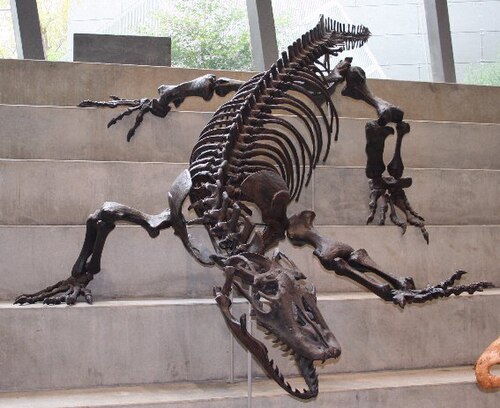
Predator Cas Liber / Public domain · cc0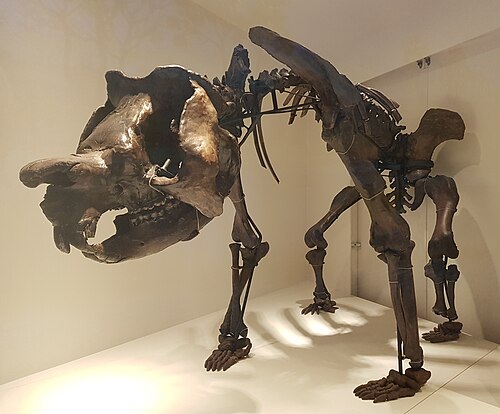
Close Relative Paleocolour / CC0 · cc0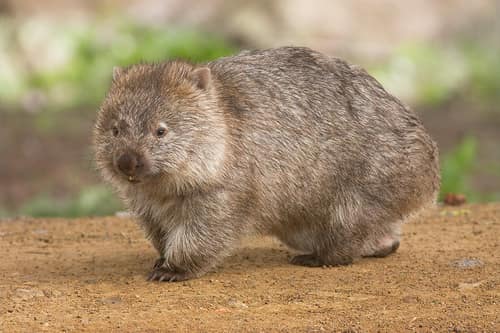
Living Relative "Common Wombat" by JJ Harrison is licensed under CC BY-SA 2.0. To view a copy of this license, visit https://creativecommons.org/licenses/by-sa/2.0/. · cc-by-sa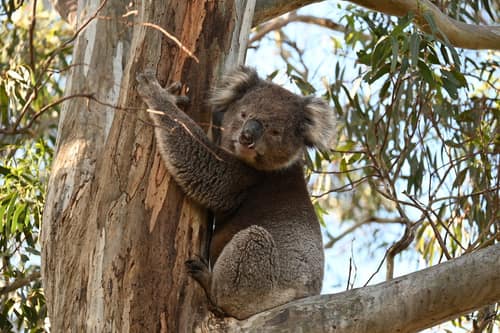
Living Relative (c) jraus, some rights reserved (CC BY-SA) · cc-by-sa
Help improve the field guideSomething wrong?
Checking your Fauna account…Report a name, category, or profile issue for review.