Fission yeast grows as cylindrical, rod-shaped single cells that elongate exclusively at their tips before dividing symmetrically down the middle through a medial septum. First isolated from East African millet beer, it shares conserved cellular machinery with human cells, making it a foundational model for studying chromosome dynamics, DNA repair, and the eukaryotic cell cycle. When starved of nitrogen, opposite mating types conjugate to form resistant four-spored asci that withstand harsh environmental conditions.
MicroscopicSingle-celledFermenting
—observations
—countries
—peak records
Not EvaluatedConservation statusIUCN Red List categoriesLCNTVUENCREWEXNot Evaluated — not placed on the risk ladderRed List categories, explained →
Key facts
Diet & preyGlucose, Fructose, Sucrose
Predators
Free-living nematodes
Amoebae
Ciliate protozoans
ThreatsDesiccation, lethal alcohol accumulation, nutrient starvation, and microbial competition
HabitatsFermenting plant saps, traditional brewed beverages, fruit surfaces, and research laboratories
Life spanHours between binary fission events; dormant spores can endure for years
Classification
FamilySchizosaccharomycetaceae
SpeciesSchizosaccharomyces pombe
Range & activity
Range data is not available yet.
Safe observation
Interaction riskLow
Low
Moderate
High
Very high
Why interaction risk is low
Harmless laboratory organism; never ingest wild fungi based on app identification alone.
Responsible observation
Microscopy: View active cultures at 400x to 1000x magnification to observe medial septum formation during cell division.
Laboratory Culturing: Maintain colonies on yeast extract agar supplemented with glucose at around 30 degrees Celsius.

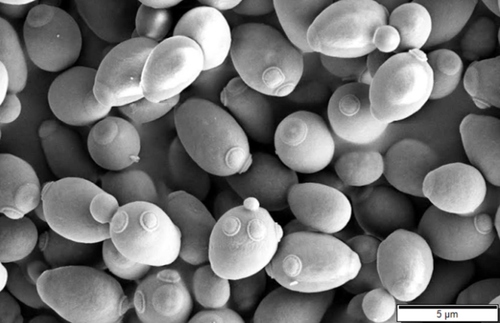
 Image unavailable