
Invertebrate
Portuguese Oyster
Magallana angulataAlso known as Angulate Oyster
Portuguese oysters form dense, complex reefs in brackish estuarine waters, providing critical structural habitat for numerous marine invertebrates and juvenile fish. These bivalves cement themselves permanently to hard surfaces, filtering massive volumes of water daily to feed on microscopic plankton. Their elongated, irregular shells feature wavy margins and purplish-brown shading, reflecting the dynamic tidal environments they inhabit.
MarineFilter FeederReef Builder
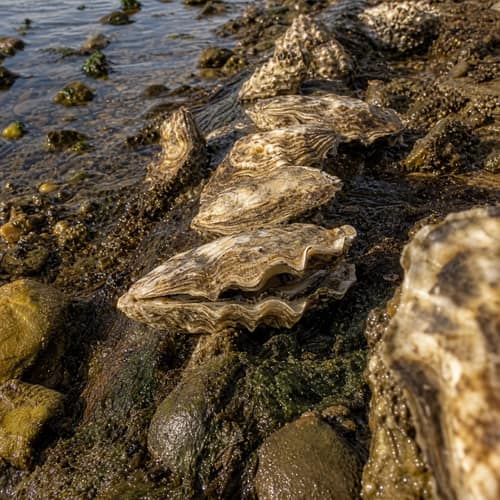
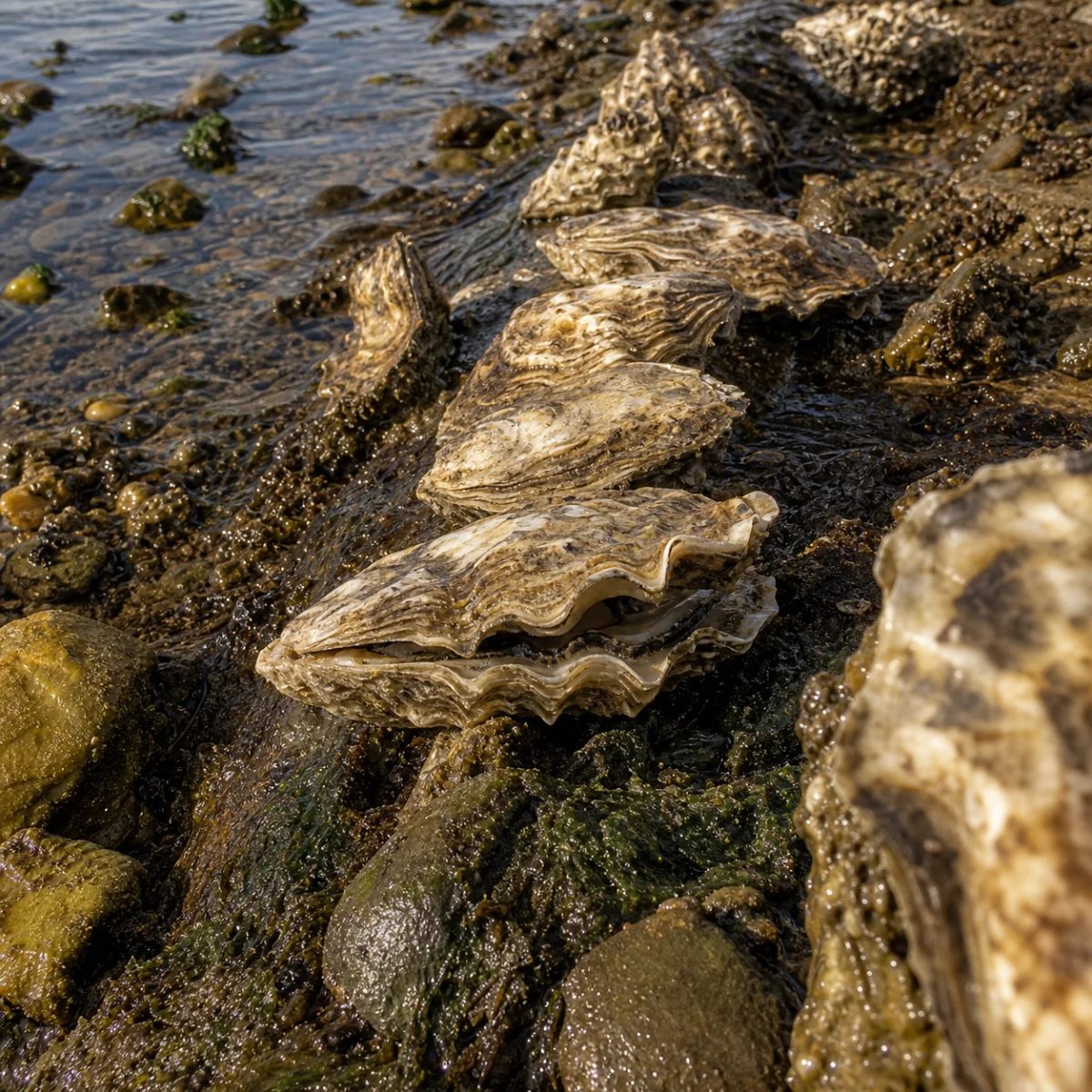
—observations
—countries
—peak records
Not EvaluatedConservation statusIUCN Red List categoriesLCNTVUENCREWEXNot Evaluated — not placed on the risk ladderRed List categories, explained →
Diet & preyPhytoplankton, Microalgae, Detritus
Predators
- Crabs
- Sea stars
- Whelks
ThreatsWater pollution, coastal development, sedimentation, and disease
HabitatsEstuaries, coastal river mouths, and intertidal mudflats
Life spanUp to 10 years
Classification
- FamilyOstreidae
- SpeciesMagallana angulata
Range data is not available yet.
Interaction riskLow
- Low
- Moderate
- High
- Very high
- Why interaction risk is low
- Shells are extremely sharp; wear protective footwear and gloves if walking near or handling them.
Responsible observation
- Watch the tides: Plan visits during low tide when the extensive oyster beds are fully exposed.
- Protect your feet: Wear thick-soled water shoes to avoid painful cuts from the razor-sharp shell edges.
- Observe filtration: Look closely at submerged individuals to see their slightly open shells filtering water.
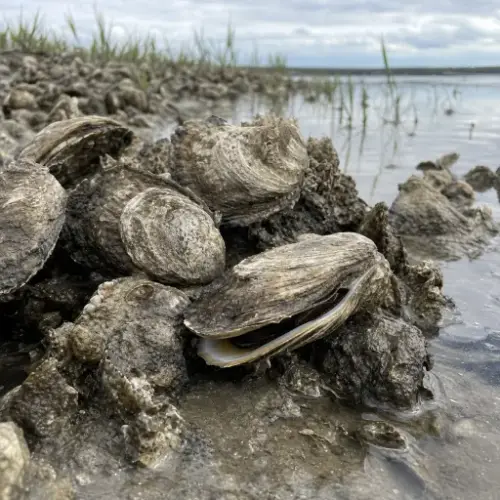
Ecological Counterpart Unknown / CC-BY · cc-by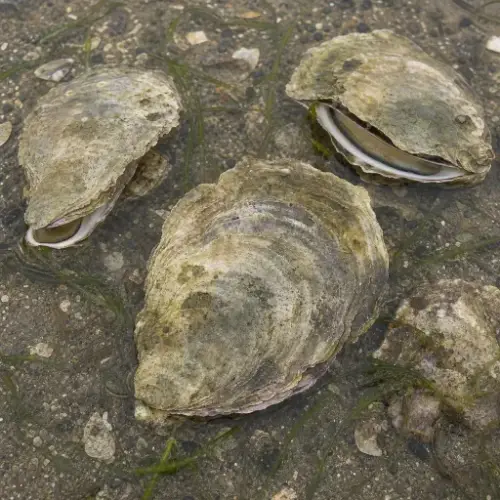
Competitor Unknown / CC-BY · cc-by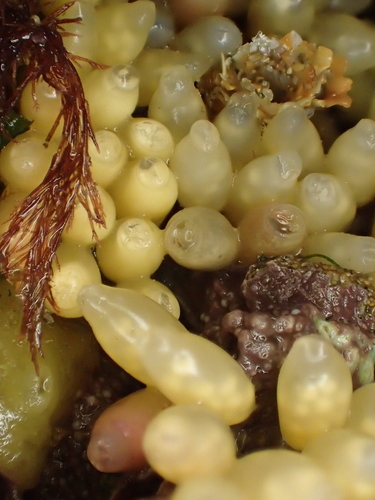
Predator (c) Julien Renoult, some rights reserved (CC BY), uploaded by Julien Renoult · cc-by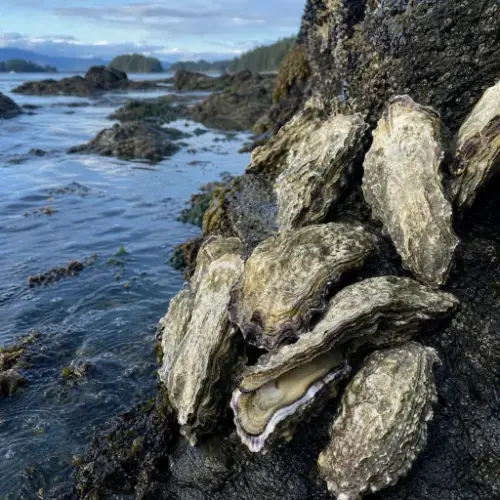
Close Relative Unknown / CC-BY · cc-by
Help improve the field guideSomething wrong?
Checking your Fauna account…Report a name, category, or profile issue for review.