
Mammal
Angolan Giraffe
Giraffa giraffa angolensisAlso known as Namibian Giraffe, Smokey Giraffe
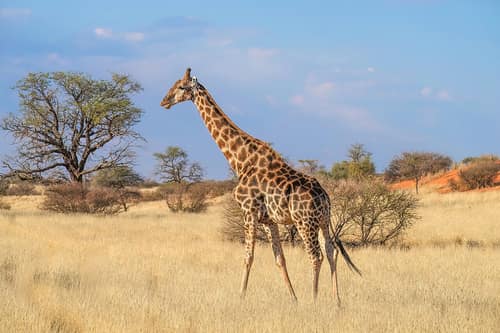
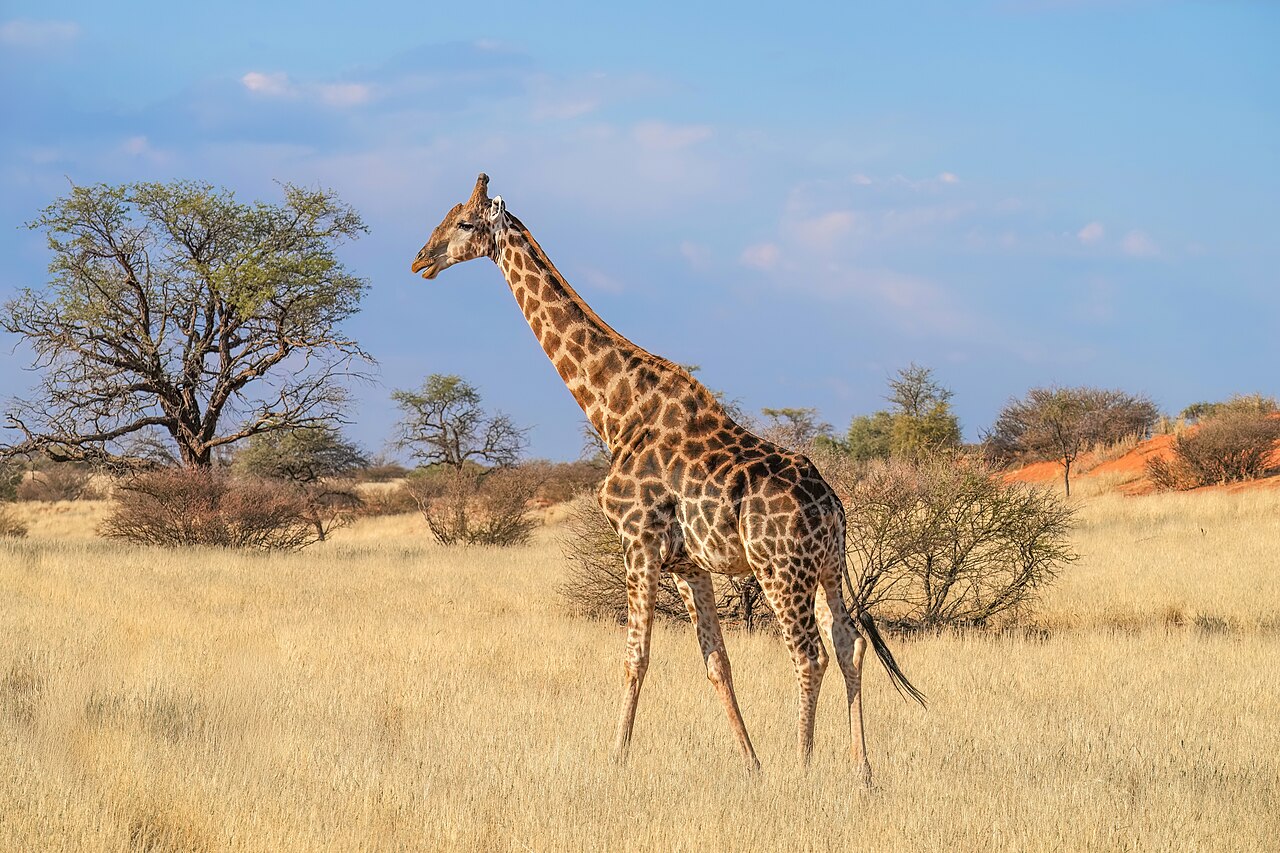
Angolan giraffes navigate the arid savannas and desert landscapes of southwestern Africa, using their prehensile blue-black tongues to strip nutritious leaves from thorny acacia branches. These towering herbivores live in loose, fluid groups called towers, where individuals come and go without rigid social hierarchies. Their distinctive coat pattern features large, asymmetrical spots with notched edges that extend all the way down their legs, providing excellent camouflage against the dappled light of the bushveld.
DiurnalHerbivoreSavanna
—observations
—countries
—peak records
Least ConcernConservation statusIUCN Red List categoriesLCNTVUENCREWEXLeast ConcernRed List categories, explained →
Diet & preyAcacia Leaves, Terminalia Leaves, Combretum Leaves
Predators
- Lions
- Spotted Hyenas
- Leopards
ThreatsHabitat loss, poaching, civil unrest, and severe droughts.
HabitatsArid savannas, desert scrublands, dry woodlands, and riparian corridors.
Life span20 to 25 years in the wild
Classification
- FamilyGiraffidae
- SpeciesGiraffa giraffa angolensis
Range data is not available yet.
Interaction riskHigh
- Low
- Moderate
- High
- Very high
- Why interaction risk is high
- Capable of delivering a lethal kick if cornered; observe from a safe distance of at least 50 meters.
- Why it is dangerous
- Weighing up to 1.4 metric tons, these animals can deliver devastating kicks with their heavy hooves that can easily kill large predators or humans.
- How to recognize a risky encounter
- Look for towering height, long necks, and large, notched spots that cover the legs down to the hooves.
- What to do
- Never approach on foot; remain inside a safari vehicle and give them at least 50 meters of clearance.
Responsible observation
- Binocular Viewing: Use binoculars to appreciate their intricate coat patterns without encroaching on their space.
- Vehicle Etiquette: Keep your vehicle engine running quietly and avoid sudden movements when observing them on safari.
- Waterhole Patience: Watch quietly at waterholes where they must awkwardly splay their front legs to drink.
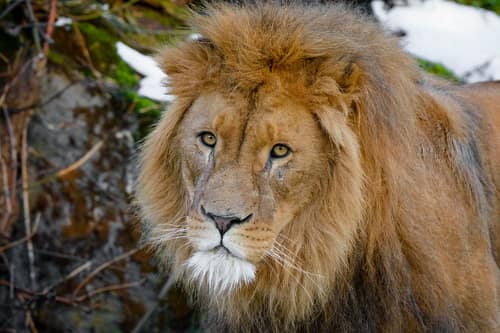
Apex Predator "African Lion" by Mathias Appel is marked with CC0 1.0. To view the terms, visit https://creativecommons.org/publicdomain/zero/1.0/. · cc0 Image unavailable
Close Relative 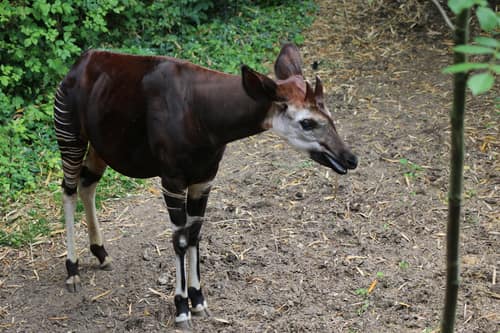
Only Living Relative (c) Melvin TOULLEC, some rights reserved (CC BY-SA) · cc-by-sa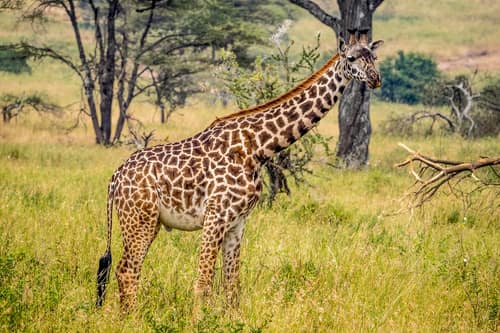
Close Relative "Masai Giraffe / Masai Mara / Kenya" by fotopamas is licensed under CC BY 2.0. To view a copy of this license, visit https://creativecommons.org/licenses/by/2.0/. · cc-by
Help improve the field guideSomething wrong?
Checking your Fauna account…Report a name, category, or profile issue for review.