
Mammal
Collared Peccary
Dicotyles tajacuAlso known as Javelina, Musk Hog, Saino, Quenk
Collared peccaries are highly social, pig-like mammals that roam in cohesive herds of up to several dozen individuals, communicating through a complex system of vocalizations and scent marking. They possess a specialized scent gland on their lower back that releases a strong, musky odor used to identify group members and mark territory boundaries. These adaptable herbivores play a vital role in their ecosystems by dispersing seeds and turning over soil as they forage for roots and cacti.
SocialCrepuscularDesert-dwelling
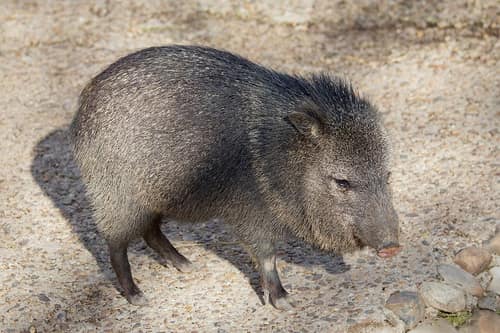
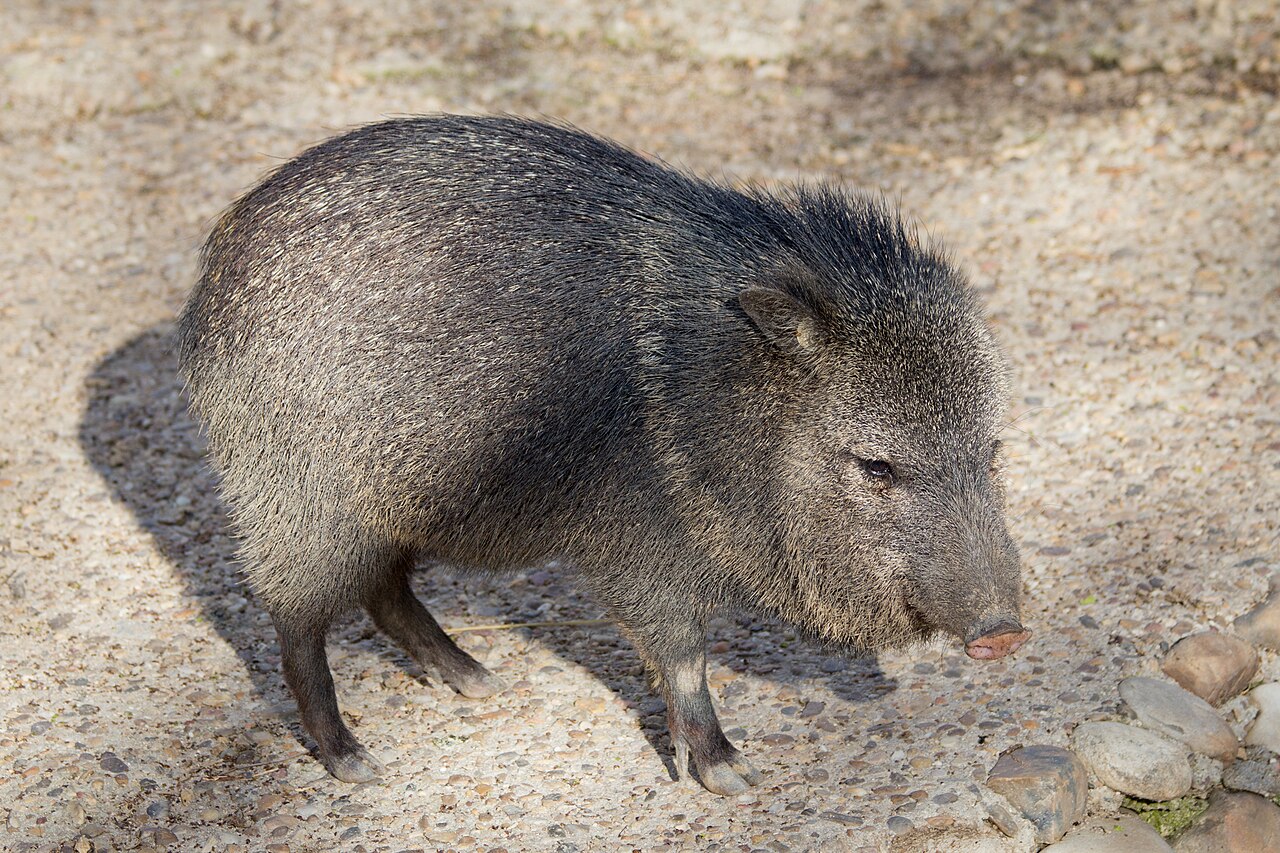
—observations
—countries
—peak records
Least ConcernConservation statusIUCN Red List categoriesLCNTVUENCREWEXLeast ConcernRed List categories, explained →
Diet & preyPrickly Pear Cactus, Roots and Tubers, Insects
Predators
- Cougar
- Jaguar
- Coyote
ThreatsHabitat fragmentation, hunting, and competition with invasive feral hogs.
HabitatsDeserts, scrublands, tropical rainforests, and oak woodlands.
Life span10 to 15 years in the wild
Classification
- FamilyTayassuidae
- SpeciesDicotyles tajacu
Range data is not available yet.
Interaction riskLow
- Low
- Moderate
- High
- Very high
- Why interaction risk is low
- Can inflict severe bites with sharp tusks if cornered; keep dogs away and observe from a distance.
Responsible observation
- Keep Distance: Avoid approaching herds, especially if young piglets are present.
- Leash Dogs: Keep dogs on a leash, as peccaries view them as predators and will attack.
- Scent Detection: Listen for low grunts and watch for a strong, musky odor indicating a nearby herd.
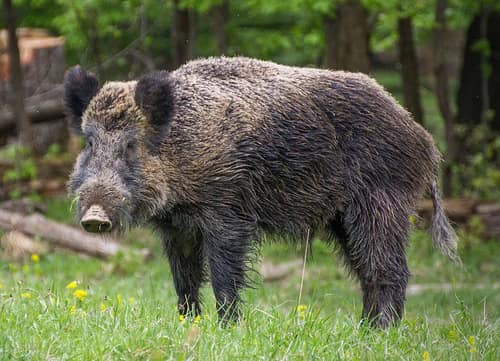
Competitor Valentin Panzirsch / CC BY-SA 3.0 at · cc-by-sa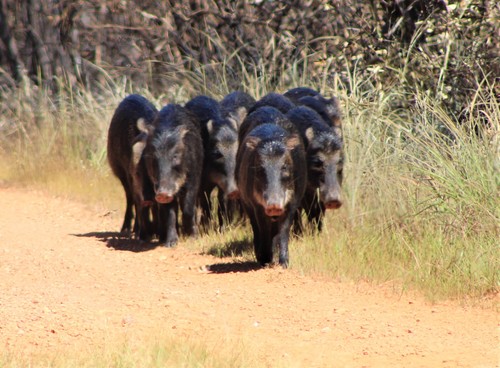
Close Relative (c) Pedro Sisnando Araújo dos Santos, some rights reserved (CC BY) · cc-by
Close Relative (c) Dave Pape, some rights reserved (CC BY) · cc-by
Help improve the field guideSomething wrong?
Checking your Fauna account…Report a name, category, or profile issue for review.