
Reptile
Loggerhead Sea Turtle
Caretta carettaAlso known as Loggerhead Turtle, Loggerhead
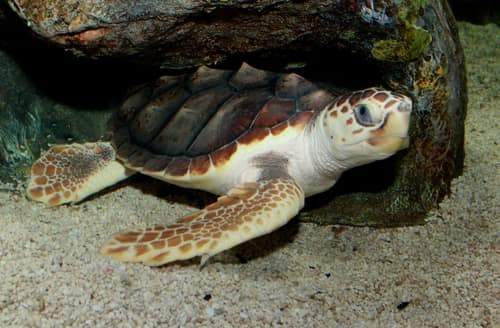
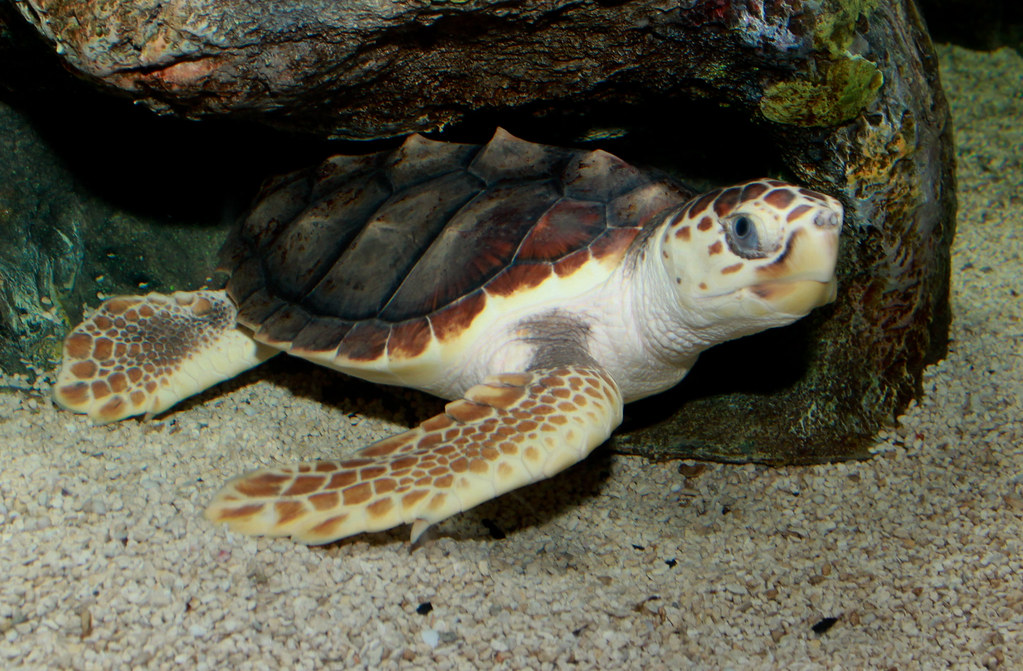
Loggerhead sea turtles navigate ocean basins using geomagnetic cues, traveling thousands of miles between foraging grounds and breeding shores. Their disproportionately large heads house powerful jaw muscles built to crush heavy-shelled prey like crabs, whelks, and sea urchins. Females return religiously to the sandy beaches where they hatched decades earlier to lay multiple egg clutches each season.
MarineMigratoryReptile
—observations
—countries
—peak records
VulnerableConservation statusIUCN Red List categoriesLCNTVUENCREWEXVulnerableRed List categories, explained →
Diet & preyHorseshoe crabs, Conchs, Jellyfish
Predators
- Tiger shark
- Raccoons (nest eggs)
- Ghost crabs (hatchlings)
ThreatsFisheries bycatch, coastal light pollution, beach destruction, marine debris
HabitatsOpen ocean, coastal bays, estuaries, coral reefs
Life span50–80 years
Classification
- FamilyCheloniidae
- SpeciesCaretta caretta
Range data is not available yet.
Interaction riskHigh
- Low
- Moderate
- High
- Very high
- Why interaction risk is high
- Powerful jaws can deliver a crushing bite; observe from a respectful distance in water and on land.
- Why it is dangerous
- Massive jaw muscles and sharp beak-like plates can easily crush bone if the turtle bites defensively.
- How to recognize a risky encounter
- Reddish brown heart-shaped shell and a broad, disproportionately large head relative to its body.
- What to do
- Never grab or approach wild sea turtles closely, and yield space to stranded or nesting individuals.
- What to notice
- Large marine reptile with a heavy reddish-brown carapace and yellow-to-brown skin.
- Support conservation
- Turn off beachfront lights during nesting season and keep dogs leashed near known coastal nesting zones.
Responsible observation
- Nesting Etiquette: Use red flashlights and maintain distance from nesting females on beaches at night.
- Boating Caution: Slow down in shallow coastal waters to prevent accidental boat strikes.
- Hatchling Protection: Never touch or obstruct hatchlings making their journey from nest to ocean.
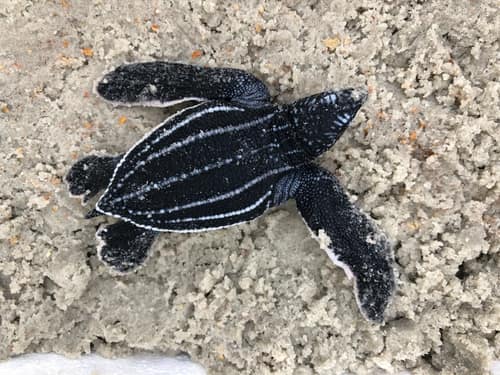
Co-occurring Sea Turtle (c) Pam Kleinsasser, some rights reserved (CC BY), uploaded by Pam Kleinsasser · cc-by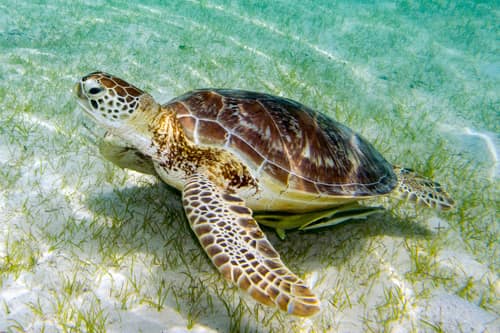
Close Relative (c) Paul Asman and Jill Lenoble, some rights reserved (CC BY), uploaded by Paul Asman and Jill Lenoble · cc-by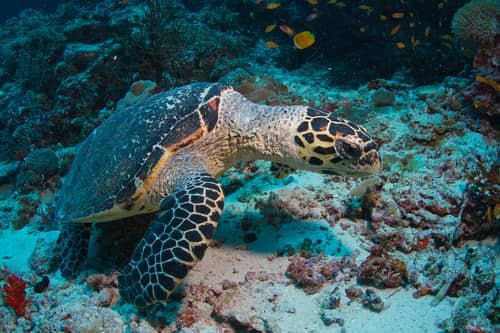
Close Relative "Hawksbill Turtle" by Tchami is licensed under CC BY-SA 2.0. To view a copy of this license, visit https://creativecommons.org/licenses/by-sa/2.0/. · cc-by-sa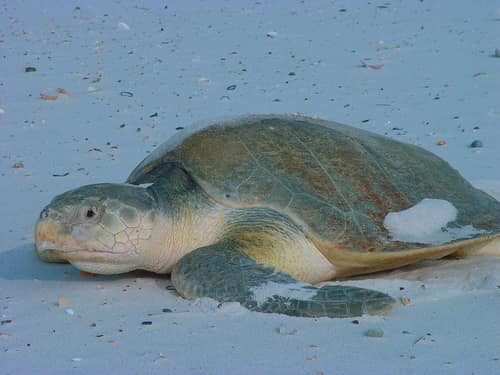
Close Relative U.S. Fish and Wildlife Service Southeast Region / CC BY 2.0 · cc-by
Help improve the field guideSomething wrong?
Checking your Fauna account…Report a name, category, or profile issue for review.