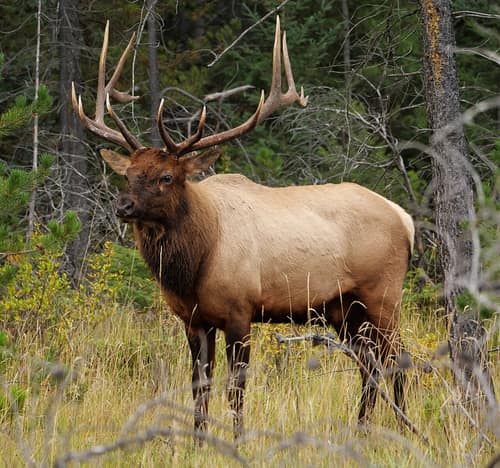
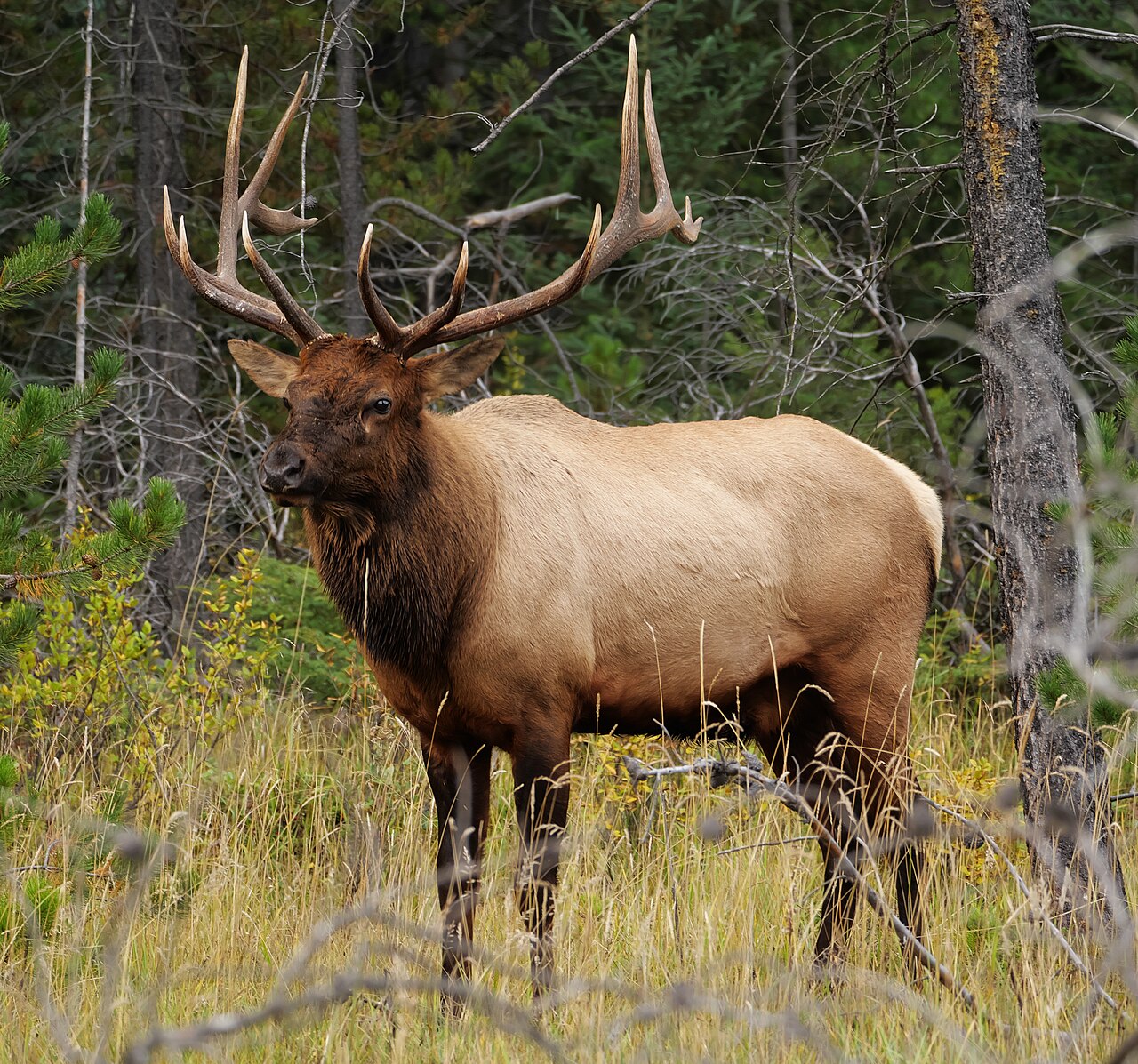
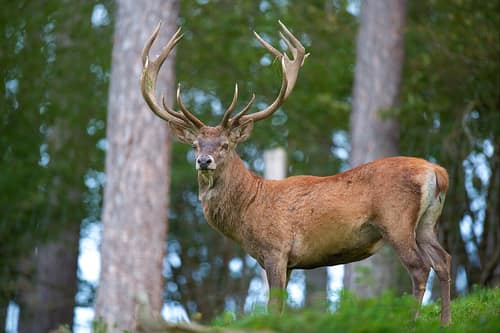
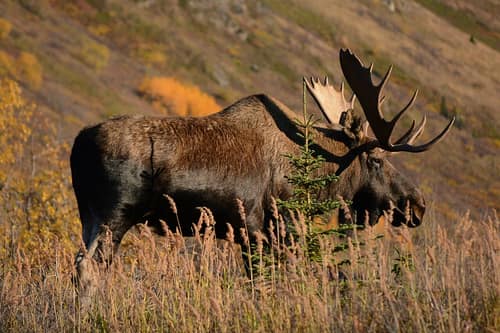
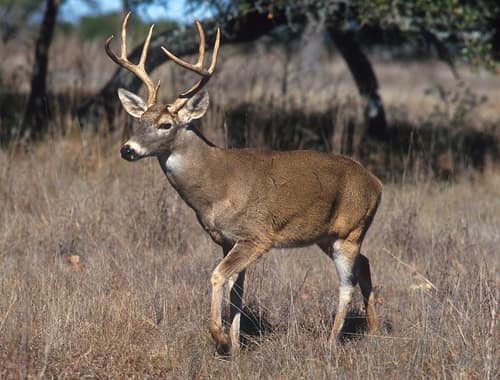
Wapiti are large, herd-dwelling ungulates famous for the resonant bugling calls bulls broadcast across alpine valleys during the autumn mating rut. Dominant bulls amass harems of dozens of cows, sparring with massive branched antlers and defending their territory against rival bachelors. As winter sets in, herds migrate from high-elevation summer pastures down to lower valley bottoms and open woodlands where forage remains accessible under shallower snow.
Diet & preyGrasses, sedges, forb foliage, tree bark, twigs, and woody browse
Predators
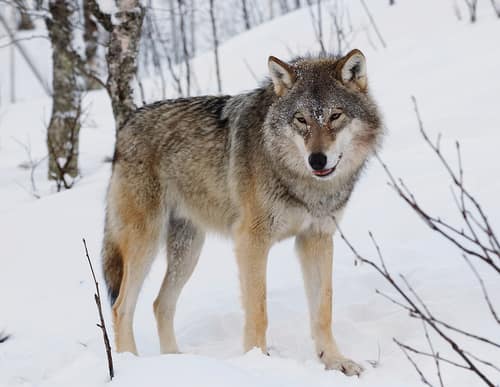
Gray Wolf
Cougar
Grizzly Bear
ThreatsHabitat fragmentation, highway collisions, chronic wasting disease, and poaching
HabitatsMontane forests, subalpine meadows, woodlands, and open grasslands
Life span10–13 years in the wild; up to 20 years in captivity
Classification
OrderArtiodactyla
FamilyCervidae
GenusCervus
SpeciesCervus canadensis
Range & activity
Native Introduced
Native range in olive; established introduced range in rust.
Safe observation
Interaction riskHigh
Low
Moderate
High
Very high
Why interaction risk is high
Bulls during the autumn rut and protective mothers in spring charge readily; keep at least 25 meters back.
Why it is dangerous
Massive body mass combined with sharp hooves and multi-tined antlers can inflict crushing blunt trauma, deep puncture wounds, and fatal gore injuries when animals charge.
How to recognize a risky encounter
Recognizable by their massive stature, dark brown mane, pale tan rump patch, and wide, backward-swept multi-pointed antlers on adult males.
What to do
Never approach, feed, or encircle; if an individual lowers its head, grinds its teeth, or flares its ears, slowly retreat behind a sturdy barrier or vehicle immediately.
Responsible observation
Observation Distance: Stay at least 25 meters away at all times, extending distance to 50 meters or more during the autumn rut.
Rut Etiquette: Avoid imitating bugling calls or shining spotlights into meadow clearings where breeding harems graze.
Calving Caution: Give bedded cows a wide berth from May to June, as protective mothers defend hidden calves aggressively.