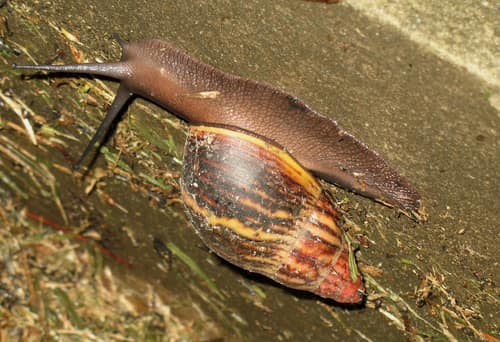
Also known as Giant Tiger Land Snail, Agate Snail, Ghana Snail
Giant tiger land snails glide across tropical forest floors beneath dense rainforest canopies, rasping at fallen fruits and decaying vegetation with thousands of microscopic radular teeth. While predominantly solitary, they are simultaneous hermaphrodites capable of producing clutches of hundreds of yellow, pea-sized eggs buried in damp soil. During dry seasons, individuals seal themselves inside their shells behind an epiphragm of calcified mucus to estivate for months until rains return.
ThreatsOverharvesting for bushmeat, habitat destruction from logging, and agricultural clearance
HabitatsTropical lowland rainforests, river valleys, and coastal scrub
Life span5–10 years
Classification
FamilyAchatinidae
SpeciesAchatina achatina
Range & activity
Range data is not available yet.
Safe observation
Interaction riskModerate
Low
Moderate
High
Very high
Why interaction risk is moderate
Can carry the rat lungworm parasite; avoid handling barehanded and never consume raw.
Why it is dangerous
Acts as an intermediate host for the nematode Angiostrongylus cantonensis, which causes eosinophilic meningitis in humans when ingested via raw meat or mucus-contaminated surfaces.
How to recognize a risky encounter
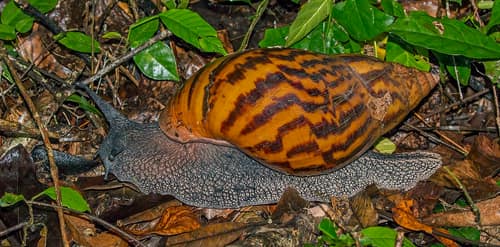
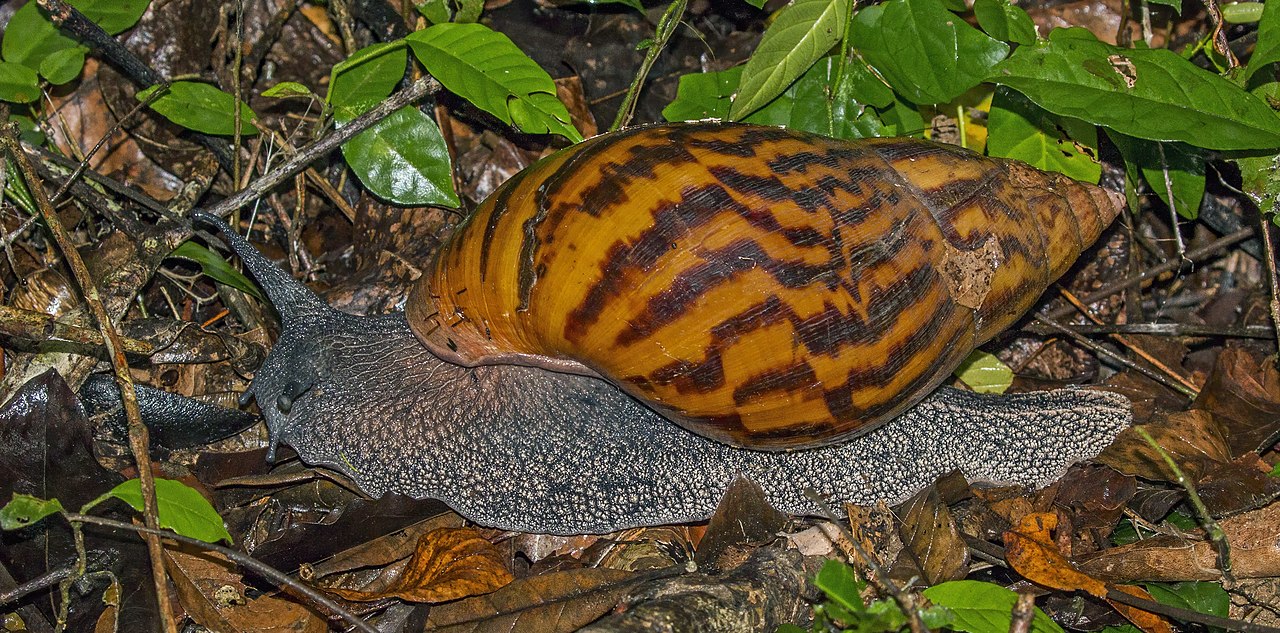
Recognizable by its massive, conical yellowish shell overlaid with prominent dark brown tiger stripes and a rounded apex.
What to do
Observe without touching, use disposable gloves if handling is required, and wash hands thoroughly with soap.
Responsible observation
Field Spotting: Look under decaying logs and fallen palm fronds after heavy evening rainstorms.
Safe Hygiene: Wash hands thoroughly if contact occurs, and keep wild snails away from food prep areas.