
Mammal
Eurasian Red Squirrel
Sciurus vulgarisAlso known as Red Squirrel, Common Red Squirrel
Eurasian red squirrels build spherical twig nests called dreys high in tree forks, spending early mornings caching pine seeds and hazelnuts for winter. Their coats vary from bright chestnut to dark grey depending on region and season, highlighted by distinctive long ear tufts that grow in autumn. Severe local declines in parts of Western Europe stem from habitat fragmentation and competitive pressure from introduced grey squirrels.
ArborealDiurnalForest Dweller
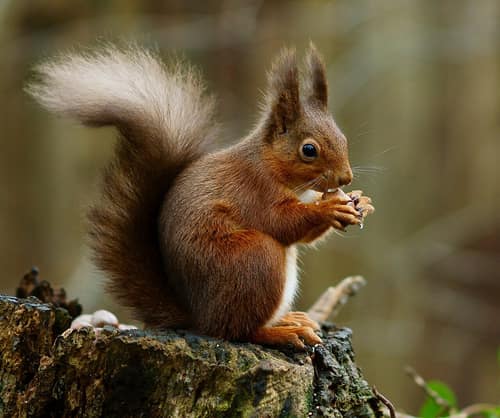
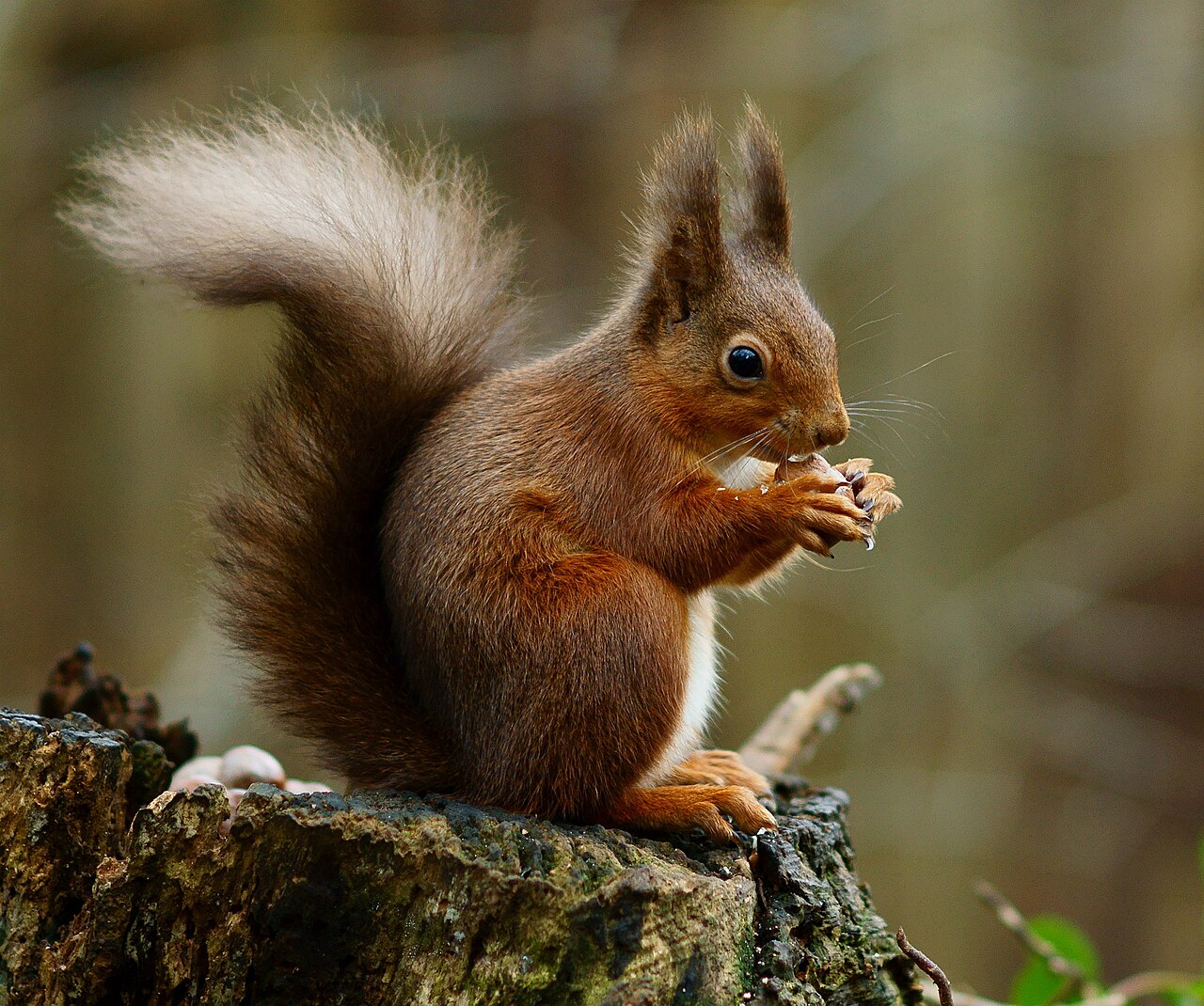
—observations
—countries
—peak records
Least ConcernConservation statusIUCN Red List categoriesLCNTVUENCREWEXLeast ConcernRed List categories, explained →
Diet & preyConifer Seeds, Hazelnuts, Fungi
Predators
- Pine Marten
- Northern Goshawk
- Red Fox
ThreatsHabitat loss, competition from invasive grey squirrels, and squirrelpox virus
HabitatsConiferous forests, broadleaf woodlands, parks, and large gardens
Life span3–7 years in the wild
Classification
- OrderRodentia
- FamilySciuridae
- GenusSciurus
- SpeciesSciurus vulgaris
Native Introduced
Native range in olive; established introduced range in rust.
Interaction riskLow
- Low
- Moderate
- High
- Very high
- Why interaction risk is low
- Capable of a sharp bite if cornered or handled; observe quietly from a distance.
Responsible observation
- Observation Timing: Scan woodland canopies in early morning or late afternoon when activity peaks.
- Feeding Etiquette: Offer plain hazelnuts or sunflower seeds in fixed feeders rather than feeding by hand.
- Identifying Dreys: Look for dense, ball-shaped twig nests positioned close to main tree trunks.
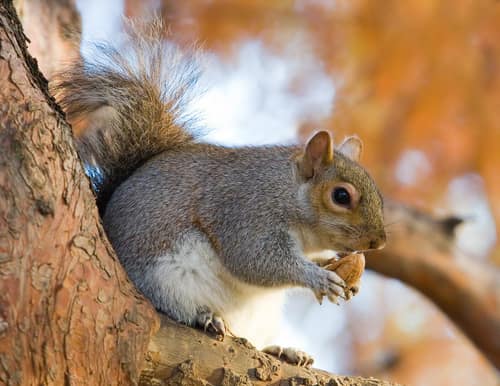
Competitor (c) Diliff, some rights reserved (CC BY-SA) · cc-by-sa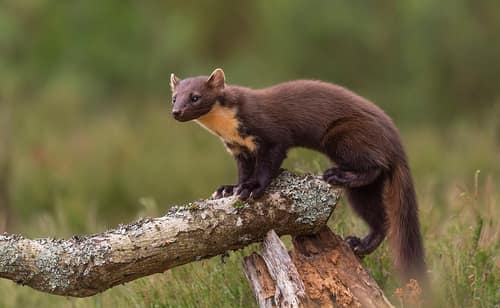
Predator caroline legg / CC BY 2.0 · cc-by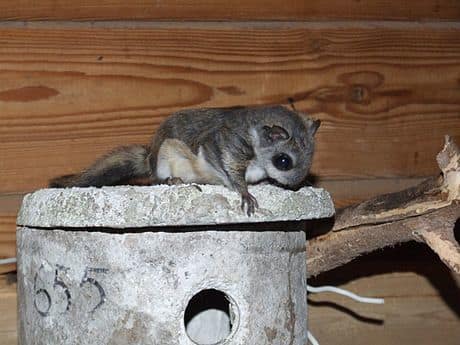
Frequent Companion (c) A.Popov, some rights reserved (CC BY-SA) · cc-by-sa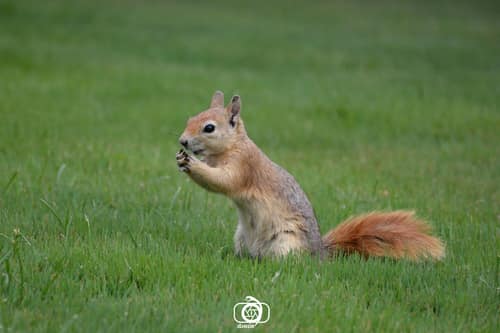
Close Relative (c) Mohammad Amin Ghaffari, some rights reserved (CC BY), uploaded by Mohammad Amin Ghaffari · cc-by
Keep collecting in Fauna
Found in Collections
Species set
Urban Dwellers
Eurasian Red Squirrel is found in this collection. Identify it in Fauna to fill this slot and continue your progress.
—/7
Help improve the field guideSomething wrong?
Checking your Fauna account…Report a name, category, or profile issue for review.