
Invertebrate
Pacific Oyster
Magallana gigasAlso known as Japanese Oyster, Giant Pacific Oyster, Miyagi Oyster
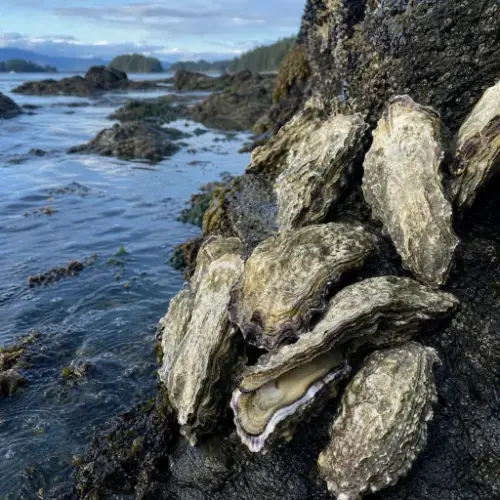
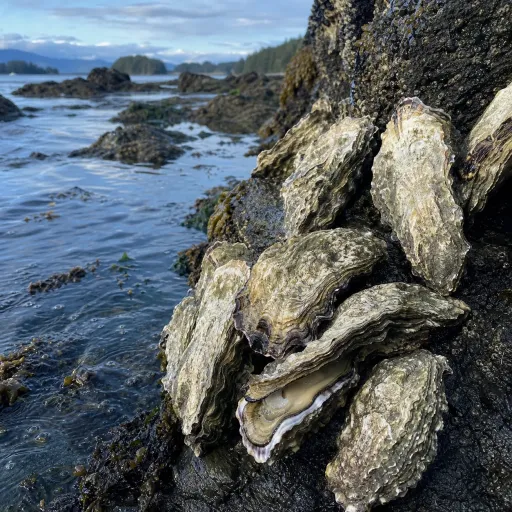
Pacific oysters are highly adaptable bivalves that form dense, complex reef structures in intertidal and shallow estuarine waters. They act as powerful ecosystem engineers, filtering up to 200 liters of water daily to consume phytoplankton while providing critical habitat for numerous marine invertebrates and fish. Though native to Asian Pacific coasts, their rapid growth and resilience have allowed them to establish wild, self-sustaining populations worldwide.
MarineBivalveEcosystem Engineer
—observations
—countries
—peak records
Not EvaluatedConservation statusIUCN Red List categoriesLCNTVUENCREWEXNot Evaluated — not placed on the risk ladderRed List categories, explained →
Diet & preyPhytoplankton, Microalgae, Organic Detritus
Predators
- Red Rock Crab
- Oyster Drill Snail
- Ochre Sea Star
ThreatsOcean acidification, coastal pollution, habitat destruction, and oyster herpesvirus
HabitatsEstuaries, intertidal zones, rocky shores, and muddy bays
Life span10 to 30 years
Classification
- FamilyOstreidae
- SpeciesMagallana gigas
Range data is not available yet.
Interaction riskLow
- Low
- Moderate
- High
- Very high
- Why interaction risk is low
- Shells are extremely sharp; wear sturdy footwear and thick gloves when exploring oyster reefs.
Responsible observation
- Watch your step: Walk carefully on oyster beds as the upright, razor-sharp shells can easily slice through light footwear.
- Observe filtration: Look for open shells in calm, shallow water to see their feeding currents in action.
- Check local regulations: Avoid harvesting wild oysters without checking local water quality safety alerts and permits.
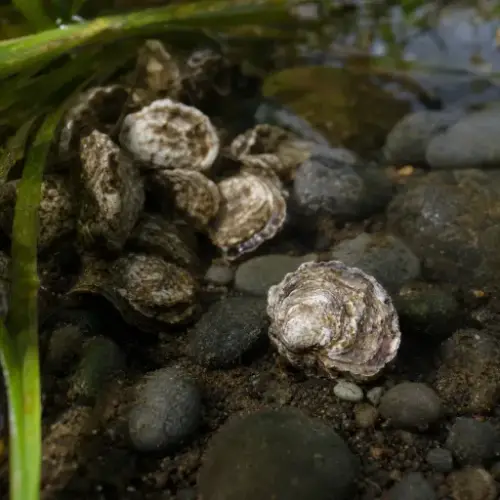
Native Competitor Unknown / CC-BY · cc-by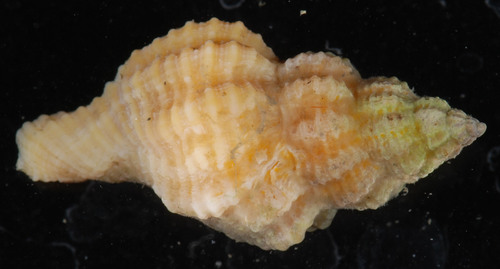
Predator (c) Smithsonian Environmental Research Center, some rights reserved (CC BY) · cc-by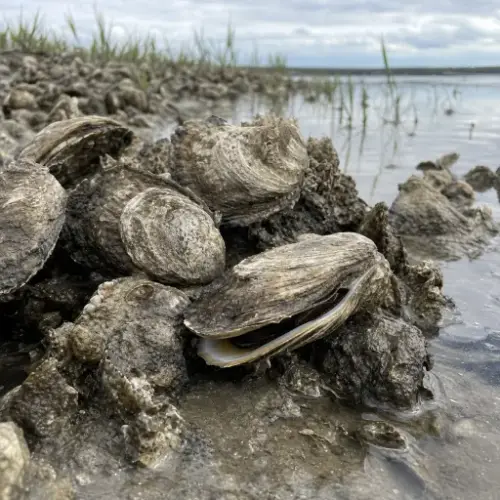
Close Relative Unknown / CC-BY · cc-by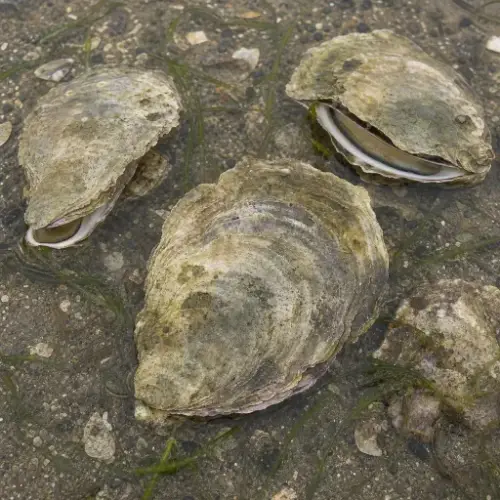
Close Relative Unknown / CC-BY · cc-by
Help improve the field guideSomething wrong?
Checking your Fauna account…Report a name, category, or profile issue for review.