
Bird
Calliope Hummingbird
Selasphorus calliopeAlso known as Calliope's Hummingbird
Calliope Hummingbirds are the smallest breeding birds in North America, weighing no more than a penny yet undertaking a massive annual migration of over five thousand miles. Males sport a striking throat gorget of long, magenta-pink feathers that they flare out like a starburst during courtship displays. They nest in high-altitude mountain forests, often placing their tiny, lichen-covered cups directly on pinecones or branches beneath overhanging needles.
MigratoryTinyColorful
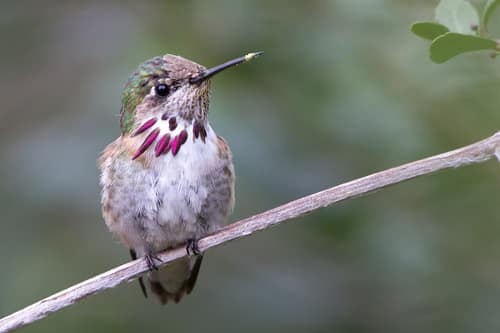
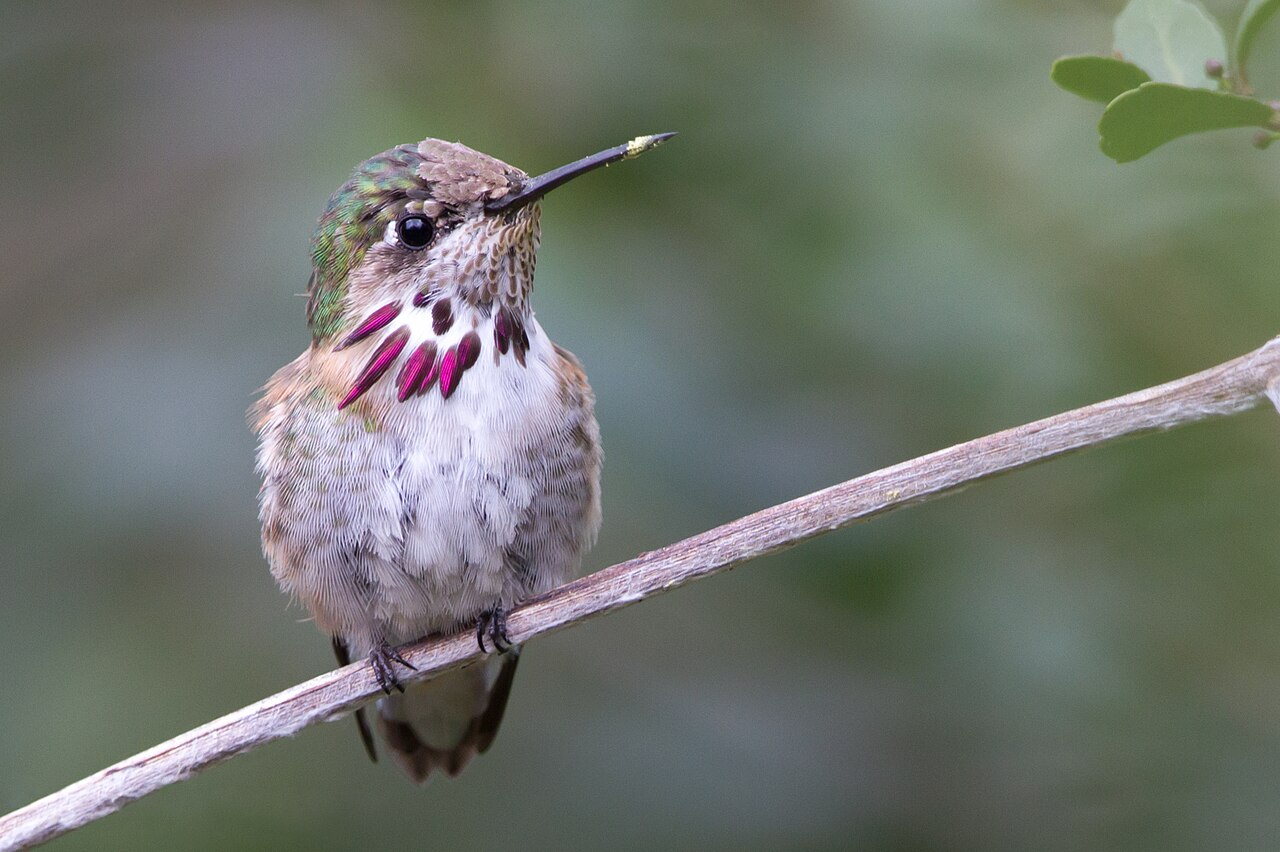
—observations
—countries
—peak records
Least ConcernConservation statusIUCN Red List categoriesLCNTVUENCREWEXLeast ConcernRed List categories, explained →
Diet & preyFlower nectar, Tree sap, Small insects
Predators
- Hawks
- Praying mantises
- Domestic cats
ThreatsHabitat loss, climate change affecting flower bloom timing, and pesticide use
HabitatsMontane forests, mountain meadows, willow thickets, and canyons
Life span3 to 6 years
Classification
- FamilyTrochilidae
- SpeciesSelasphorus calliope
Range data is not available yet.
Interaction riskLow
- Low
- Moderate
- High
- Very high
- Why interaction risk is low
- Safe to observe at a normal distance.
Responsible observation
- Feeder Placement: Hang sugar-water feeders near shrubs to provide cover from larger, aggressive hummingbirds.
- Planting Native Flowers: Grow tubular red and purple flowers like penstemon and columbine to attract them.
- Quiet Observation: Sit quietly near nectar sources; they are surprisingly bold when feeding.
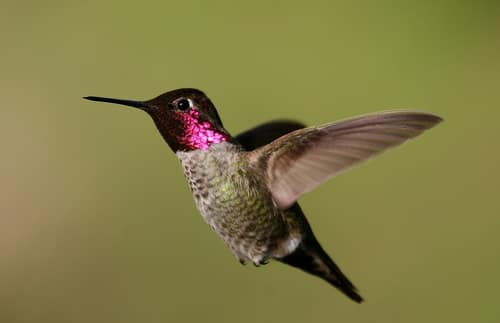
Frequent Companion Robert McMorran, United States Fish and Wildlife Service / Public domain · cc0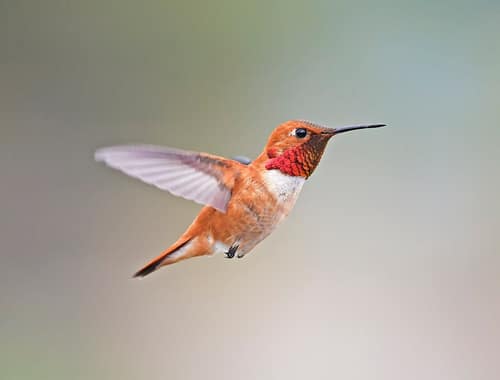
Close Relative VJAnderson / CC BY-SA 4.0 · cc-by-sa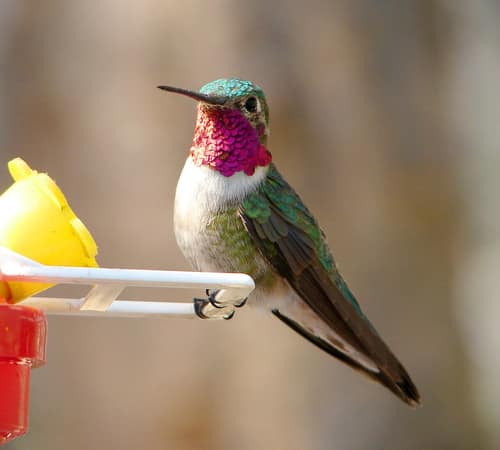
Close Relative Michelle Lynn Reynolds / CC BY-SA 3.0 · cc-by-sa
Help improve the field guideSomething wrong?
Checking your Fauna account…Report a name, category, or profile issue for review.