
Bird
Wilson's Warbler
Cardellina pusillaAlso known as Wilson's Black-capped Warbler, Black-capped Warbler, Green Black-cap Warbler
Wilson's warblers are energetic songbirds that bounce endlessly through dense shrubbery and willow thickets, frequently flipping their slim tails in rapid circles. Males feature a glossy black cap atop bright yellow underparts and olive-green backs, while females display a paler cap or lack one entirely. They feed primarily by sallying into the air to snag midges or gleaning caterpillars directly from leaf undersides.
MigratoryInsectivoreSongbird
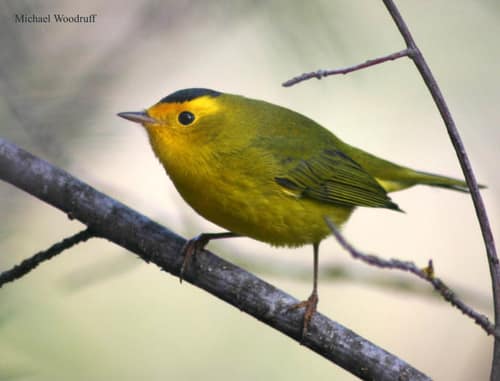
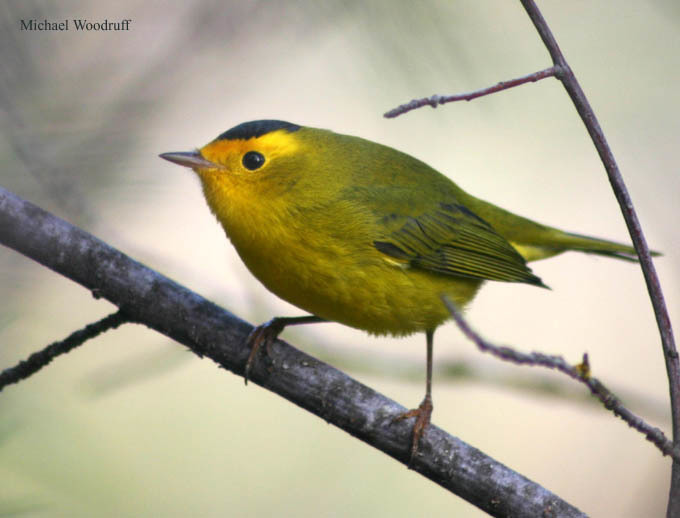
—observations
—countries
—peak records
Least ConcernConservation statusIUCN Red List categoriesLCNTVUENCREWEXLeast ConcernRed List categories, explained →
Diet & preyCaterpillars, Spiders, Midges
Predators
- Accipiter hawks
- Domestic cats
- Blue jays
ThreatsHabitat loss in wintering grounds, collisions with man-made structures, and climate change
HabitatsRiparian thickets, willow shrubs, montane boreal forests, and coastal scrub
Life span3–6 years
Classification
- FamilyParulidae
- SpeciesCardellina pusilla
Range data is not available yet.
Interaction riskLow
- Low
- Moderate
- High
- Very high
- Why interaction risk is low
- Safe to observe at a normal distance.
Responsible observation
- Listen for Calls: Look for nervous tail flips in low willow thickets while listening for their sharp chip call.
- Patience at Water: Watch near stream edges during spring migration where they frequently stop to bathe and forage.
- Keep Distance: Avoid approaching low-nesting pairs in dense brush during the summer breeding season.
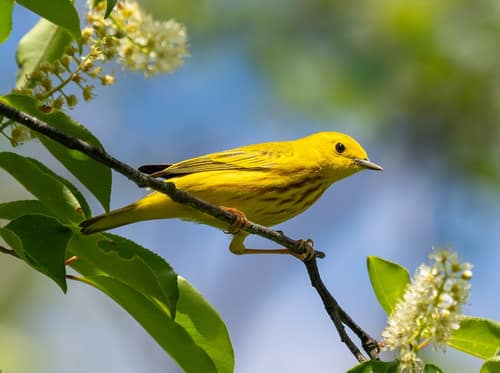
Frequent Companion Rhododendrites / CC BY-SA 4.0 · cc-by-sa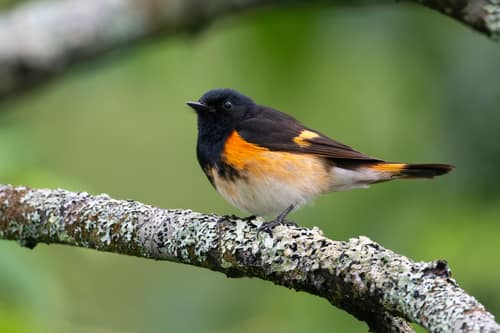
Ecological Counterpart no rights reserved, uploaded by Adam Jackson · cc0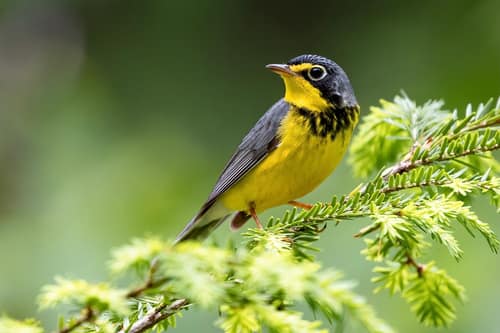
Close Relative (c) Matt Felperin, some rights reserved (CC BY), uploaded by Matt Felperin · cc-by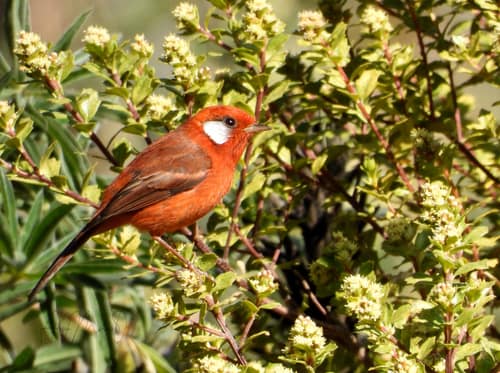
Close Relative (c) Adrianh M. Orozco, some rights reserved (CC BY) · cc-by
Help improve the field guideSomething wrong?
Checking your Fauna account…Report a name, category, or profile issue for review.