
Mammal
Sambar
Rusa unicolorAlso known as Sambar Deer, Sambur, Malayan Sambar
Sambar are massive, rugged deer easily recognized by their coarse, shaggy coats and the formidable, three-tined antlers grown by mature stags. They are highly crepuscular or nocturnal, often wallowing in mud to cool down and protect their skin from biting insects. These forest-dwelling giants play a vital role in their ecosystems as a primary food source for apex predators like tigers and dholes.
NocturnalForest-DwellingAntlered
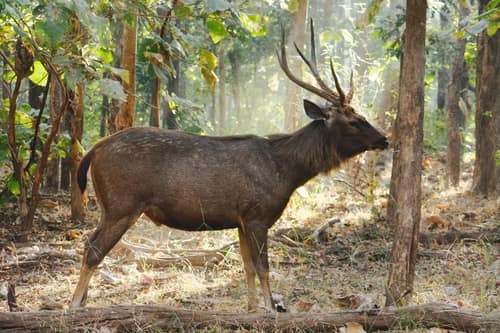
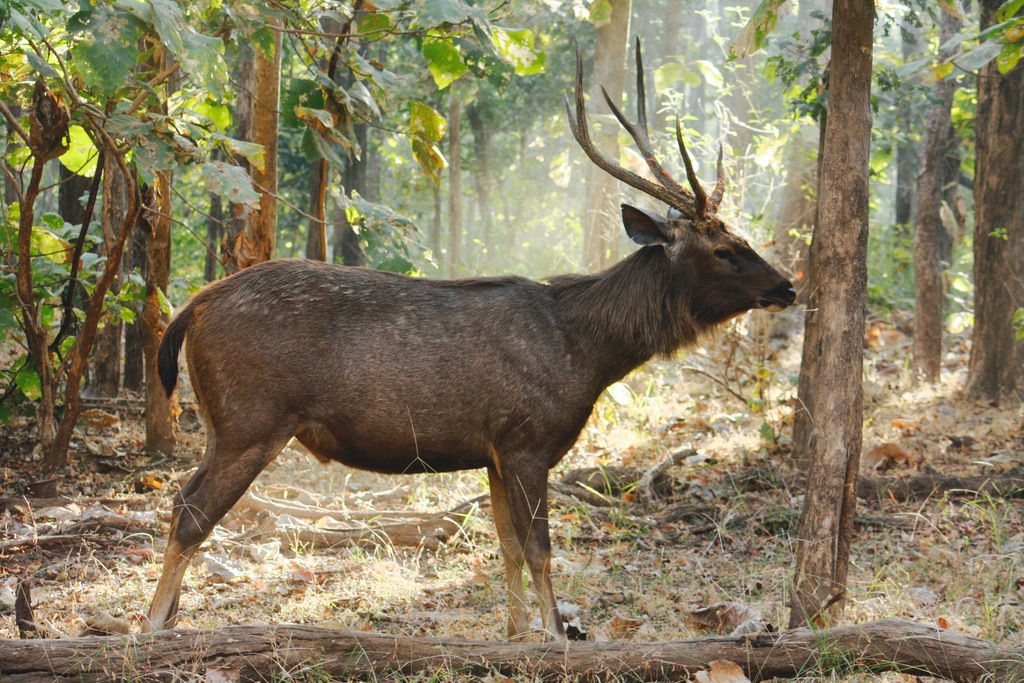
—observations
—countries
—peak records
VulnerableConservation statusIUCN Red List categoriesLCNTVUENCREWEXVulnerableRed List categories, explained →
Diet & preyGrasses, Deciduous leaves, Fallen fruits
Predators
- Bengal Tiger
- Dhole
- Indian Leopard
ThreatsHabitat loss, poaching, hunting, forest fragmentation
HabitatsDense deciduous forests, rainforests, subtropical pine forests, grasslands
Life span16 to 20 years in the wild
Classification
- FamilyCervidae
- SpeciesRusa unicolor
Native Introduced
Native range in olive; established introduced range in rust.
Interaction riskHigh
- Low
- Moderate
- High
- Very high
- Why interaction risk is high
- Large and powerful stags can charge if cornered or during the autumn rut; keep a safe distance.
- Why it is dangerous
- Stags weigh up to 300 kilograms and possess sharp, heavy antlers that can inflict severe injuries during the mating season.
- How to recognize a risky encounter
- Look for a very large, dark brown deer with a shaggy neck ruff and thick, three-tined antlers.
- What to do
- Never approach a wild deer, particularly during the autumn rut, and back away slowly if one stares or stomps.
- What to notice
- Recognizable by its massive size, uniform dark brown coat, and large, rounded ears.
- Support conservation
- Avoid using flash photography or making loud noises, which can cause these shy animals to flee into dangerous open areas.
Responsible observation
- Keep Distance: Maintain a respectful distance of at least 50 meters, especially when observing stags during the breeding season.
- Listen for Alarms: Pay attention to their loud, metallic alarm barks, which often signal the presence of a nearby tiger.
- Watch the Wallows: Look for them near muddy pools during the heat of the day, where they coat themselves to deter insects.
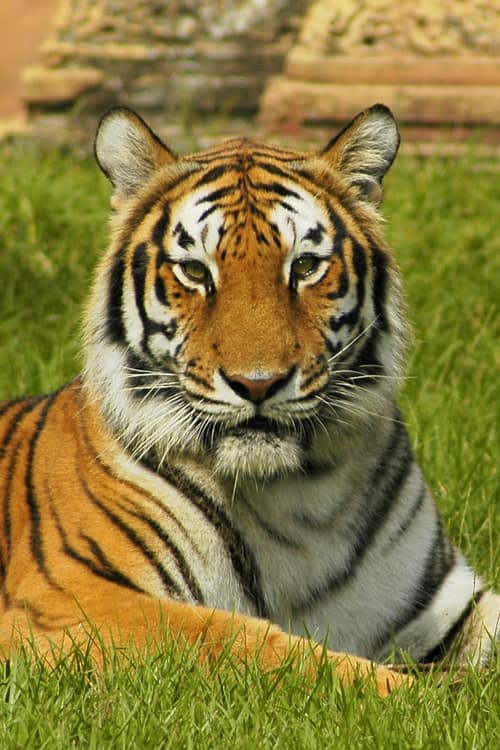
Predator "Bengal Tiger" by ucumari photography is licensed under CC BY-SA 2.0. To view a copy of this license, visit https://creativecommons.org/licenses/by-sa/2.0/. · cc-by-sa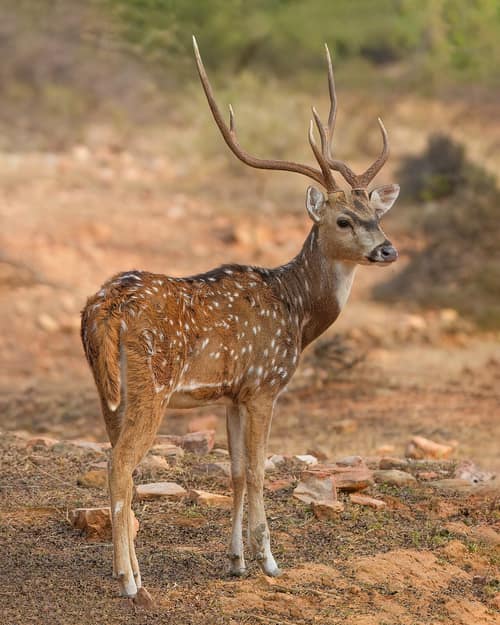
Frequent Companion Giles Laurent / CC BY-SA 4.0 · cc-by-sa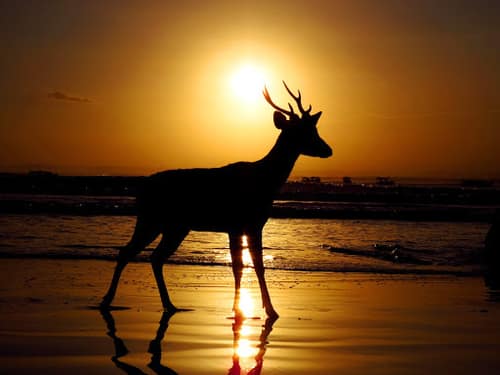
Close Relative (c) Jason Alexander, some rights reserved (CC BY), uploaded by Jason Alexander · cc-by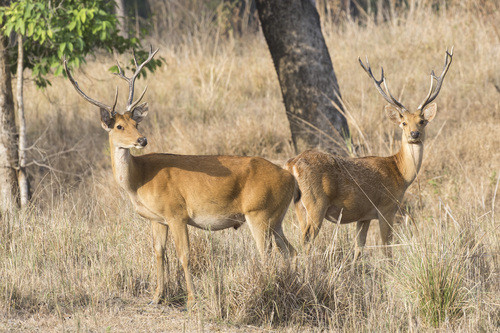
Close Relative (c) Ramesh Shenai, some rights reserved (CC BY), uploaded by Ramesh Shenai · cc-by
Help improve the field guideSomething wrong?
Checking your Fauna account…Report a name, category, or profile issue for review.