
Invertebrate
Maori Octopus
Macroctopus maorumAlso known as New Zealand Octopus, Māori Octopus
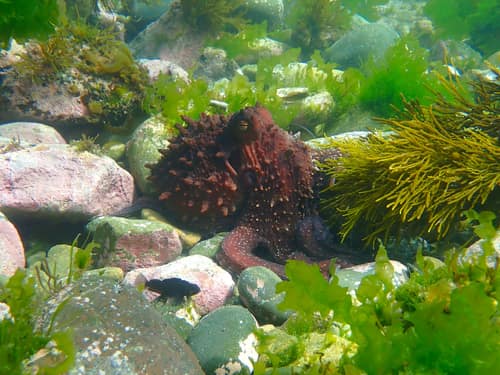
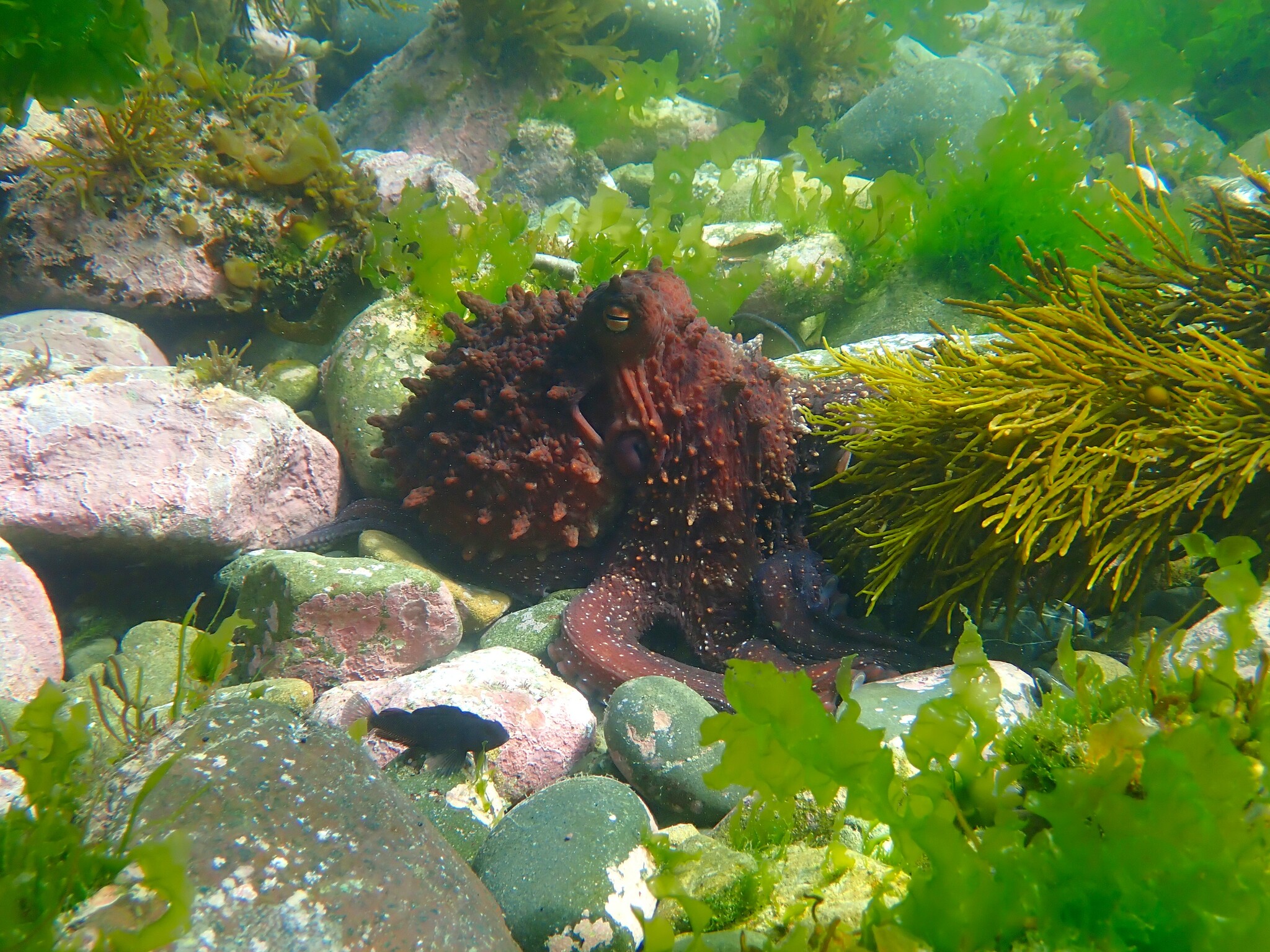
Māori octopuses are formidable, highly intelligent predators that dominate the rocky reefs and kelp forests of New Zealand and southern Australia. They use their immense, muscular arms to pry open stubborn shellfish and can rapidly shift both their skin color and texture to blend seamlessly into the seafloor. During the breeding season, females retreat into deep rocky dens to guard their massive clutches of eggs, refusing to eat until the young hatch.
MarineIntelligentCamouflage
—observations
—countries
—peak records
Least ConcernConservation statusIUCN Red List categoriesLCNTVUENCREWEXLeast ConcernRed List categories, explained →
Diet & preySouthern Rock Lobster, Paddle Crabs, Bony Fish
Predators
- New Zealand Fur Seal
- Broadnose Sevengill Shark
- Dolphins
ThreatsHabitat degradation, climate change, and localized overfishing
HabitatsRocky reefs, kelp forests, seagrass meadows, and sandy seafloors
Life span2 to 3 years
Classification
- FamilyOctopodidae
- SpeciesMacroctopus maorum
Range data is not available yet.
Interaction riskVery high
- Low
- Moderate
- High
- Very high
- Why interaction risk is very high
- Can deliver a painful bite with a sharp beak and toxic saliva; do not handle.
- Why it is dangerous
- Possesses a sharp chitinous beak and salivary glands that inject a mild paralyzing venom to subdue prey, which can cause pain and swelling in humans.
- How to recognize a risky encounter
- Look for a large, reddish-brown to orange-brown octopus with long, robust arms and white spots or mottling along its body.
- What to do
- Observe these intelligent creatures from a respectful distance while diving or tide-pooling, and never attempt to touch or pull them from their dens.
Responsible observation
- Look for Middens: Search near rocky crevices for piles of discarded crab and bivalve shells, which indicate an active octopus den nearby.
- Watch the Color: Observe their skin patterns from a distance to see them mimic surrounding kelp and rock textures in real time.
- Keep Your Distance: Avoid blocking the entrance to a den, as this can cause unnecessary stress to a nesting female.
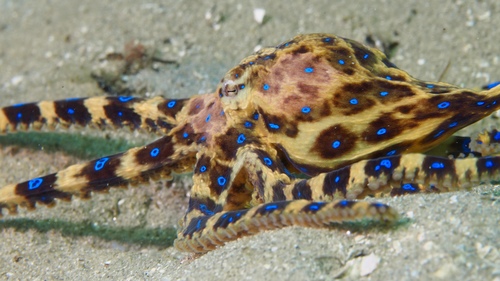
Co-occurring Species (c) Christopher Mark, some rights reserved (CC BY), uploaded by Christopher Mark · cc-by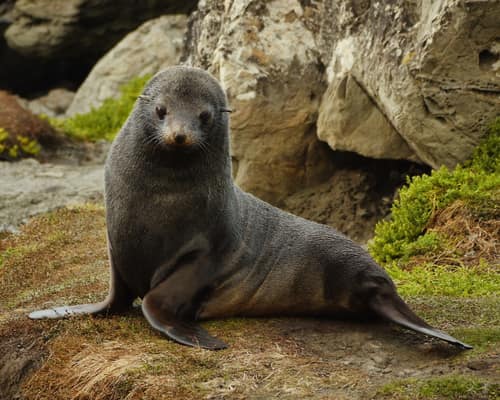
Predator (c) Sid Mosdell, some rights reserved (CC BY) · cc-by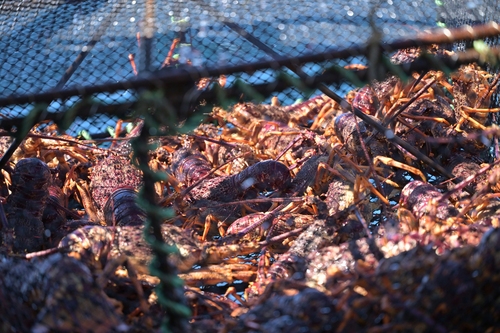
Prey (c) Christopher Stephens, some rights reserved (CC BY-SA) · cc-by-sa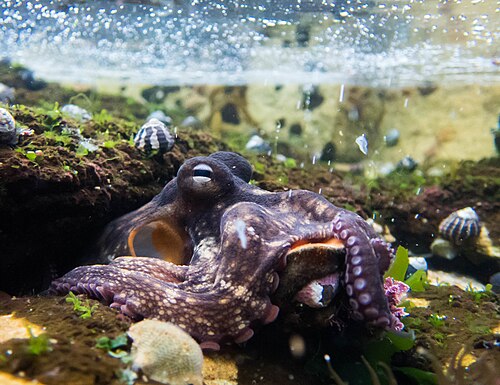
Close Relative Niki Hubbard / CC BY 4.0 · cc-by
Help improve the field guideSomething wrong?
Checking your Fauna account…Report a name, category, or profile issue for review.