
Mammal
Northeast African Cheetah
Acinonyx jubatus soemmeringiiAlso known as Sudan Cheetah, Somali Cheetah
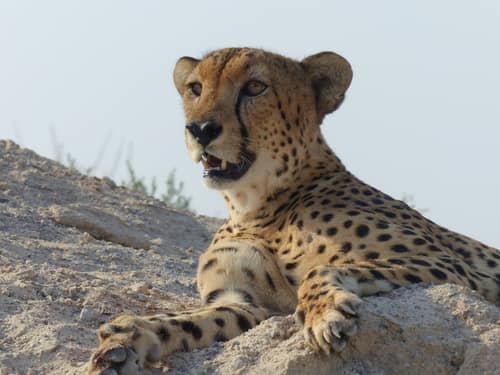
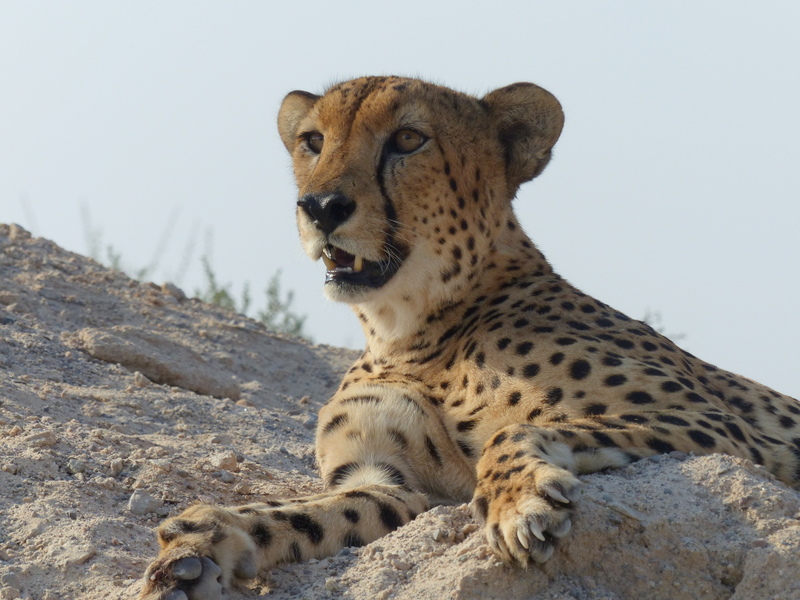
Northeast African cheetahs are slender, high-speed predators distinguished by their densely spotted, relatively dark ochre coats and thick, tear-like facial stripes. They hunt primarily during the day, using their exceptional acceleration to run down swift antelopes across open savannahs and arid grasslands. Females lead solitary lives raising cubs, while males often form tight-knit coalitions to defend territories.
Fastest Land MammalDiurnal
—observations
—countries
—peak records
EndangeredConservation statusIUCN Red List categoriesLCNTVUENCREWEXEndangeredRed List categories, explained →
Diet & preySoemmerring's gazelle, Dorcas gazelle, Cape hare
Predators
- Lions
- Leopards
- Spotted hyenas
ThreatsHabitat loss, prey depletion, illegal wildlife trade, and human-wildlife conflict
HabitatsSavannahs, grasslands, and arid semi-desert scrublands
Life span10 to 12 years in the wild
Classification
- FamilyFelidae
- SpeciesAcinonyx jubatus soemmeringii
Range data is not available yet.
Interaction riskHigh
- Low
- Moderate
- High
- Very high
- Why interaction risk is high
- A large predator capable of defensive attacks if cornered; maintain a safe distance from safari vehicles.
- Why it is dangerous
- Equipped with powerful claws and sharp teeth, this large carnivore can inflict severe injuries if it feels threatened or cornered.
- How to recognize a risky encounter
- Look for a slender, long-legged build, distinctive black tear tracks from the eyes to the mouth, and a spotted coat.
- What to do
- Never approach on foot; remain inside your vehicle and give the animal ample space to move freely.
- What to notice
- Identifiable by its spotted coat, slender frame, and presence in protected areas of South Sudan, Ethiopia, and Uganda.
- Support conservation
- Do not share precise GPS coordinates of sightings online to protect them from poachers and illegal wildlife traffickers.
Responsible observation
- Safari Etiquette: Observe from a designated safari vehicle and never attempt to approach on foot.
- Keep Quiet: Minimize noise when near a sighting to avoid disrupting their hunting or resting behaviors.
- Support Conservation: Report sightings to local conservation databases to help track these endangered populations.
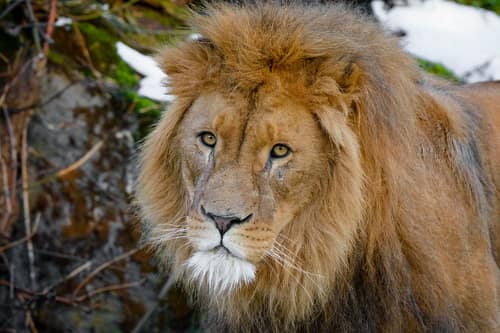
Competitor "African Lion" by Mathias Appel is marked with CC0 1.0. To view the terms, visit https://creativecommons.org/publicdomain/zero/1.0/. · cc0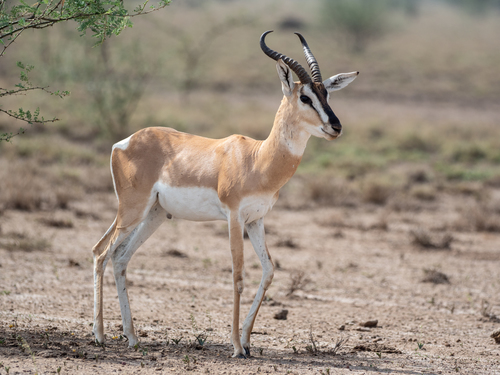
Prey (c) Forest Botial-Jarvis, some rights reserved (CC BY), uploaded by Forest Botial-Jarvis · cc-by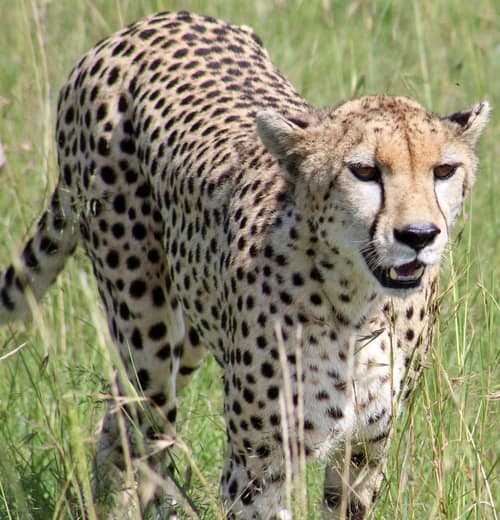
Close Relative "Acinonyx jubatus (cheetah) (Maasai Mara National Reserve, Kenya) 9" by James St. John is licensed under CC BY 2.0. To view a copy of this license, visit https://creativecommons.org/licenses/by/2.0/. · cc-by Image unavailable
Close Relative
Help improve the field guideSomething wrong?
Checking your Fauna account…Report a name, category, or profile issue for review.