
Mammal
Southeastern Coyote
Canis latrans frustrorAlso known as Southern Coyote, Brush Wolf
Southeastern coyotes are highly adaptable, medium-sized canids that have successfully colonized the forests, fields, and suburban neighborhoods of the American South. Often larger than their western counterparts due to historical hybridization with red wolves, they play a vital role as apex or mesopredators in fragmented ecosystems. They communicate through a complex repertoire of high-pitched yips, howls, and barks that can echo for miles on quiet nights.
AdaptableNocturnalVocal
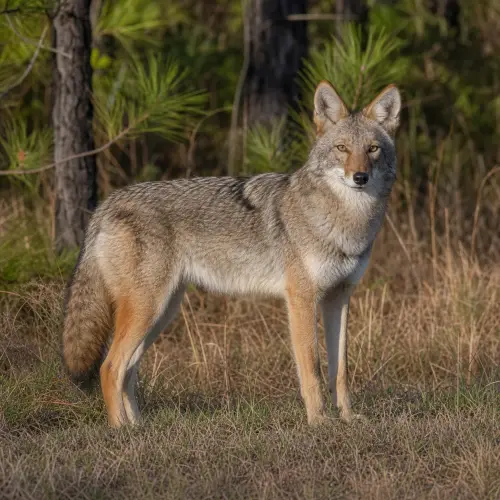
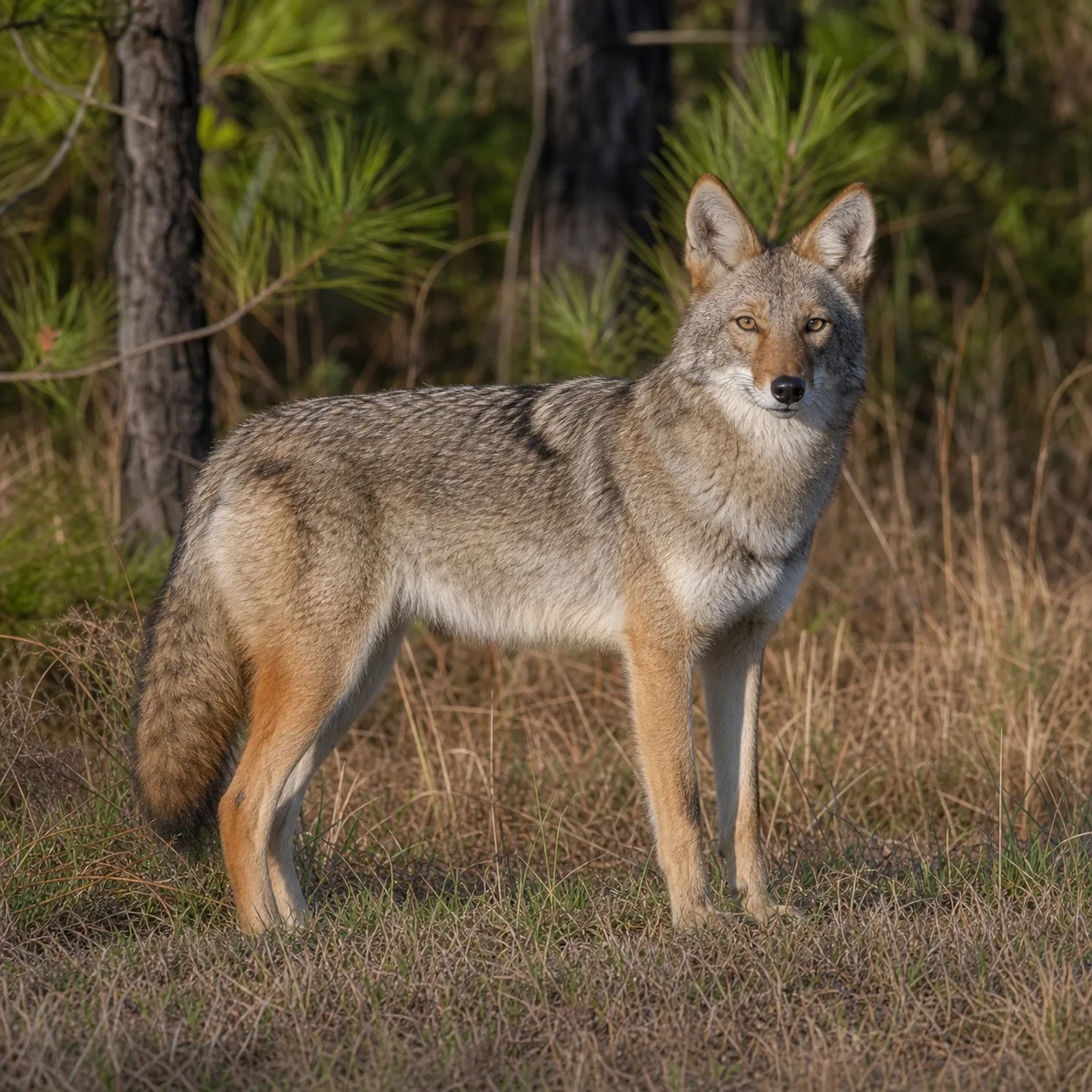
—observations
—countries
—peak records
Least ConcernConservation statusIUCN Red List categoriesLCNTVUENCREWEXLeast ConcernRed List categories, explained →
Diet & preyWhite-tailed deer, Eastern cottontail, Hispid cotton rat
Predators
- Red wolf
- Cougar
- Human
ThreatsVehicle collisions, hunting, rodenticide poisoning, and habitat fragmentation
HabitatsPine forests, agricultural fields, deciduous woodlands, and suburban areas
Life span10 to 14 years in the wild
Classification
- FamilyCanidae
- SpeciesCanis latrans frustror
Range data is not available yet.
Interaction riskModerate
- Low
- Moderate
- High
- Very high
- Why interaction risk is moderate
- Can carry rabies and defend themselves if cornered; observe from a safe distance and never feed them.
- Why it is dangerous
- Capable of delivering a painful defensive bite if cornered or habituated, and can transmit rabies, sarcoptic mange, or tapeworms.
- How to recognize a risky encounter
- Look for a dog-like silhouette with a bushy, black-tipped tail held low, pointed ears, and a grizzled grey-brown coat.
- What to do
- Never approach, corner, or attempt to feed a coyote; back away slowly if one approaches you too closely.
Responsible observation
- Secure attractants: Keep pet food indoors and secure trash cans to prevent habituation.
- Haze bold individuals: Make loud noises, wave your arms, or throw small objects to maintain their natural fear of humans.
- Keep pets leashed: Walk dogs on short leashes, especially during the spring pup-rearing season.
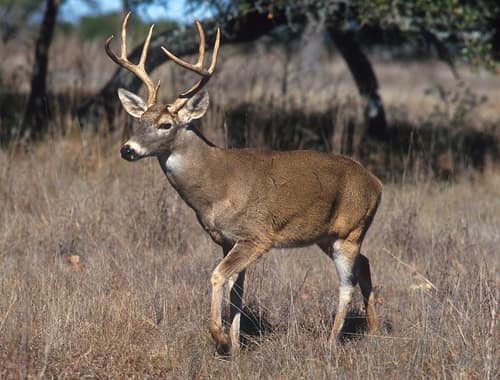
Prey USDA photo by Scott Bauer / Public domain · cc0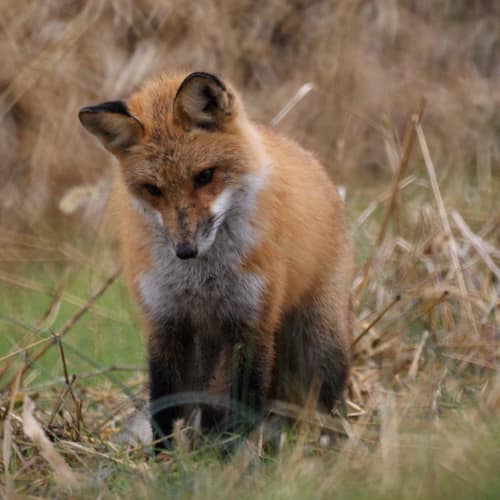
Competitor "Red Fox" by Mike's Birds is licensed under CC BY-SA 2.0. To view a copy of this license, visit https://creativecommons.org/licenses/by-sa/2.0/. · cc-by-sa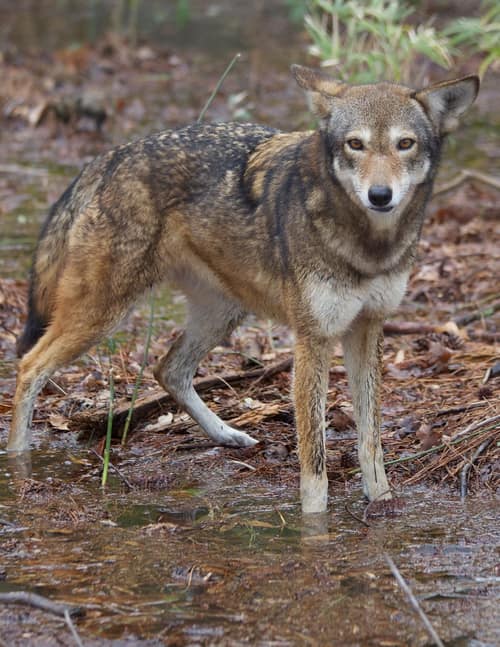
Close Relative "11276F, Red Wolf Healthcare and Education Center" by Red Wolf Recovery Program is licensed under CC BY 2.0. To view a copy of this license, visit https://creativecommons.org/licenses/by/2.0/. · cc-by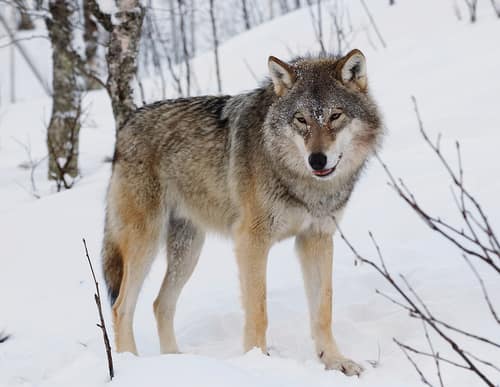
Close Relative User:Mas3cf / CC BY-SA 4.0 · cc-by-sa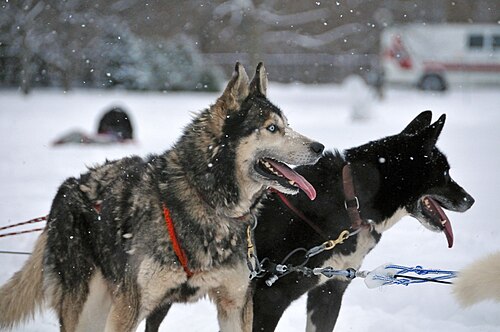
Close Relative M. Rehemtulla / CC BY 2.0 · cc-by
Help improve the field guideSomething wrong?
Checking your Fauna account…Report a name, category, or profile issue for review.