Also known as Mackenzie Valley Wolf, Alaskan Timber Wolf, Canadian Timber Wolf, Rocky Mountain Wolf
Northwestern wolves are massive apex predators that live in highly structured family packs led by a dominant breeding pair. These wolves coordinate sophisticated group hunts to bring down large ungulates like moose and elk across vast northern territories. Their thick, double-layered coats range from pure white to coal black, providing insulation against harsh subarctic winters.
ThreatsHabitat fragmentation, human conflict, and localized predator control programs
HabitatsBoreal forests, alpine tundra, subalpine forests, and coastal rainforests
Life span6 to 8 years in the wild
Classification
FamilyCanidae
SpeciesCanis lupus occidentalis
Range & activity
Range data is not available yet.
Safe observation
Interaction riskHigh
Low
Moderate
High
Very high
Why interaction risk is high
An apex predator capable of defensive attacks; maintain a safe distance of at least 100 meters.
Why it is dangerous
Equipped with powerful jaws and a highly coordinated pack structure, these large carnivores can defend themselves or their pups aggressively if cornered.
How to recognize a risky encounter
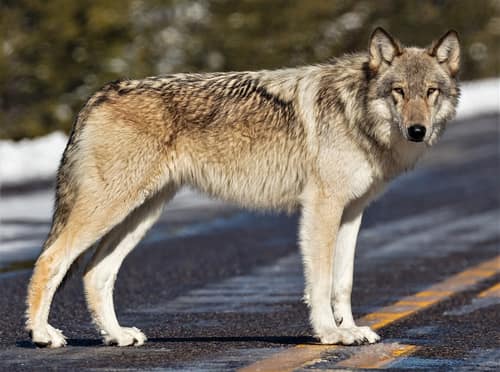
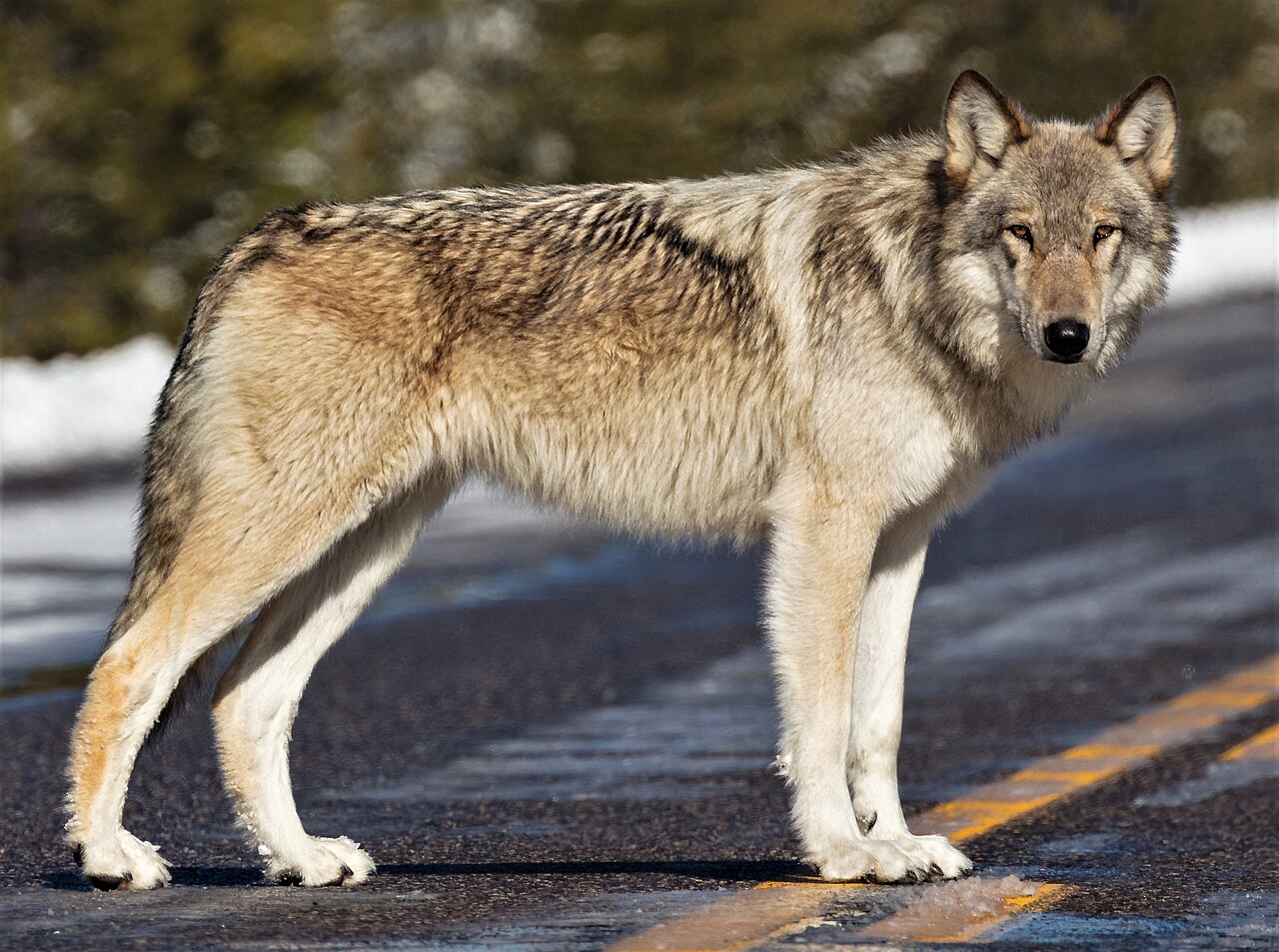
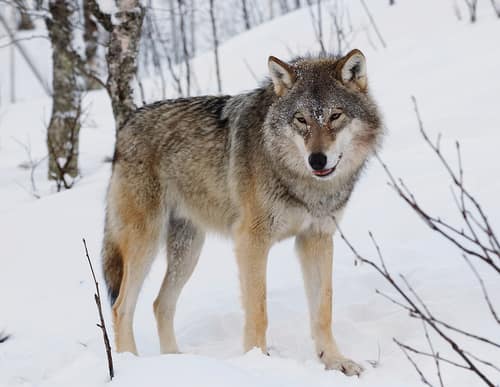
Look for an exceptionally large canine profile, broad snout, and coat colors ranging from grizzled gray and black to near-white.
What to do
Never approach, feed, or corner a wolf; back away slowly without running if one approaches you.
What to notice
Identified by their massive tracks, deep howling, and remote wilderness habitats.
Support conservation
Report sightings to local wildlife agencies and support non-lethal deterrent measures to foster coexistence.
Responsible observation
Keep Distance: Maintain a distance of at least 100 yards (90 meters) if encountered in the wild.
Secure Food: Use bear-proof canisters and secure all attractants when camping in wolf territory.
Leash Pets: Keep domestic dogs on a leash, as wolves view them as territorial intruders.