
Invertebrate
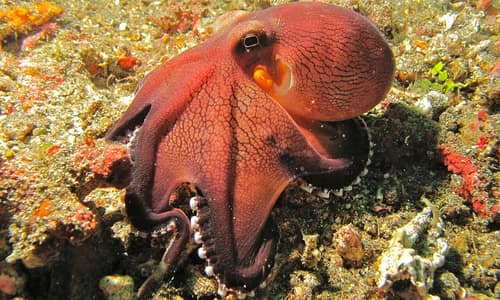
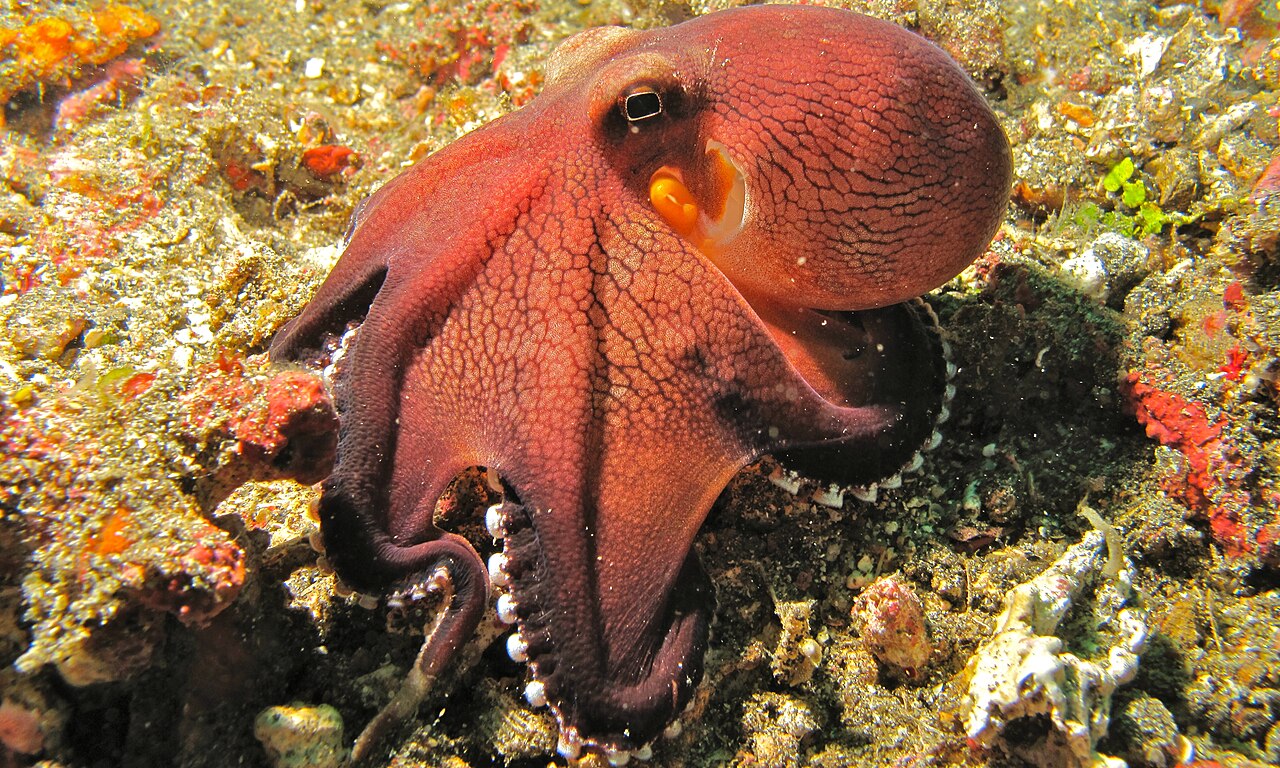
Coconut Octopus
Amphioctopus marginatusAlso known as Veined Octopus
Coconut octopuses inhabit sandy benthic environments across the tropical Indo-Pacific, where natural cover is notoriously scarce. To protect themselves, these clever invertebrates gather discarded coconut husks or bivalve shells, stacking and carrying them along the seafloor using a specialized stilt-like bipedal walk. When threatened, they pull the shell halves together around their body to form a neat, impenetrable armored sphere.
Tool UserIntelligentMarine
—observations
—countries
—peak records
Least ConcernConservation statusIUCN Red List categoriesLCNTVUENCREWEXLeast ConcernRed List categories, explained →
Diet & preyCrabs, Shrimp, Clams
Predators
- Sharks
- Moray Eels
- Large Groupers
ThreatsMarine pollution, coastal habitat destruction, and climate change
HabitatsShallow tropical waters, sandy substrates, and muddy seafloors
Life span1–2 years
Classification
- OrderOctopoda
- FamilyOctopodidae
- GenusAmphioctopus
- SpeciesAmphioctopus marginatus
Range data is not available yet.
Interaction riskLow
- Low
- Moderate
- High
- Very high
- Why interaction risk is low
- Safe to observe from a respectful distance while diving or snorkeling.
Responsible observation
- Watch from Above: Maintain neutral buoyancy and float quietly to watch shell-gathering behavior without causing disturbance.
- Avoid Touching: Direct handling stresses the octopus and causes it to abandon its hard-won shell armor.
- Look for Shells: Scan open sandy flats for half-buried coconut husks or clam shells moving unnaturally across the sea floor.
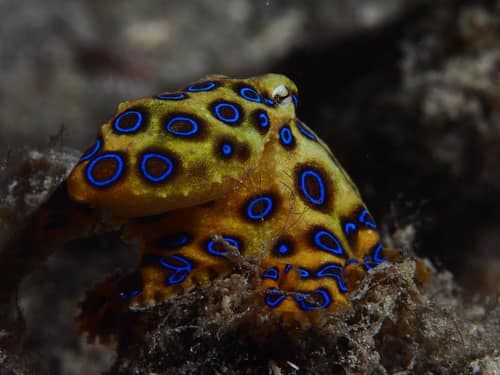
Venomous Kin "Greater blue-ringed octopus (Hapalochlaena lunulata)" by krokodiver is licensed under CC BY-SA 2.0. To view a copy of this license, visit https://creativecommons.org/licenses/by-sa/2.0/. · cc-by-sa Image unavailable
Benthic Neighbor 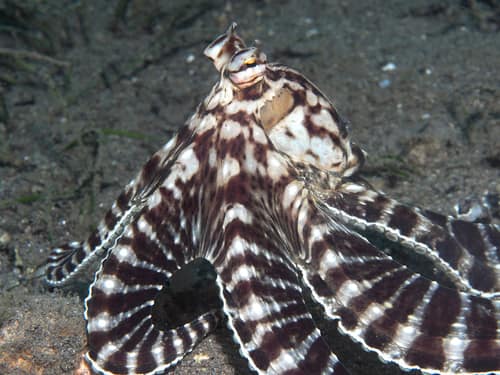
Clever Relative "Mimic octopus (Thaumoctopus mimicus)" by krokodiver is licensed under CC BY-SA 2.0. To view a copy of this license, visit https://creativecommons.org/licenses/by-sa/2.0/. · cc-by-sa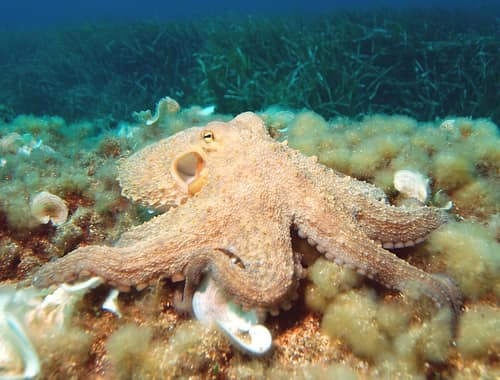
Family Member albert kok / CC BY-SA 3.0 · cc-by-sa
Keep collecting in Fauna
Found in Collections
Species set Pro
Shore Life
Coconut Octopus is found in this collection. Identify it in Fauna to fill this slot and continue your progress.
Unlock to track progress
Help improve the field guideSomething wrong?
Checking your Fauna account…Report a name, category, or profile issue for review.