
Invertebrate
Bear Paw Clam
Hippopus hippopusAlso known as Horse Hoof Clam, Strawberry Clam
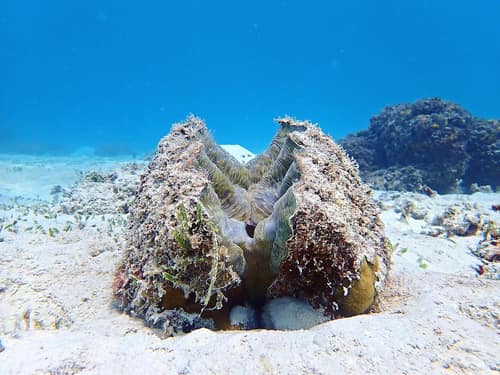
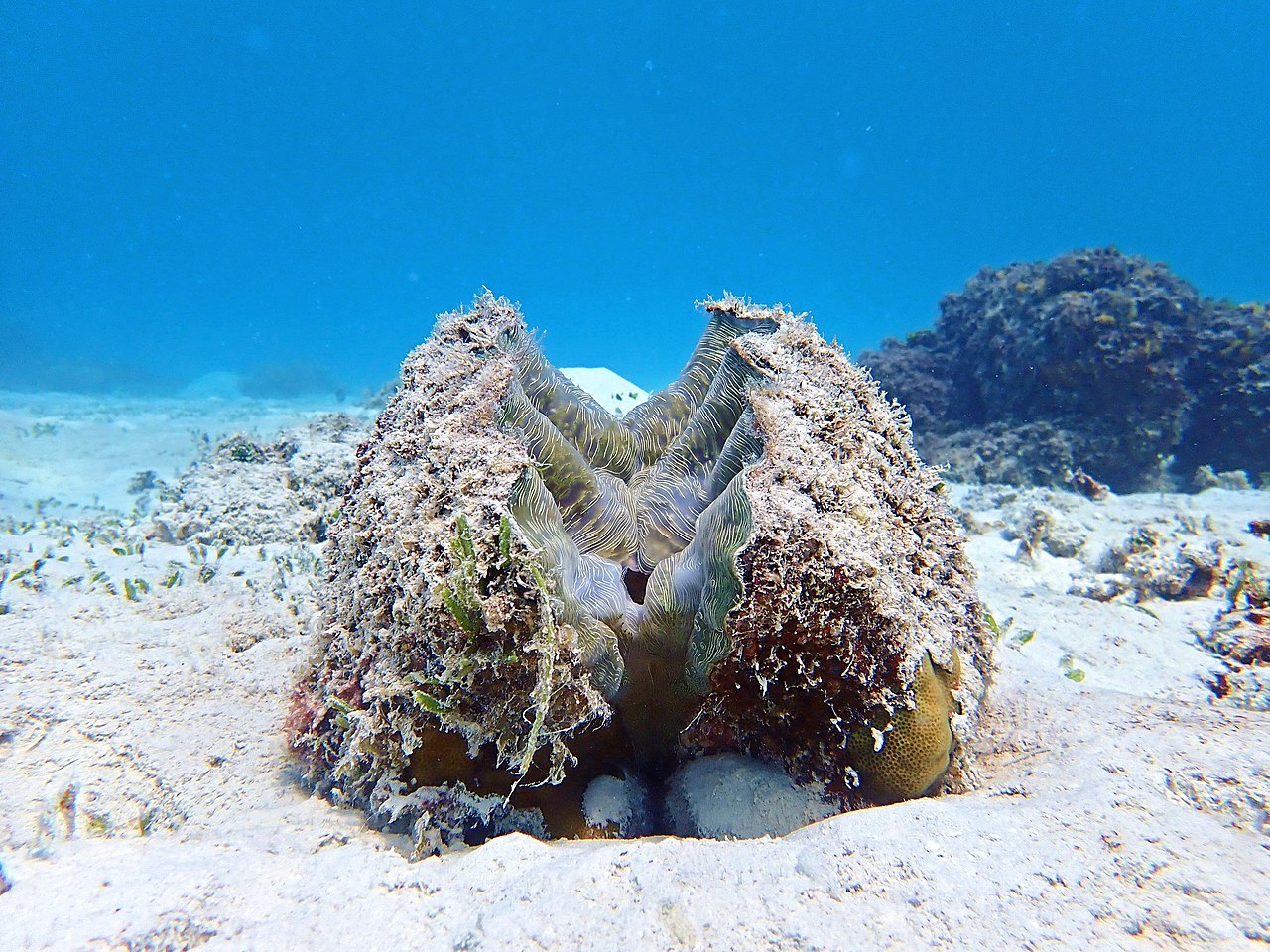
Bear paw clams rest unattached on shallow reef substrates, held securely in place by their sheer weight and heavy, fluted shells. Their undulating mantles house photosynthetic zooxanthellae algae that provide nutrients in exchange for sunlight and sheltered habitat. Unlike true giant clams, this species can fully close its interlocking zigzag valves when disturbed or exposed at extreme low tide.
Reef DwellerBivalveFilter Feeder
—observations
—countries
—peak records
VulnerableConservation statusIUCN Red List categoriesLCNTVUENCREWEXVulnerableRed List categories, explained →
Diet & preyPhytoplankton, Zooplankton, Suspended organic detritus
Predators
- Titan triggerfish
- Giant triton
- Reef octopus
ThreatsOverharvesting for meat and decorative shells, reef degradation
HabitatsShallow coral reefs, seagrass beds, and sandy reef flats
Life span30–50 years
Classification
- FamilyCardiidae
- SpeciesHippopus hippopus
Range data is not available yet.
Interaction riskLow
- Low
- Moderate
- High
- Very high
- Why interaction risk is low
- Safe to observe at a normal distance.
- What to notice
- Look for heavy, strongly ribbed, triangular valves with reddish blotches and a dull green or brown mantle held flush within the shell margin.
- Support conservation
- Observe entirely hands-off while snorkeling or diving, and never purchase wild giant clam shells or meat.
Responsible observation
- Maintain Buoyancy: Keep fins well above the substrate to avoid kicking sand onto the clam's sensitive mantle.
- Do Not Touch: Avoid poking the exposed mantle or attempting to shift the heavy shell, which stresses the animal.
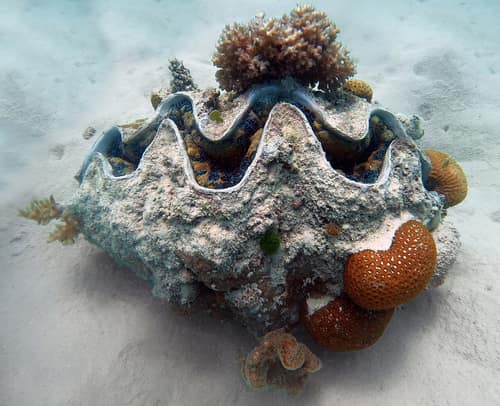
Reef Companion Charles J. Sharp / CC BY-SA 4.0 · cc-by-sa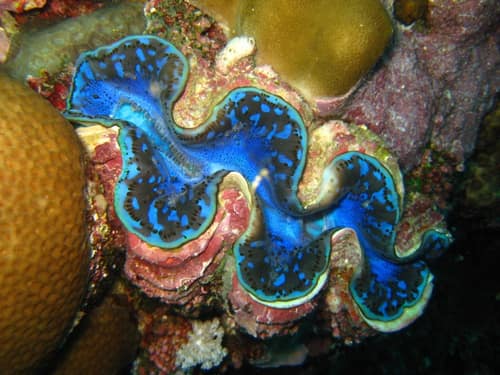
Reef Companion (c) Micha Baum, some rights reserved (CC BY-SA), uploaded by Micha Baum · cc-by-sa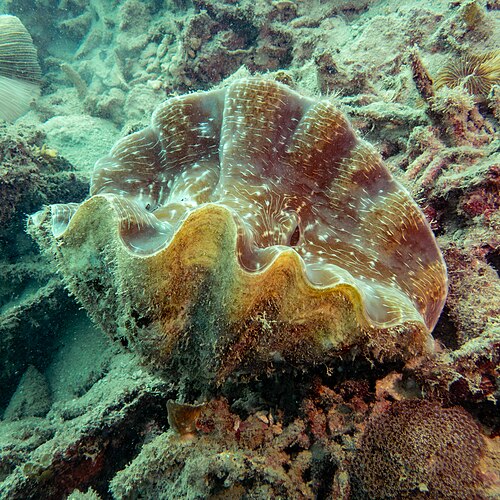
Close Relative (c) Pierre Pericard, some rights reserved (CC BY) / CC BY 4.0 · cc-by
Help improve the field guideSomething wrong?
Checking your Fauna account…Report a name, category, or profile issue for review.