
Fungus
Pacific Golden Chanterelle
Cantharellus formosusAlso known as Pacific Chanterelle, Golden Chanterelle
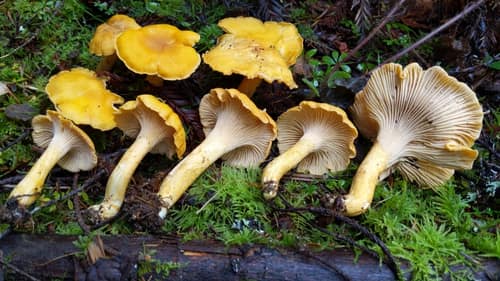
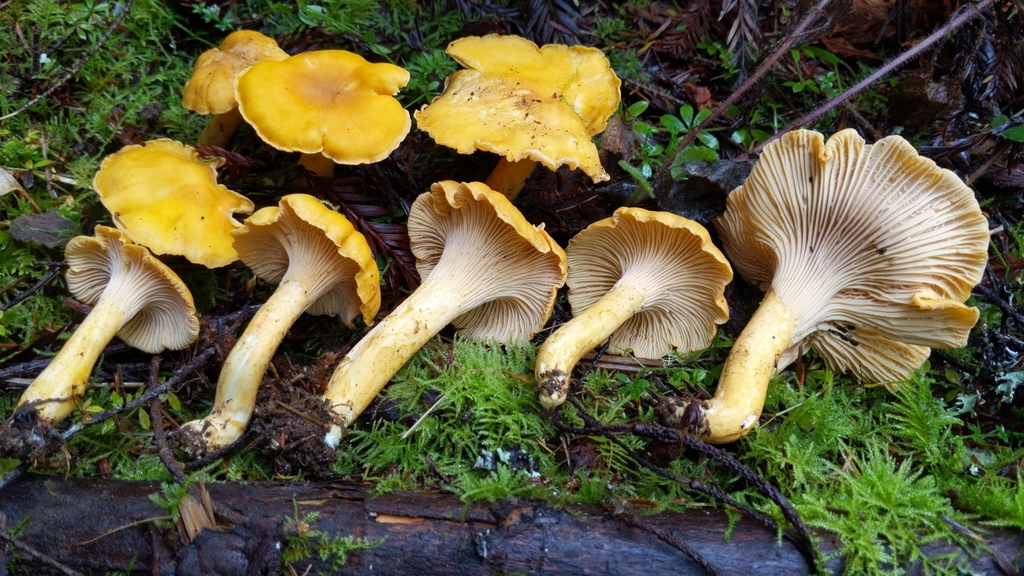
Pacific Golden Chanterelles form vital mycorrhizal partnerships with conifers across the Pacific Northwest, exchanging soil nutrients for tree sugars beneath Douglas-firs and hemlocks. Their warm orange-yellow caps feature wavy margins and blunt, fork-branched ridges on the underside that run down the tapering stem. These fungi often flush in abundance after autumn rains, persisting in damp, mossy forest floors for several weeks.
FungusForest DwellerMycorrhizal
—observations
—countries
—peak records
Least ConcernConservation statusIUCN Red List categoriesLCNTVUENCREWEXLeast ConcernRed List categories, explained →
Diet & preyMycorrhizal
Predators
- Banana Slugs
- Fungus Gnats
- Squirrels
ThreatsDeforestation, clear-cutting, and severe soil compaction
HabitatsConiferous forests, particularly Douglas-fir and Western hemlock stands
Life spanFruiting body lasts 2–4 weeks; underlying mycelium persists for decades
Classification
- FamilyHydnaceae
- SpeciesCantharellus formosus
Range data is not available yet.
Interaction riskLow
- Low
- Moderate
- High
- Very high
- Why interaction risk is low
- Many wild mushrooms have toxic look-alikes; never eat wild fungi based on app identification alone.
Responsible observation
- Gills versus Ridges: Examine the underside to confirm thick, blunt, net-like ridges rather than thin, papery true gills.
- Ecosystem Role: Leave fruiting bodies intact to allow spore dispersal throughout the surrounding coniferous habitat.
- Habitat Spotting: Look among deep moss layers and damp leaf litter near Douglas-fir and hemlock root zones.
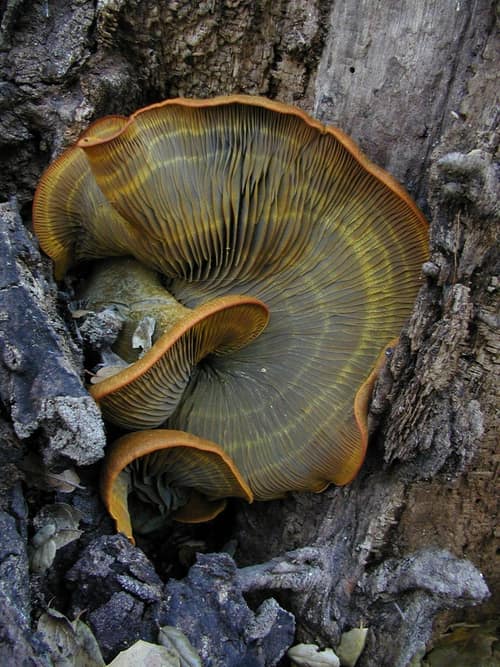
Toxic Look-Alike (c) Nathan Wilson, some rights reserved (CC BY-SA) · cc-by-sa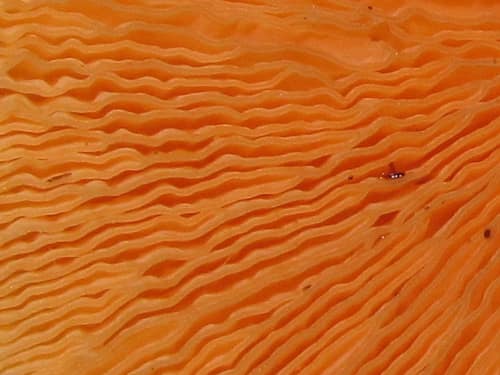
Look-Alike (c) Tim Sage, some rights reserved (CC BY-SA), uploaded by Tim Sage · cc-by-sa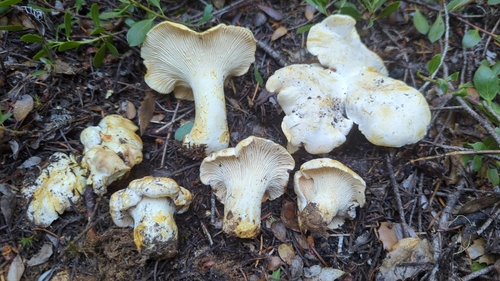
Close Relative (c) Alan Rockefeller, some rights reserved (CC BY) · cc-by
Help improve the field guideSomething wrong?
Checking your Fauna account…Report a name, category, or profile issue for review.