
Plant
Pellaea mucronata
Pellaea mucronataAlso known as Bird's-Foot Fern, Birdfoot Cliffbrake
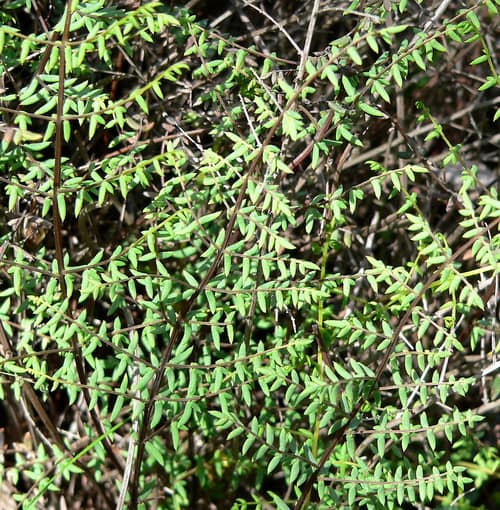
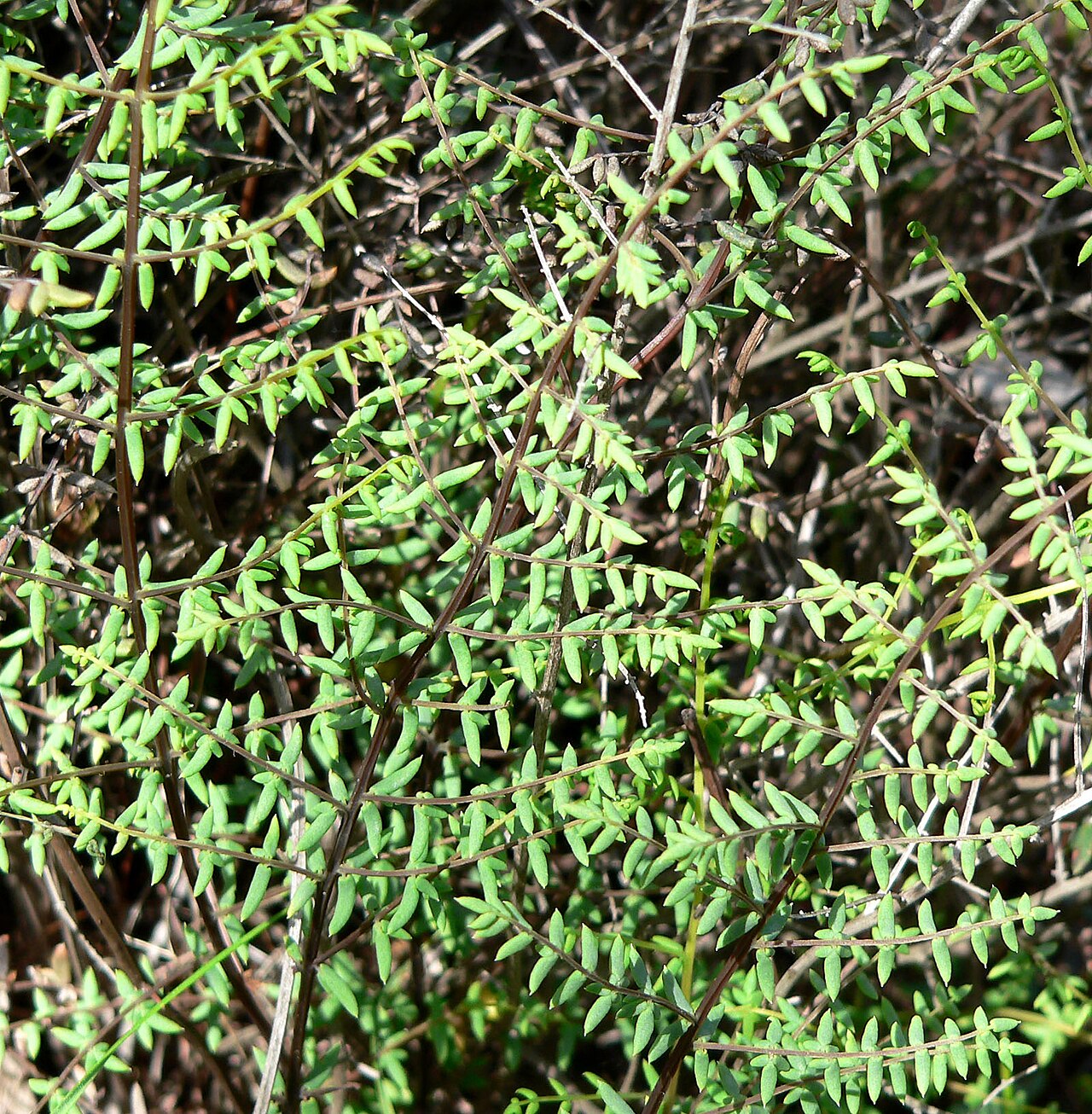
Bird's foot cliffbrake thrives in dry, rocky terrain where few other ferns dare to grow, anchoring its creeping rhizomes deep into granite crevices and chaparral cliffs. Its distinctive fronds feature small, bluish-green leaflets clustered in groups of three to five, strongly resembling miniature bird tracks. During intense summer droughts, the fronds curl tightly and turn brittle to conserve moisture, only to revive and unfurl with the arrival of winter rains.
FernDrought-TolerantRock Dweller
—observations
—countries
—peak records
Not EvaluatedConservation statusIUCN Red List categoriesLCNTVUENCREWEXNot Evaluated — not placed on the risk ladderRed List categories, explained →
Diet & preyAutotrophic (photosynthesis)
Predators
- Browsing Deer
- Herbivorous Insects
ThreatsSevere wildfire regimes, habitat disruption from urban sprawl, and rock-climbing traffic
HabitatsChaparral slopes, dry rocky cliffs, oak woodlands, and desert canyons
Life spanPerennial (often exceeding 10 years via hardy rhizomes)
Classification
- FamilyPteridaceae
- SpeciesPellaea mucronata
Range data is not available yet.
Interaction riskLow
- Low
- Moderate
- High
- Very high
- Why interaction risk is low
- Safe to observe at a normal distance.
Responsible observation
- Observation: Search dry cliff crevices and exposed talus slopes where few other ferns can survive.
- Seasonal Timing: Visit following winter rains to see the fronds fully hydrated and open.

Frequent Companion (c) Ken-ichi Ueda, some rights reserved (CC BY) · cc-by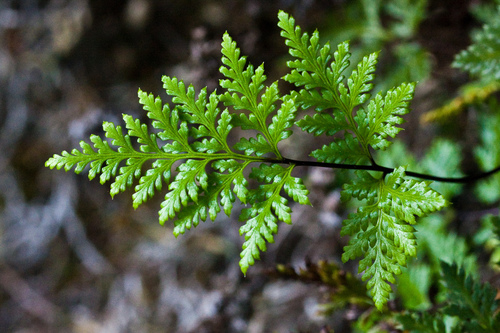
Frequent Companion (c) Ken-ichi Ueda, some rights reserved (CC BY) · cc-by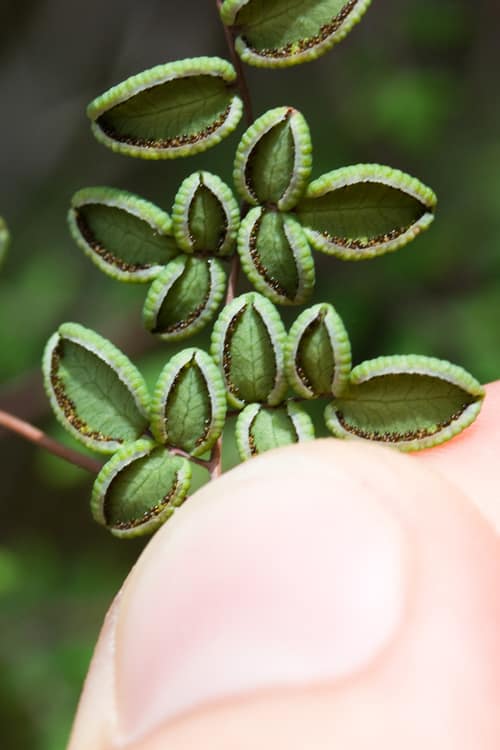
Close Relative (c) Ken-ichi Ueda, some rights reserved (CC BY) · cc-by
Help improve the field guideSomething wrong?
Checking your Fauna account…Report a name, category, or profile issue for review.