
Plant
Common Bracken
Pteridium aquilinumAlso known as Bracken, Brake, Pasture Brake, Eagle Fern
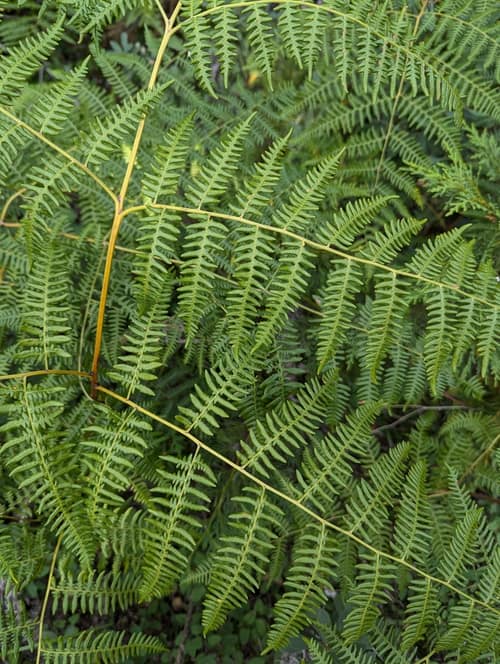
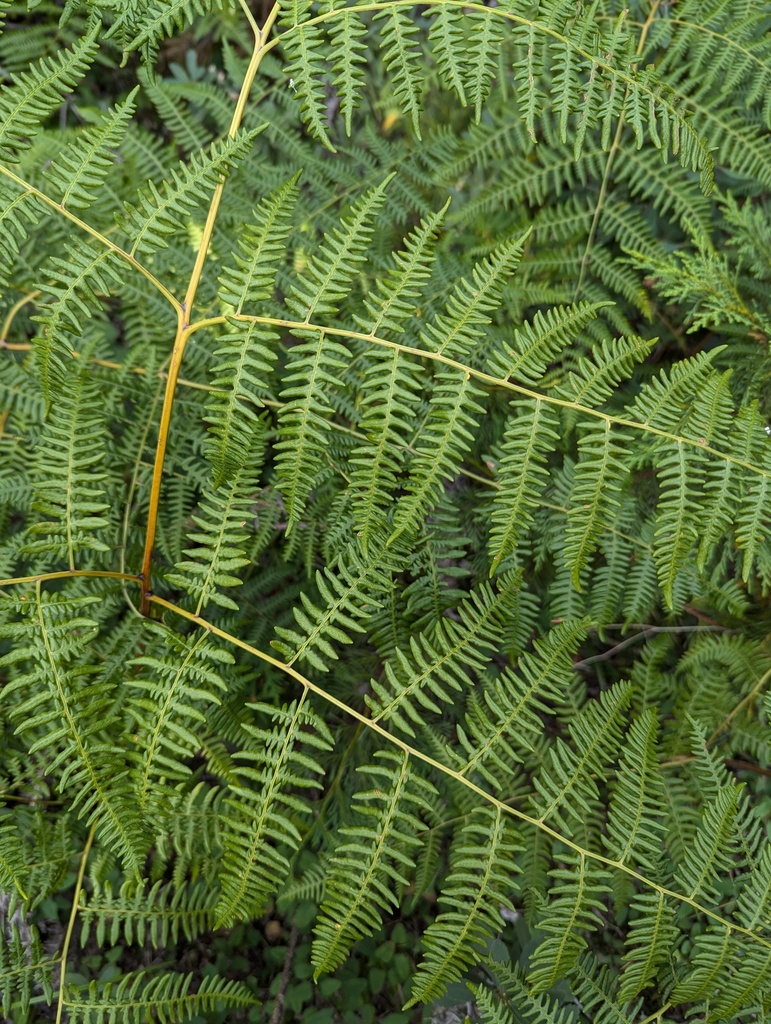
Common bracken unfurls massive, triangular fronds each spring from an extensive underground network of deep rhizomes. These aggressive ferns colonize acidic soils, forming dense, monotypic thickets that shade out competing vegetation and persist as copper-colored dieback through winter. Their fronds release biochemical compounds that suppress rival plant germination, reshaping entire upland landscapes.
FernCosmopolitanPerennial
—observations
—countries
—peak records
Least ConcernConservation statusIUCN Red List categoriesLCNTVUENCREWEXLeast ConcernRed List categories, explained →
Diet & preySunlight, Water, Soil Minerals
Predators
- Bracken Moth Caterpillars
- Sawfly Larvae
ThreatsHabitat management, mechanical clearing, herbicide application
HabitatsWoodlands, heathlands, moorlands, pastures, disturbed soils
Life spanPerennial (rhizomes live for decades)
Classification
- OrderPolypodiales
- FamilyDennstaedtiaceae
- GenusPteridium
- SpeciesPteridium aquilinum
Range data is not available yet.
Interaction riskHigh
- Low
- Moderate
- High
- Very high
- Why interaction risk is high
- All parts contain dangerous carcinogenic compounds; do not consume or feed to livestock.
- Why it is dangerous
- Contains ptaquiloside, a potent carcinogenic glycoside that causes severe gastrointestinal damage and tumors.
- How to recognize a risky encounter
- Look for stiff, triangular fronds growing individually from underground runners rather than tufted clumps.
- What to do
- Do not consume any part of the plant and avoid inhaling dust or spores when clearing fronds.
Responsible observation
- Identification: Search for coarse, broadly triangular fronds branching three times from a single stalk.
- Seasonal Dynamics: Observe green summer fields turn to golden copper in late autumn.
- Spore Exposure: Avoid inhaling dense spore clouds released from mature late-summer fronds.
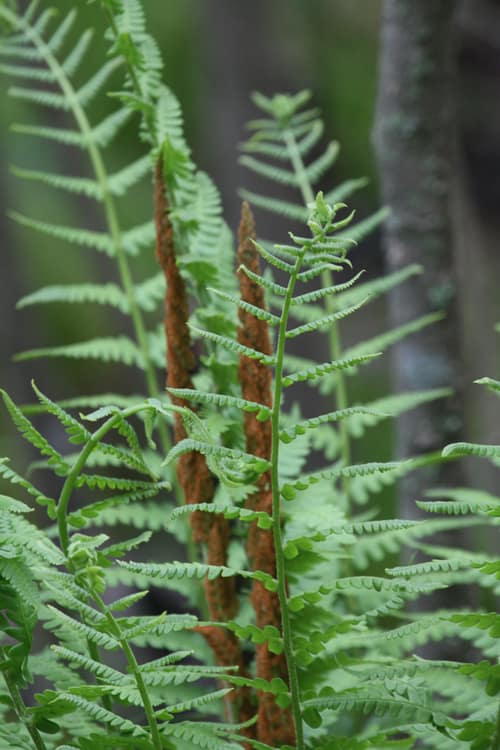
Co-occurring Fern (c) Michael Newlon, some rights reserved (CC BY), uploaded by Michael Newlon · cc-by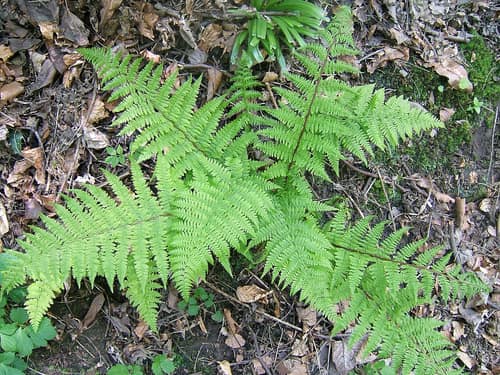
Co-occurring Fern No machine-readable author provided. MPF assumed (based on copyright claims). / CC BY 2.5 · cc-by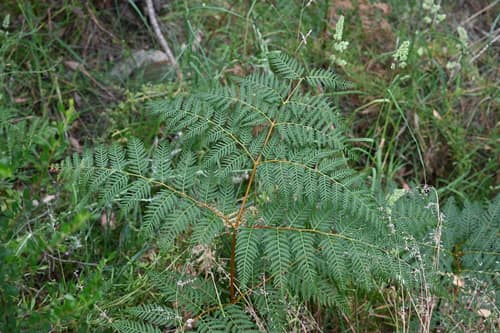
Close Relative (c) jraus, some rights reserved (CC BY-SA) · cc-by-sa
Keep collecting in Fauna
Found in Collections
Ecosystem chain Pro
Secret Garden
Common Bracken is found in this collection. Identify it in Fauna to fill this slot and continue your progress.
Unlock to track progress
Help improve the field guideSomething wrong?
Checking your Fauna account…Report a name, category, or profile issue for review.