
Fungus
Golden Chanterelle
Cantharellus cibariusAlso known as Girolle, Chanterelle, Golden Girolle
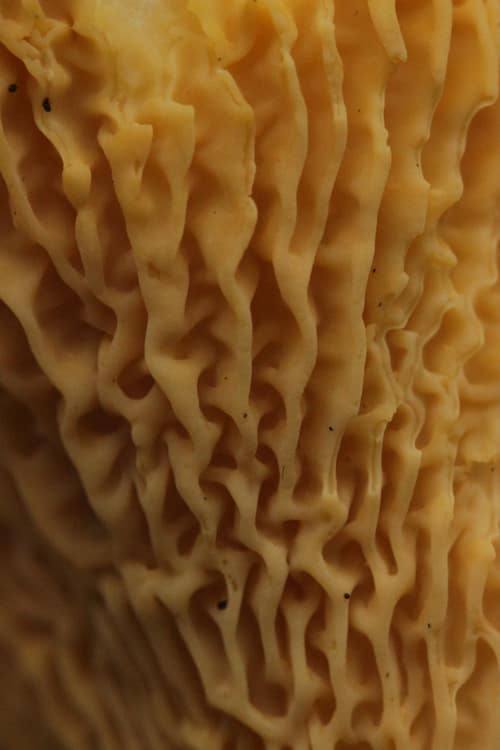
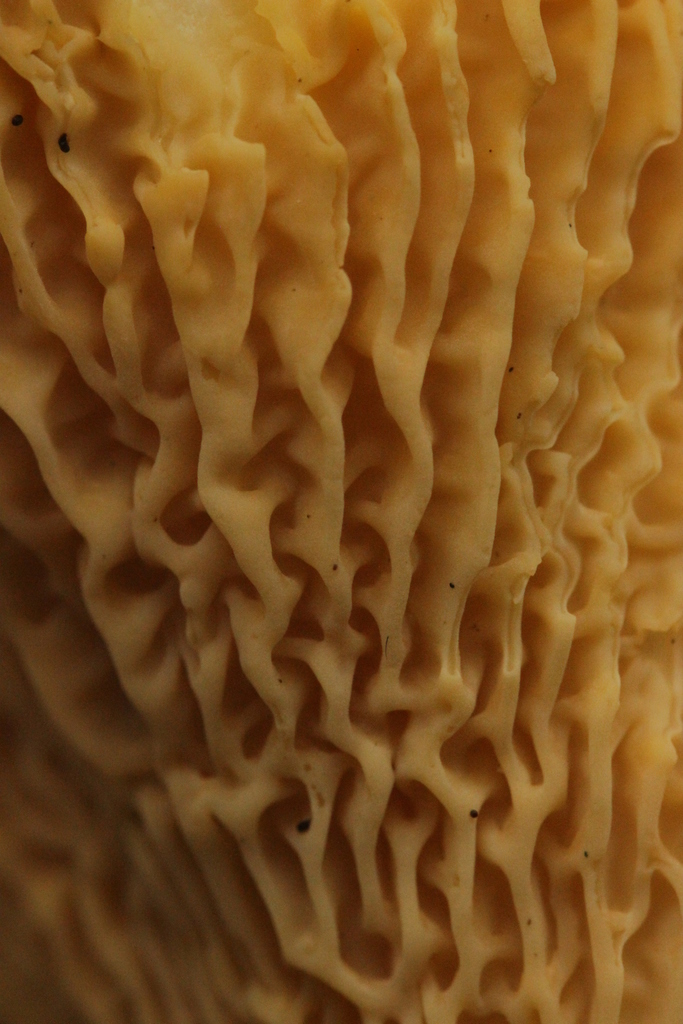
Golden chanterelles emerge from woodland soil during moist summer and autumn months, forming vital mycorrhizal partnerships with the roots of oaks, beeches, and conifers. Their bright egg-yolk yellow caps feature wavy, funnel-shaped margins supported by thick, decurrent ridges that fork repeatedly down the stem. A faint aroma reminiscent of ripe apricots often fills the air around patches growing among damp forest mosses.
MycorrhizalForestFungus
—observations
—countries
—peak records
Least ConcernConservation statusIUCN Red List categoriesLCNTVUENCREWEXLeast ConcernRed List categories, explained →
Diet & preyEctomycorrhizal
Predators
- Slugs
- Fungus Gnat Larvae
- Squirrels
ThreatsDeforestation and soil compaction
HabitatsDeciduous and coniferous woodlands
Life spanFruiting body lasts 2–4 weeks; underground mycelium lives for decades
Classification
- OrderCantharellales
- FamilyHydnaceae
- GenusCantharellus
- SpeciesCantharellus cibarius
Range data is not available yet.
Interaction riskLow
- Low
- Moderate
- High
- Very high
- Why interaction risk is low
- Many edible mushrooms have toxic look-alikes; never eat wild fungi based on app identification alone.
Responsible observation
- Observing Ridges: Examine the underside of the cap to distinguish blunt decurrent ridges from thin knife-like true gills.
- Habitat Context: Search around the base of mature hardwoods or conifers where damp moss carpets the ground.
- Spore Prints: Place a cap on white paper to produce a pale yellow to cream colored spore print.
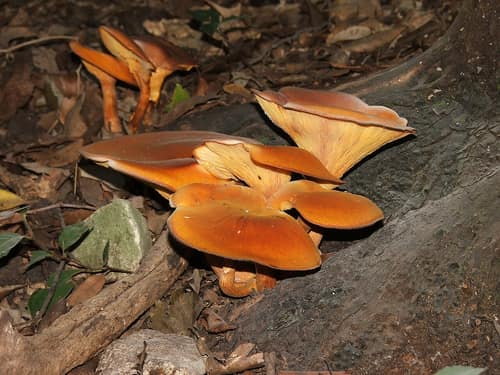
Toxic Look-Alike Antonio Abbatiello / Public domain · cc0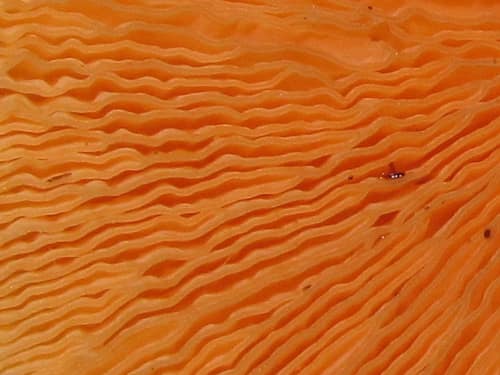
Look-Alike (c) Tim Sage, some rights reserved (CC BY-SA), uploaded by Tim Sage · cc-by-sa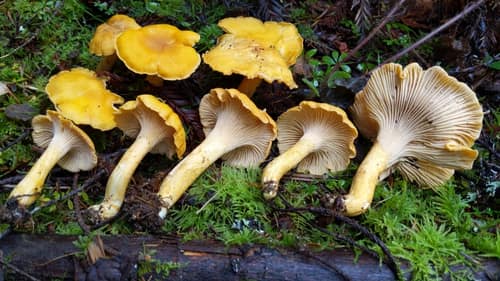
Close Relative (c) Alan Rockefeller, some rights reserved (CC BY), uploaded by Alan Rockefeller · cc-by
Close Relative Eric Smith (esmith) / CC BY-SA 3.0 · cc-by-sa
Keep collecting in Fauna
Found in Collections
Species set Pro
Fungi Forager
Golden Chanterelle is found in this collection. Identify it in Fauna to fill this slot and continue your progress.
Unlock to track progress
Help improve the field guideSomething wrong?
Checking your Fauna account…Report a name, category, or profile issue for review.