
Bird
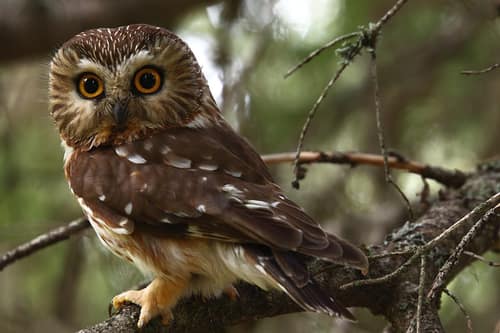
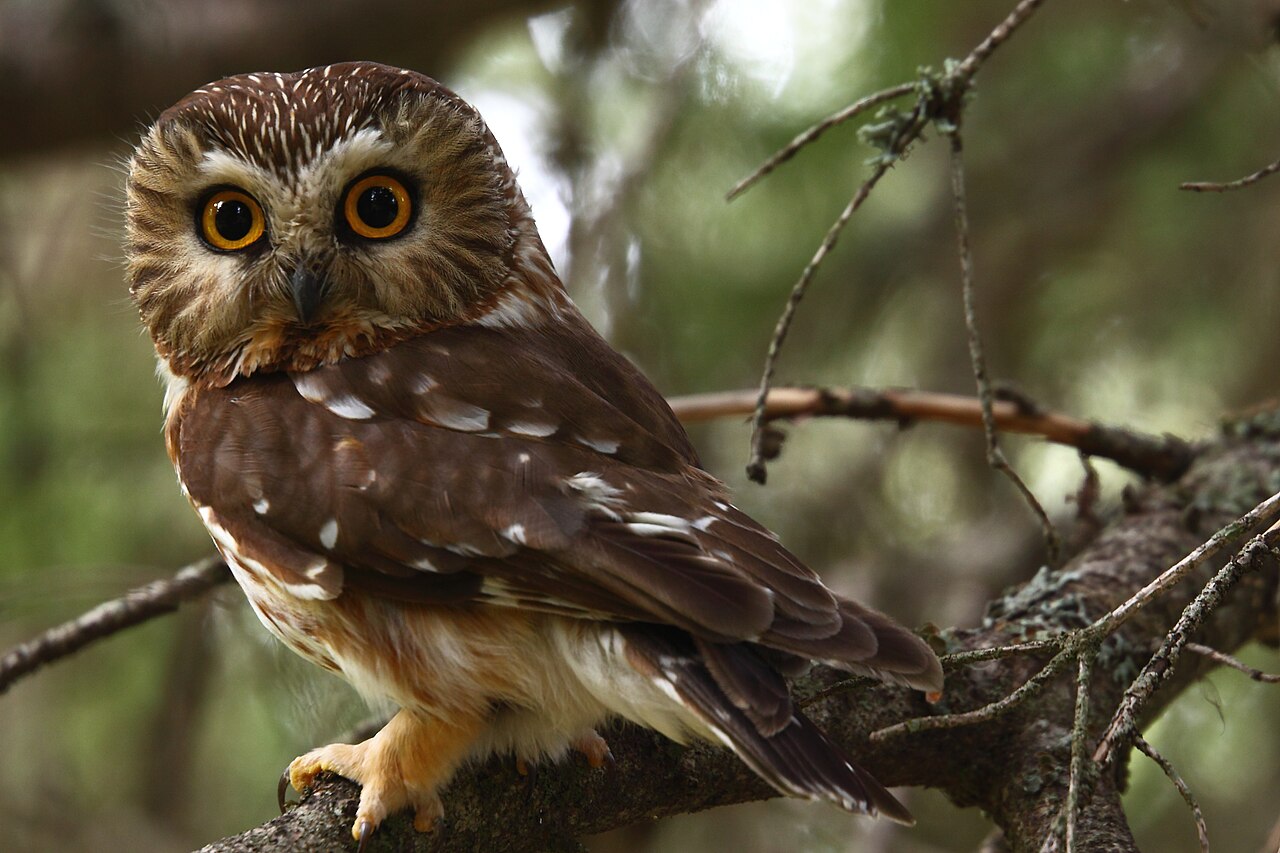
Northern Saw-whet Owl
Aegolius acadicusAlso known as Saw-whet Owl, Acadian Owl
Northern saw-whet owls spend daylight hours perched motionless against tree trunks in dense conifer thickets, relying on mottled brown-and-white plumage to remain unseen by crows and larger raptors. After nightfall, these pint-sized hunters glide through the understory on silent wings, employing acute directional hearing to strike small rodents beneath snow or leaf litter. During late winter and spring, males broadcast a rapid, mechanical series of whistling toots that early European settlers likened to the rasping sound of a saw blade sharpened against a whetstone.
NocturnalCarnivoreWoodland
—observations
—countries
—peak records
Least ConcernConservation statusIUCN Red List categoriesLCNTVUENCREWEXLeast ConcernRed List categories, explained →
Diet & preyDeer mice, Meadow voles, Shrews
Predators
- Barred Owl
- Great Horned Owl
- Cooper's Hawk
ThreatsLoss of mature snags for nesting, forest fragmentation, collisions with vehicles and windows
HabitatsDense coniferous forests, mixed woodlands, cedar swamps, riparian thickets
Life span5–7 years in the wild
Classification
- FamilyStrigidae
- SpeciesAegolius acadicus
Range data is not available yet.
Interaction riskLow
- Low
- Moderate
- High
- Very high
- Why interaction risk is low
- Harmless to humans; observe quietly from a respectful distance to avoid disturbing daytime roosts.
Responsible observation
- Daytime Spotting: Scan dense, young evergreen groves at eye level for motionless silhouettes tucked tight to the trunk.
- Minimizing Disturbance: Maintain generous distance and avoid lingering, as flushing forces the owl to waste precious energy.
- Nocturnal Listening: Step outside on calm, clear nights in early spring to detect the steady whistling calls of courting males.
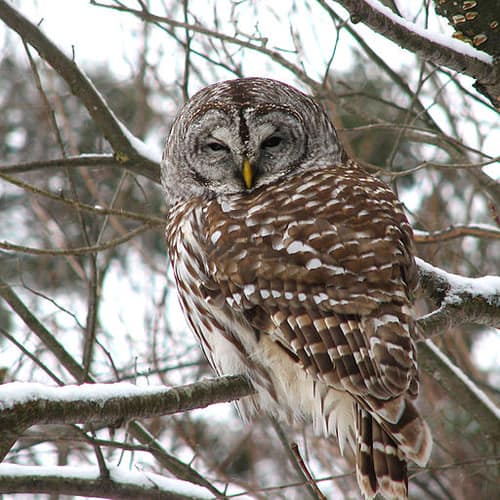
Predator U.S. Fish and Wildlife Service Headquarters / Public domain · cc0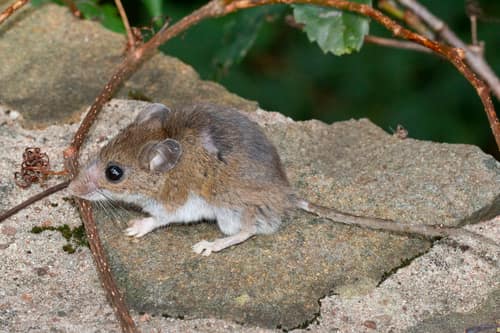
Prey (c) Kristof Zyskowski, some rights reserved (CC BY), uploaded by Kristof Zyskowski · cc-by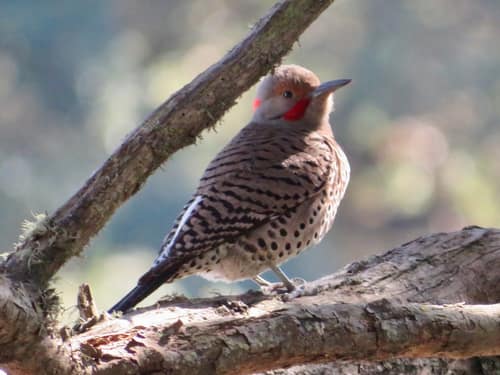
Cavity Provider (c) Jon Robson, some rights reserved (CC BY-SA), uploaded by Jon Robson · cc-by-sa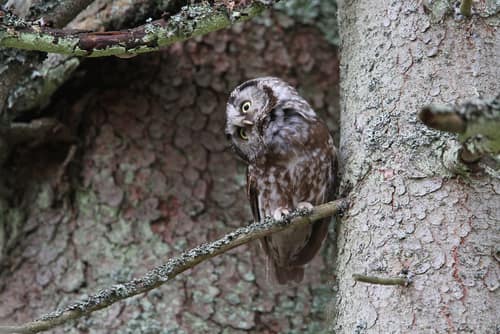
Close Relative (c) Christoph Moning, some rights reserved (CC BY), uploaded by Christoph Moning · cc-by
Help improve the field guideSomething wrong?
Checking your Fauna account…Report a name, category, or profile issue for review.