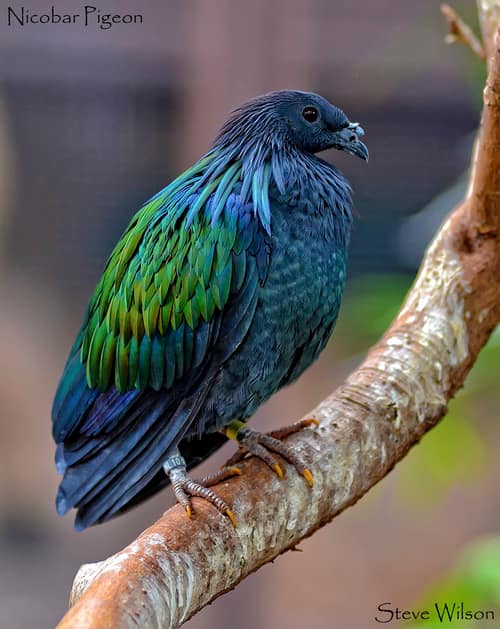
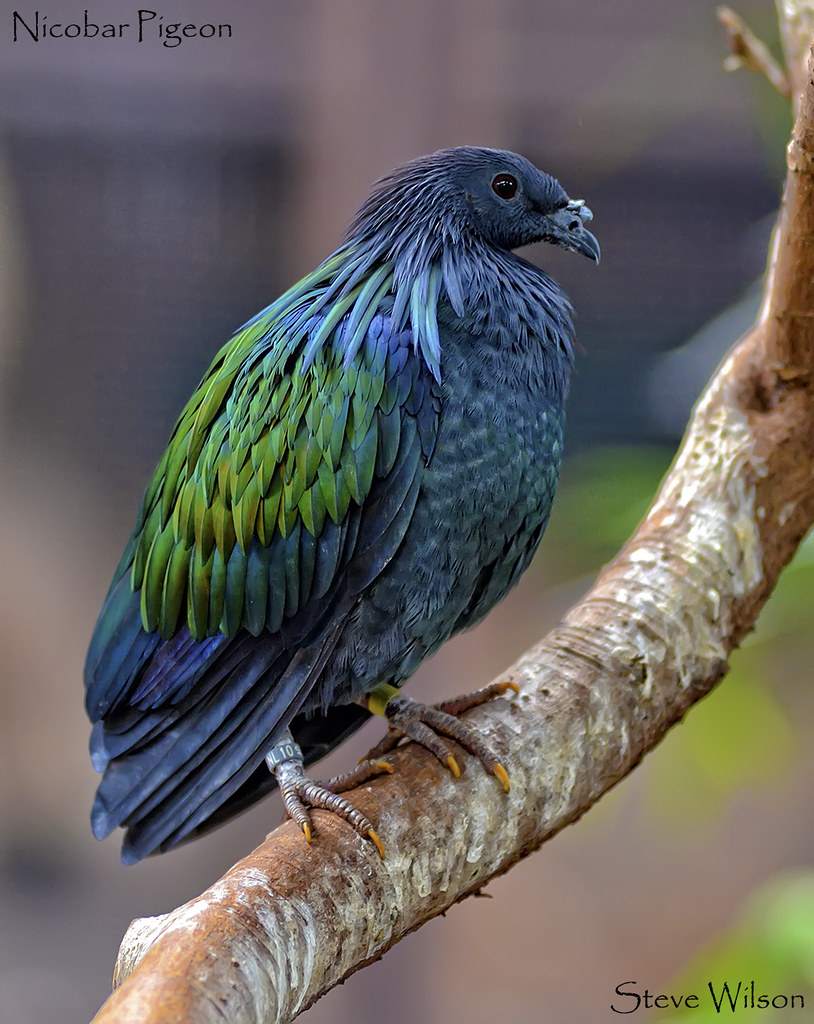
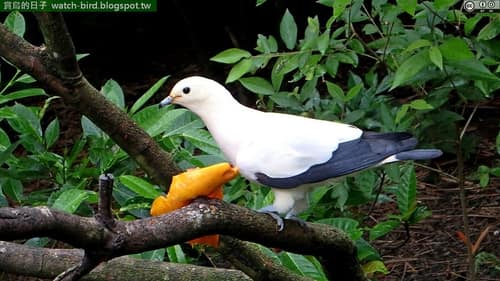
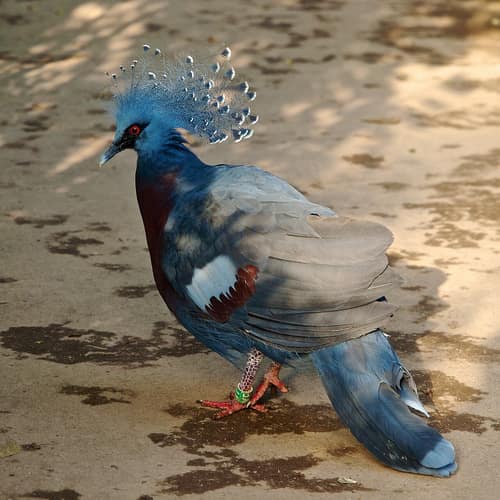
Also known as Nicobar Dove, Hackled Pigeon, White-tailed Pigeon
Nicobar pigeons roam between isolated offshore islets in nomadic flocks, commuting across expanses of open sea to forage on forest floors during the day. Their exceptionally muscular gizzards contain swallowed stones that grind through hard-shelled nuts and seeds other frugivores cannot digest. Adult birds roost communally in dense canopies, flashing their bright white tail feathers as navigational beacons for flockmates flying through dim understory light.
ThreatsTrapping for the illegal pet and meat trades, habitat clearance, and predation by invasive mammals
HabitatsDense coastal lowland forests, mangroves, and uninhabited offshore islets
Life span10–15 years in the wild; up to 20 years in captivity
Classification
OrderColumbiformes
FamilyColumbidae
GenusCaloenas
SpeciesCaloenas nicobarica
Range & activity
Range data is not available yet.
Safe observation
Interaction riskLow
Low
Moderate
High
Very high
Why interaction risk is low
Safe to observe at a normal distance.
What to notice
Look for shimmering metallic green and copper plumage, long elongated neck hackles, and a stark white tail on a heavy ground-dwelling pigeon.
Support conservation
Maintain a respectful distance of at least 15 meters; never approach nesting colonies or disrupt active feeding parties on the forest floor.
Responsible observation
Island Biosecurity: Ensure boots and gear are thoroughly cleaned before visiting sensitive breeding islets to prevent introducing invasive predators or weed seeds.
Observation Distance: Stay quiet and low when encountering foraging groups on the forest floor, as sudden movement flushes birds into flight.
Breeding Season Courtesy: Avoid dense coastal nesting colonies between January and March to prevent disturbing active ground or low-branch stick nests.