
Caribou
Rangifer tarandusAlso known as Reindeer, Barren-ground Caribou, Woodland Caribou
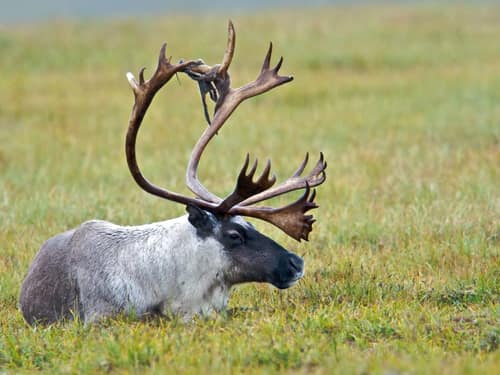
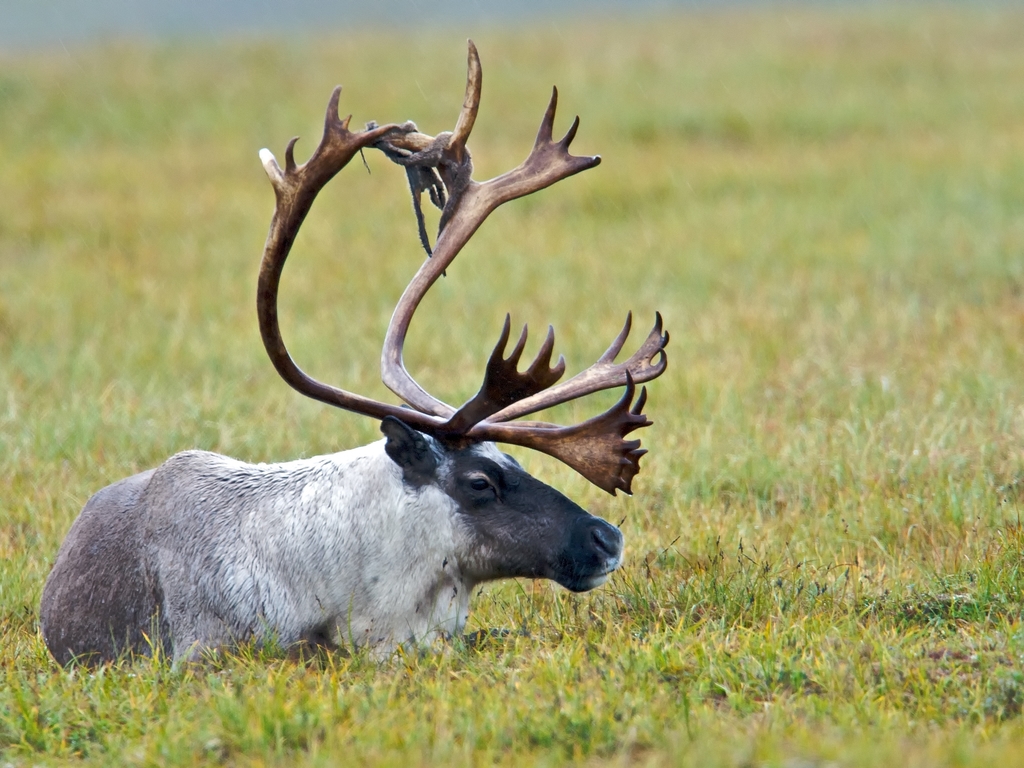
Caribou are uniquely adapted to severe Arctic environments, possessing wide, concave hooves that act as natural snowshoes in deep drifts and paddles when crossing frigid glacial rivers. Both males and females grow sweeping antlers, an uncommon trait among deer that gives cows critical leverage when defending feeding craters in frozen snow. Some barren-ground herds undertake epic annual migrations spanning thousands of kilometers, shaping subarctic ecosystems across the circumpolar north.
- Gray Wolf
- Grizzly Bear
- Wolverine
- OrderArtiodactyla
- FamilyCervidae
- GenusRangifer
- SpeciesRangifer tarandus
Native range in olive; established introduced range in rust.
- Low
- Moderate
- High
- Very high
- Why interaction risk is high
- Large body mass and sharp antlers present blunt-force hazards; observe herds from a respectful distance.
- Why it is dangerous
- Mature bulls during the autumn rut and cows guarding newborn calves can charge with tremendous force, using their weight and sharp tines to strike.
- How to recognize a risky encounter
- Look for wide crescent hooves, brown and white coats with pale neck ruffs, and sprawling, forward-beamed antlers on both sexes.
- What to do
- Never intercept a herd's line of travel; if an animal raises its head, snorts, or shifts stance toward you, back away quietly.
- What to notice
- Look for dense herds grazing across open tundra or sparse boreal spruce-lichen woodlands.
- Support conservation
- Keep domestic dogs leashed and avoid operating drones near herds, as fleeing drains vital energy reserves needed for winter survival.
- Distance: Maintain at least 100 meters of space, particularly during the autumn rut or spring calving season.
- Field Etiquette: Use high-powered optics from road shoulders or designated viewpoints instead of pursuing herds on foot.
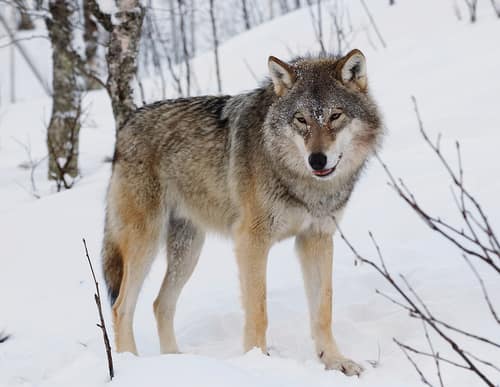
Predator User:Mas3cf / CC BY-SA 4.0 · cc-by-sa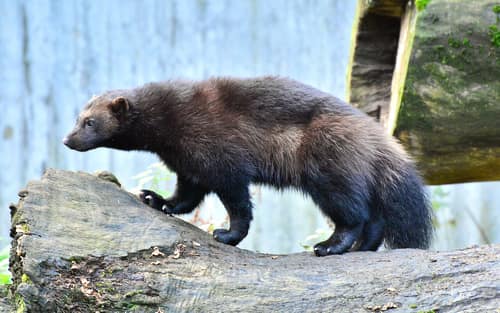
Predator Esquilo / CC BY-SA 3.0 · cc-by-sa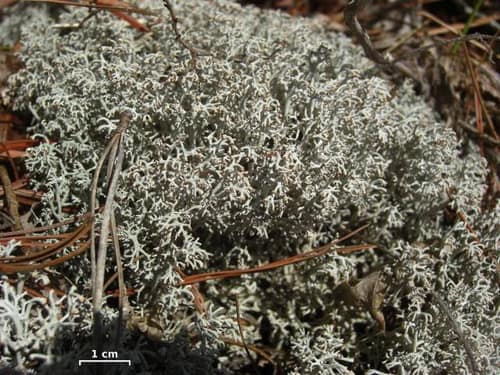
Primary Forage Jason Hollinger / CC BY-SA 3.0 · cc-by-sa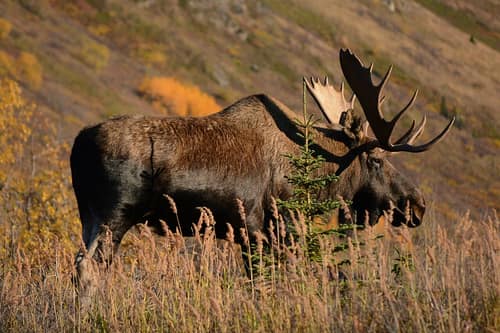
Close Relative Paxson Woelber / CC BY-SA 4.0 · cc-by-sa
Found in Collections
The Forest Floor
Caribou is found in this collection. Identify it in Fauna to fill this slot and continue your progress.
Report a name, category, or profile issue for review.