Also known as Greater One-Horned Rhinoceros, Great Indian Rhinoceros, Asian One-Horned Rhinoceros
Indian rhinoceroses navigate alluvial grasslands and riverine floodplains, spending peak daylight hours wallowing in deep mud or grazing along river margins. Adult males defend overlapping home ranges marked with communal dung heaps called middens, using sharp lower incisors rather than their horns during territorial clashes. Calves stay closely bonded to their mothers for up to four years, following behind tall elephant grass while learning complex foraging trails.
Diet & preyElephant Grass, Saccharum spontaneum, Water Hyacinth
Predators
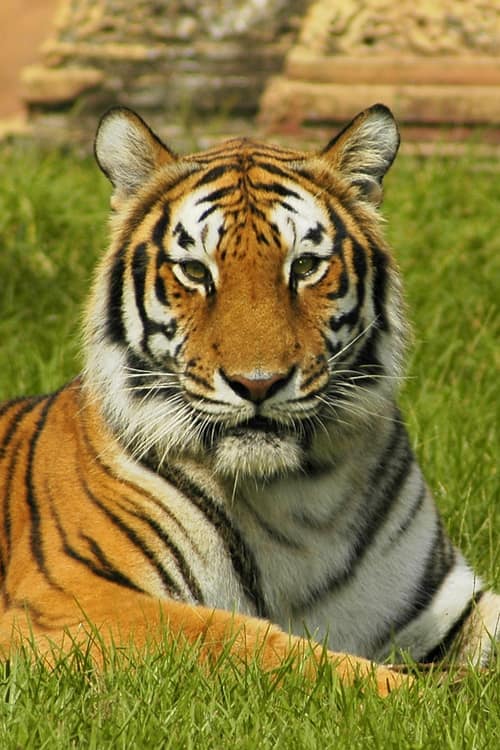
Bengal Tiger
ThreatsPoaching for horn trade, habitat loss and fragmentation, and invasive plant encroachment
HabitatsRiverine grasslands, alluvial plain marshes, and swampy sub-Himalayan woodlands
Life span35–45 years in the wild
Classification
OrderPerissodactyla
FamilyRhinocerotidae
GenusRhinoceros
SpeciesRhinoceros unicornis
Range & activity
Native
Safe observation
Interaction riskHigh
Low
Moderate
High
Very high
Why interaction risk is high
Massive herbivore capable of fatal charges; maintain strict safe distances from vehicles or viewing towers.
Why it is dangerous
Weighing up to two metric tons, this species charges at speeds exceeding 40 km/h and inflicts fatal blunt trauma or gouging wounds using its sharp lower incisors.
How to recognize a risky encounter
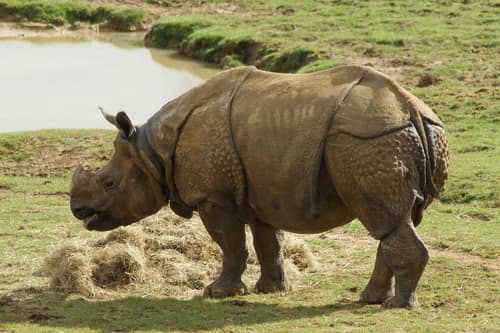
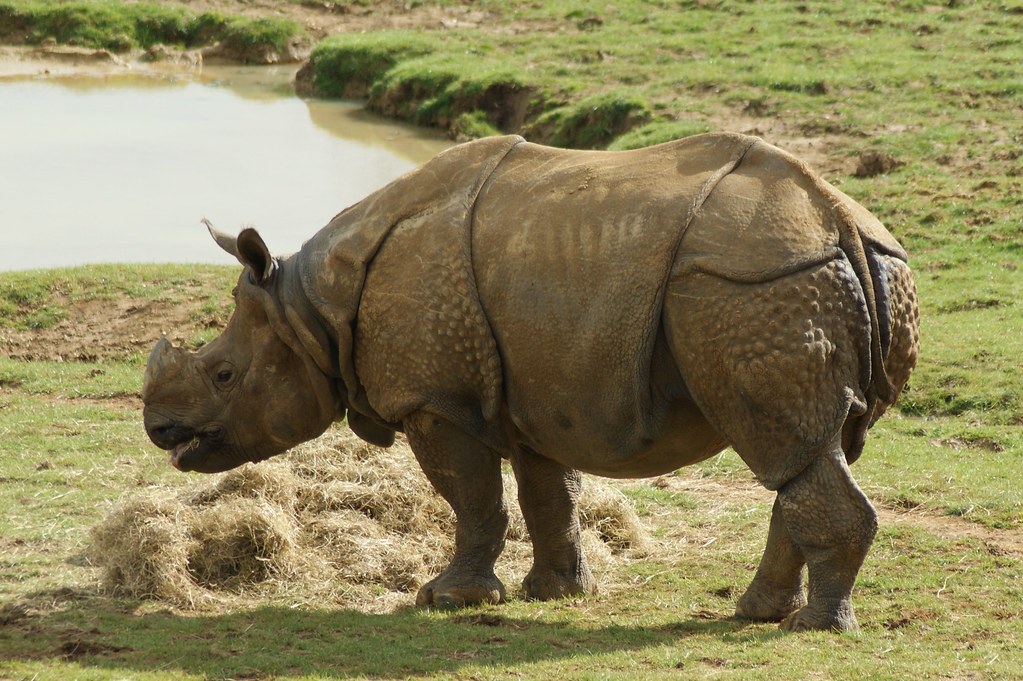
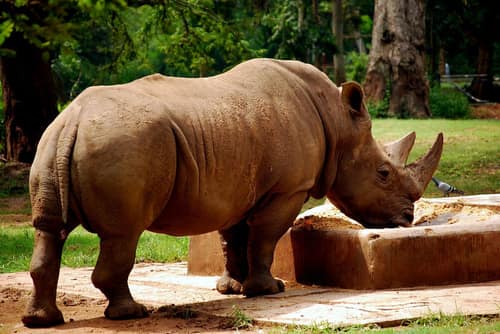
Look for an immense grey body with heavy armor-like skin folds, knobby tubercules, and a single horn over the snout.
What to do
Never approach on foot; back safari jeeps away immediately if an individual raises its head, snorts, or postures defensively.
What to notice
Recognizable by thick armor-plated skin folds accented with pinkish creases and a single keratin horn.
Support conservation
View exclusively with certified park naturalists in designated wildlife sanctuaries such as Kaziranga or Chitwan.
Responsible observation
Vehicle Etiquette: Remain inside official safari vehicles at all times and keep voices low when observing.
Distance Buffers: Ensure the guide preserves an open escape route if a mother with calf approaches.
No Flash Photography: Turn off camera flashes to avoid startling resting or grazing individuals.