
Mammal
Hector's Dolphin
Cephalorhynchus hectoriAlso known as South Island Hector's Dolphin, New Zealand Dolphin, Pāpahu
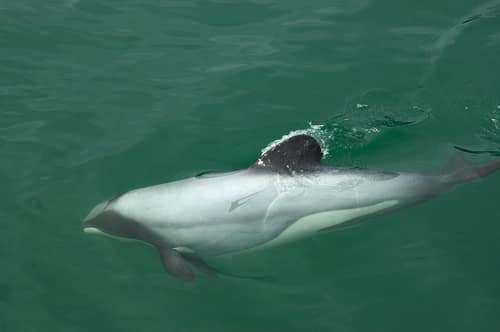
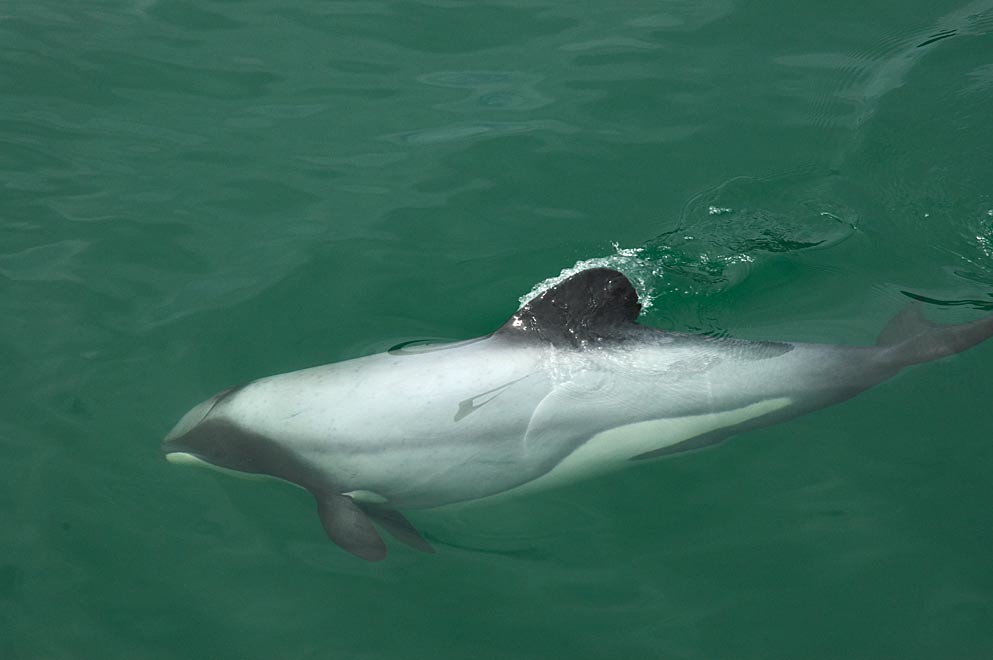
Hector's dolphins are easily recognized by their unique, rounded black dorsal fins that resemble Mickey Mouse ears. These energetic cetaceans spend their lives in shallow coastal waters, often surfing waves in the surf zone and foraging along sandy seabeds. High-frequency echolocation clicks allow them to navigate murky waters and hunt small benthic prey with remarkable precision.
EndemicMarine MammalCoastal
—observations
—countries
—peak records
EndangeredConservation statusIUCN Red List categoriesLCNTVUENCREWEXEndangeredRed List categories, explained →
Diet & preyRed cod, Stargazer, Squid
Predators
- Broadnose sevengill shark
- Great white shark
- Orca
ThreatsBycatch in gillnets and trawls, boat strikes, pollution, and underwater noise
HabitatsShallow coastal waters, bays, and estuaries around New Zealand
Life span20–25 years
Classification
- FamilyDelphinidae
- SpeciesCephalorhynchus hectori
Range data is not available yet.
Interaction riskLow
- Low
- Moderate
- High
- Very high
- Why interaction risk is low
- Safe to observe at a normal distance.
- What to notice
- Distinctive rounded, black dorsal fin shaped like a Mickey Mouse ear on a small, stout grey body.
- Support conservation
- Give pods ample space, navigate vessels slowly and predictably, and never cut through a dolphin group.
Responsible observation
- Keep Distance: Maintain at least 50 meters distance when boating to avoid accidental collisions.
- Slow Boats Down: Reduce vessel speed to 5 knots or less within 300 meters of any dolphin.
- Avoid Swimming: Do not enter the water to swim with wild pods to minimize stress.
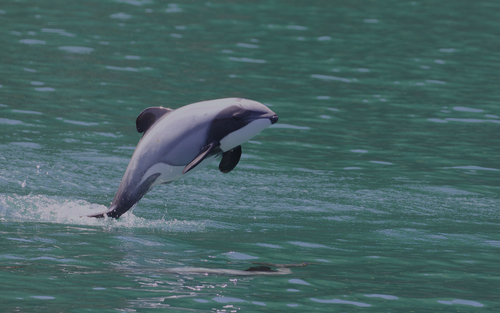
Subspecies (c) Gregory "Slobirdr" Smith, some rights reserved (CC BY) · cc-by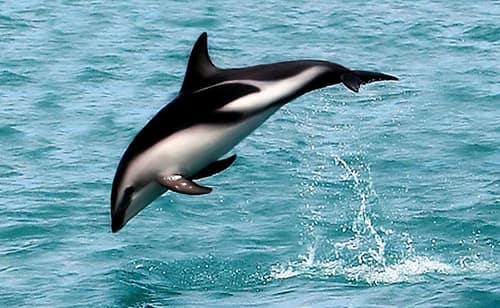
Frequent Companion AllenMcC. / CC BY 3.0 · cc-by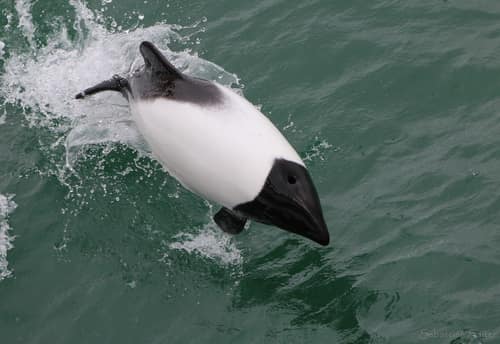
Close Relative (c) Sebastián Saiter V., some rights reserved (CC BY), uploaded by Sebastián Saiter V. · cc-by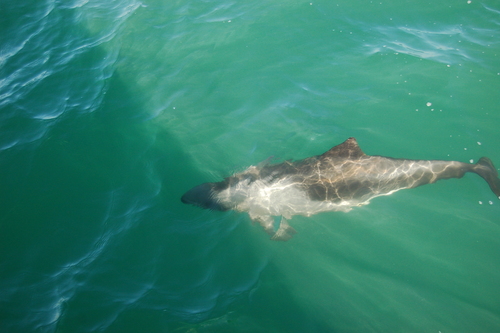
Close Relative (c) Joachim Huber, some rights reserved (CC BY-SA) · cc-by-sa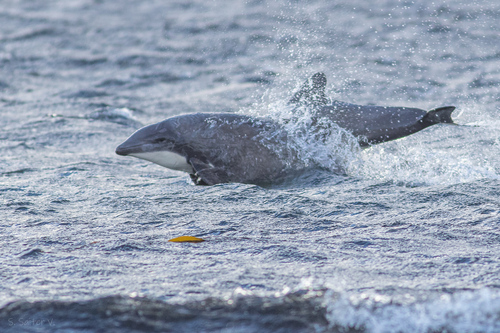
Close Relative (c) Sebastián Saiter V., some rights reserved (CC BY), uploaded by Sebastián Saiter V. · cc-by
Help improve the field guideSomething wrong?
Checking your Fauna account…Report a name, category, or profile issue for review.