
Mammal
Bornean Orangutan
Pongo pygmaeusAlso known as Borneo Orangutan
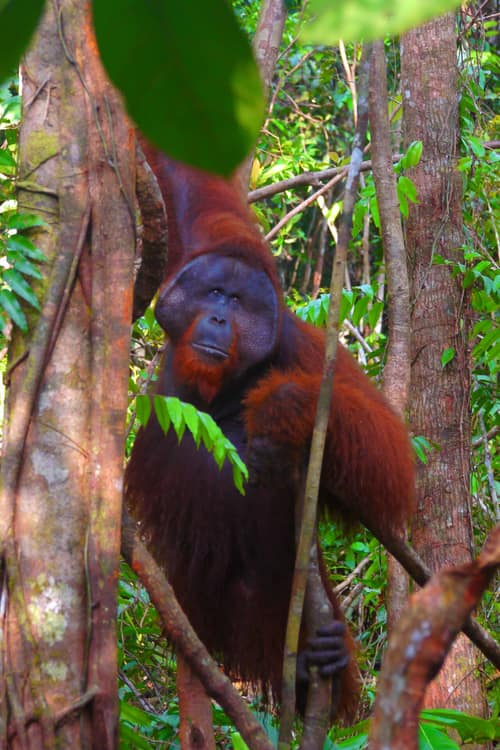
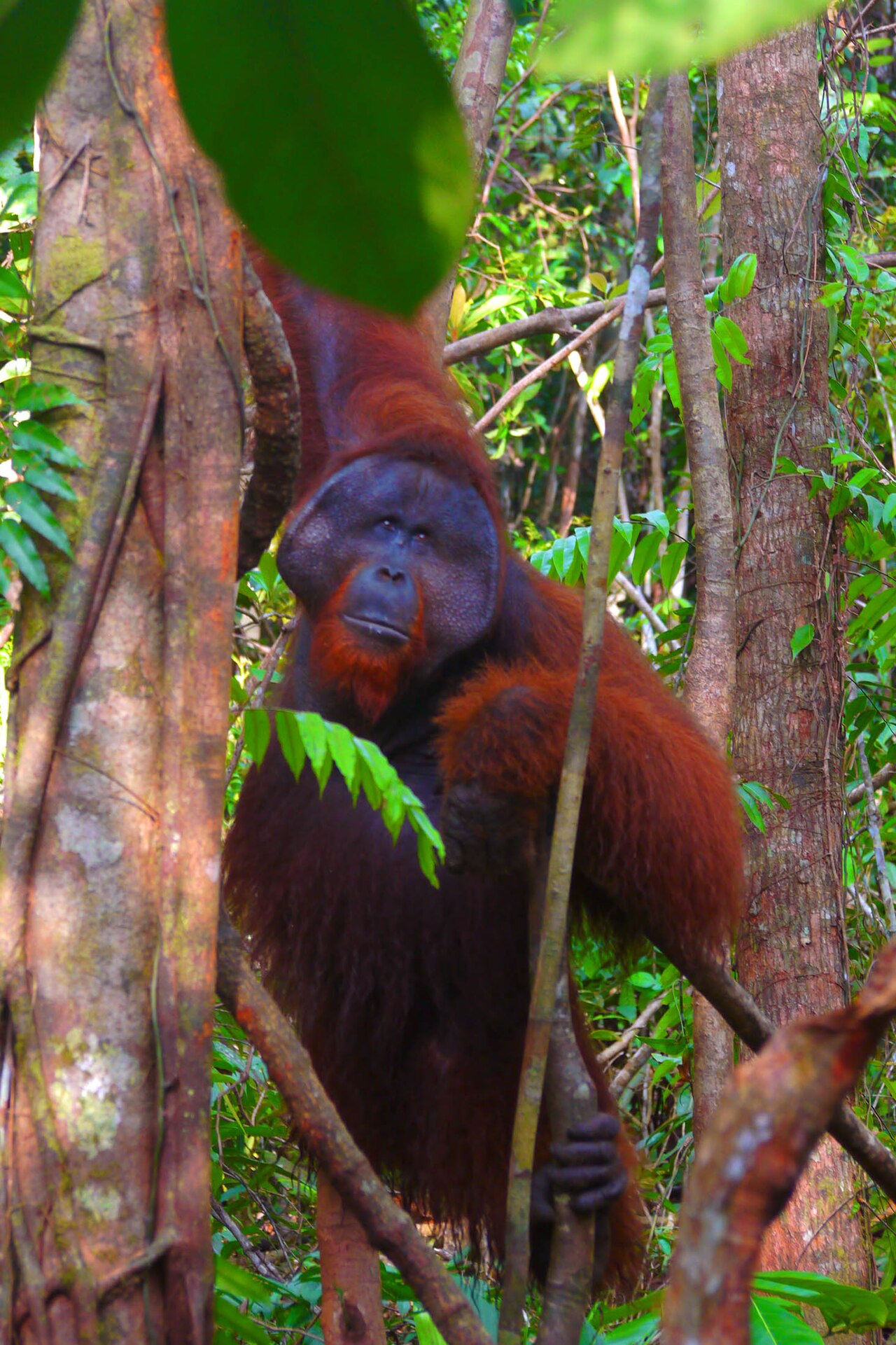
Bornean orangutans spend almost their entire lives high in the rainforest canopy, constructing fresh leafy sleep nests each evening among the branches. Flanged adult males issue booming throat-sac calls that travel up to a kilometer through dense foliage to establish territory and attract solitary females. As key seed dispersers across ancient island forests, these gentle great apes help maintain ecosystem diversity while traveling methodically through the upper strata.
ArborealFrugivoreGreat Ape
—observations
—countries
—peak records
Critically EndangeredConservation statusIUCN Red List categoriesLCNTVUENCREWEXCritically EndangeredRed List categories, explained →
Diet & preyFigs, Durians, Tree Bark
Predators
- Bornean Clouded Leopard
- Saltwater Crocodile
- Reticulated Python
ThreatsDeforestation, palm oil plantation expansion, illegal pet trade, poaching
HabitatsTropical peat swamp and lowland rainforests
Life span35–45 years in the wild
Classification
- FamilyHominidae
- SpeciesPongo pygmaeus
Native
Interaction riskHigh
- Low
- Moderate
- High
- Very high
- Why interaction risk is high
- Extremely strong and protective; maintain a safe distance and never approach wild individuals.
- Why it is dangerous
- Massive physical strength and powerful jaws capable of inflicting severe bites if cornered or defending young.
- How to recognize a risky encounter
- Look for long shaggy orange-red hair, large body size, and wide cheek flanges on fully mature males.
- What to do
- Always remain with certified nature guides, stay on marked trails, and back away slowly if an ape approaches.
- What to notice
- Recognized by high-canopy nest platforms woven from branches and large reddish silhouettes in tree crowns.
- Support conservation
- Support verified conservation tourism and keep a safe distance to prevent transmitting human illnesses.
Responsible observation
- Observe from Below: Maintain a distance of at least 10 meters to avoid disturbing tree-dwelling behavior.
- Keep Quiet: Avoid making loud noises or sudden gestures that might trigger alarm calls or stress.
- Never Feed: Supplemental feeding disrupts natural foraging and spreads dangerous human pathogens.
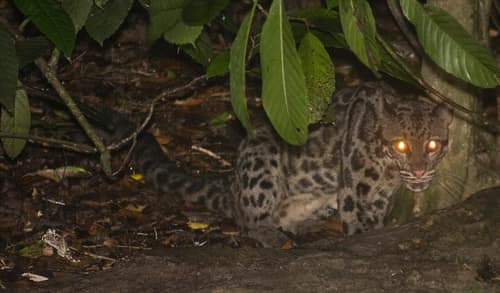
Predator www.photosbypaulo.com / CC BY-SA 3.0 · cc-by-sa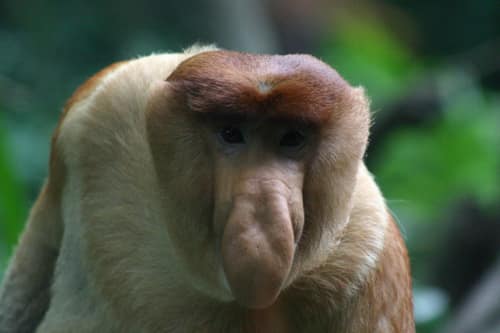
Frequent Companion "Proboscis Monkey, Singapore" by chem7 is licensed under CC BY 2.0. To view a copy of this license, visit https://creativecommons.org/licenses/by/2.0/. · cc-by
Food Source no rights reserved, uploaded by 葉子 · cc0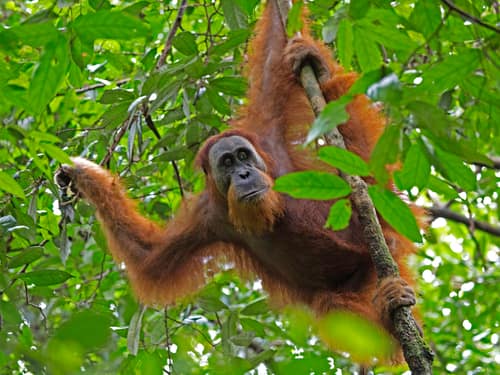
Close Relative (c) Lip Kee, some rights reserved (CC BY-SA) · cc-by-sa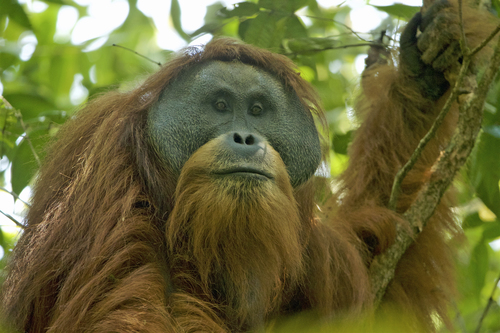
Close Relative (c) Tim Laman, some rights reserved (CC BY) · cc-by
Help improve the field guideSomething wrong?
Checking your Fauna account…Report a name, category, or profile issue for review.