
Mammal
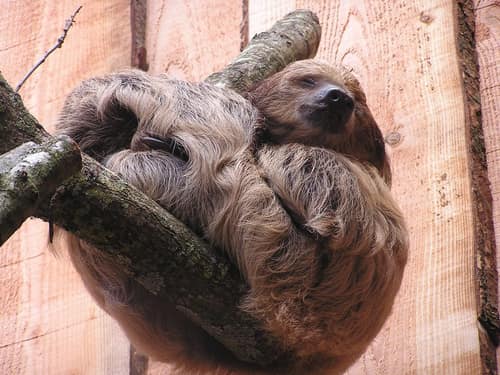
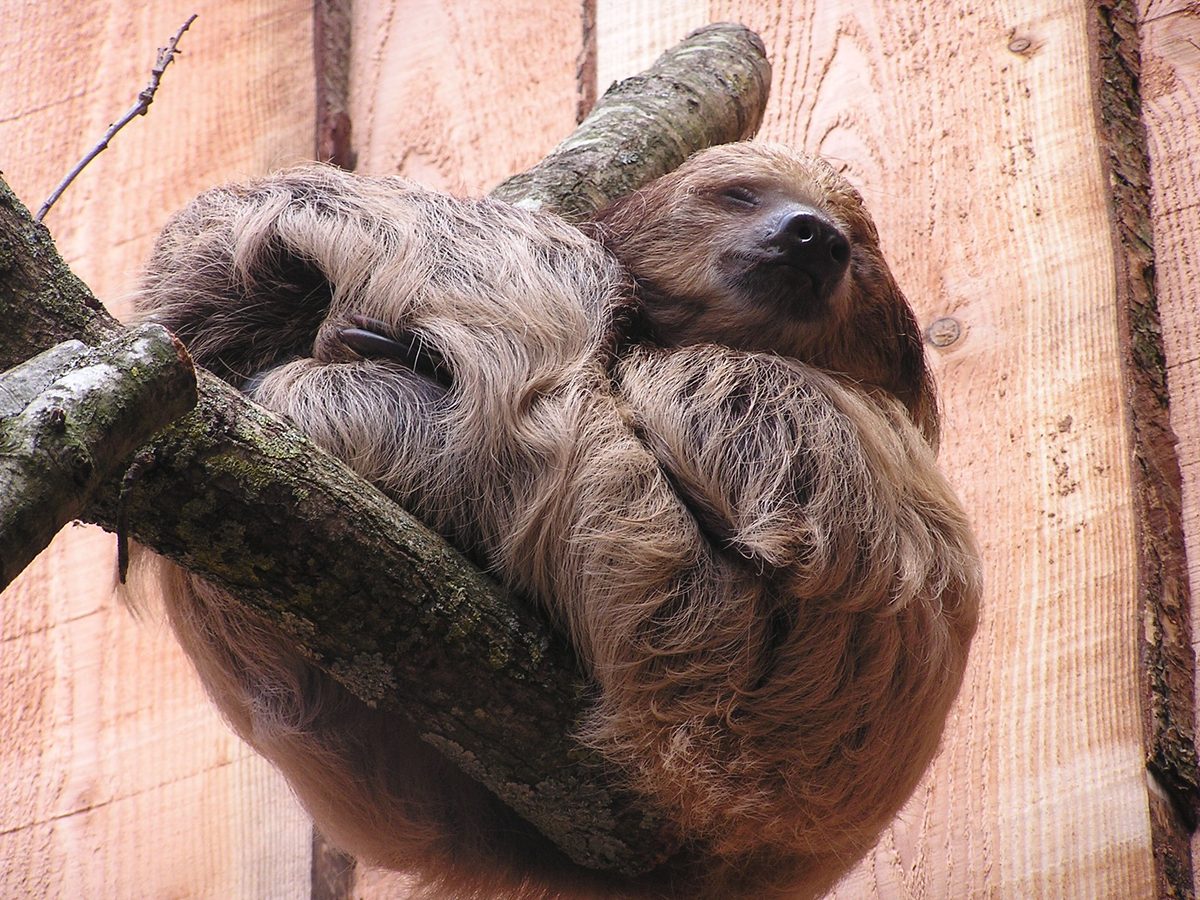
Linnaeus's Two-toed Sloth
Choloepus didactylusAlso known as Southern Two-toed Sloth, Unau, Linne's Two-toed Sloth
Linnaeus's two-toed sloths spend nearly their entire lives suspended upside down in the high canopy of South American rainforests, where their slow-motion lifestyle is powered by a low-energy diet of leaves and fruit. Their coarse, grooved fur hosts a miniature ecosystem of specialized algae and moths, providing excellent camouflage against forest predators. These solitary mammals descend to the forest floor only once a week to defecate, making them highly vulnerable during these rare terrestrial visits.
NocturnalArborealMammal
—observations
—countries
—peak records
Least ConcernConservation statusIUCN Red List categoriesLCNTVUENCREWEXLeast ConcernRed List categories, explained →
Diet & preyCecropia leaves, Wild fruits, Flowers
Predators
- Harpy Eagle
- Jaguar
- Ocelot
ThreatsHabitat fragmentation, deforestation, and the illegal pet trade
HabitatsTropical rainforests and cloud forests
Life span20 to 30 years in the wild, up to 40 years in captivity
Classification
- FamilyMegalonychidae
- SpeciesCholoepus didactylus
Native
Interaction riskLow
- Low
- Moderate
- High
- Very high
- Why interaction risk is low
- Equipped with sharp teeth and strong claws; observe from a safe distance and never handle.
- Why it is dangerous
- Possesses sharp, self-sharpening canine-like premolars and powerful forelimbs that can inflict deep puncture wounds.
- How to recognize a risky encounter
- Distinguished by two claws on the forelimbs, a prominent snout, and a lack of a tail.
- What to do
- Never attempt to touch or pick up a sloth; if one is crossing a road, contact local wildlife rescuers.
Responsible observation
- Use Binoculars: Look high in the canopy, especially in Cecropia trees, during early morning or dusk.
- Keep Distance: Never attempt to touch or rescue a sloth on the ground; contact local wildlife authorities instead.
- Listen Closely: Listen for low hisses or soft bleats, which they occasionally emit when distressed.
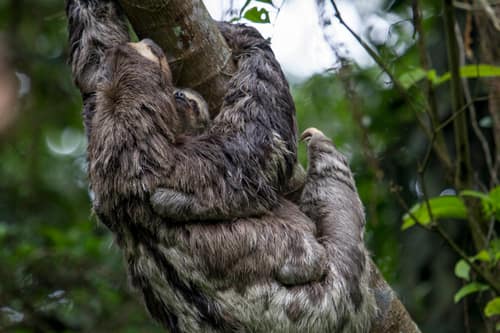
Co-occurring Species (c) Bruno Henrique Aranda, some rights reserved (CC BY), uploaded by Bruno Henrique Aranda · cc-by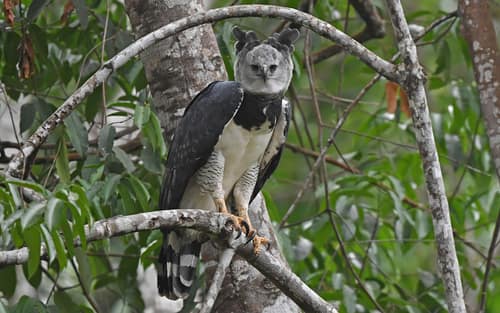
Predator (c) Christoph Moning, some rights reserved (CC BY), uploaded by Christoph Moning · cc-by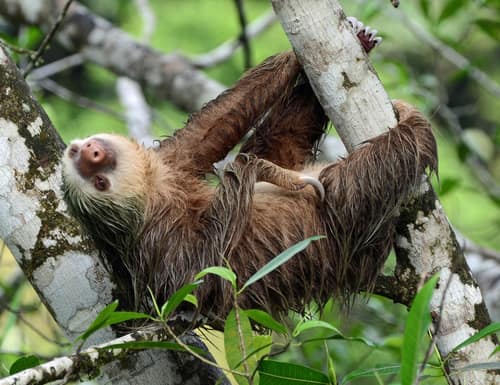
Close Relative (c) Geoff Gallice, some rights reserved (CC BY) · cc-by
Help improve the field guideSomething wrong?
Checking your Fauna account…Report a name, category, or profile issue for review.