
Amphibian
Eastern Newt
Notophthalmus viridescensAlso known as Red-Spotted Newt, Red Eft
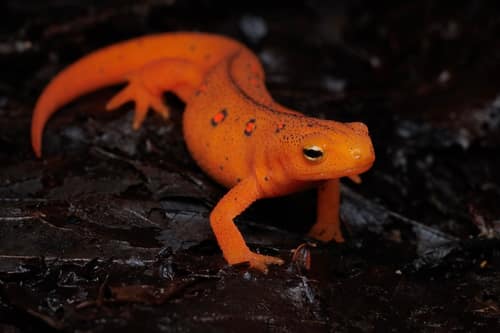
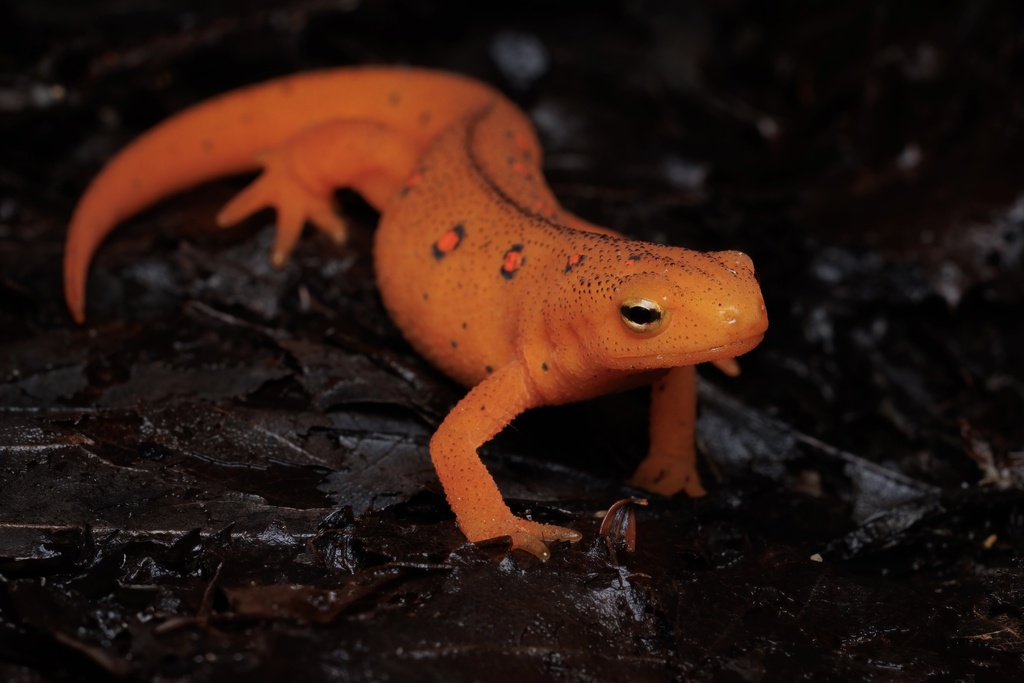
Eastern newts undergo a fascinating three-stage life cycle, transforming from aquatic larvae into brightly colored, land-dwelling red efts before returning to water as breeding adults. Their vivid red efts advertise skin saturated with potent tetrodotoxin, warning forest predators to leave them unmolested as they wander damp leaf litter. Once mature, adults develop olive-green skin with crimson spots and a broad paddle-like tail adapted for swimming in quiet ponds.
AmphibianToxic SkinMetamorphic
—observations
—countries
—peak records
Least ConcernConservation statusIUCN Red List categoriesLCNTVUENCREWEXLeast ConcernRed List categories, explained →
Diet & preyInsect larvae, Small crustaceans, Snails
Predators
- Garter snakes
- Large frogs
- Water birds
ThreatsHabitat loss, wetland drainage, road mortality during migration, infectious fungal pathogens
HabitatsDeciduous forests, woodland ponds, vernal pools, slow streams
Life span12–15 years in the wild
Classification
- OrderCaudata
- FamilySalamandridae
- GenusNotophthalmus
- SpeciesNotophthalmus viridescens
Range data is not available yet.
Interaction riskHigh
- Low
- Moderate
- High
- Very high
- Why interaction risk is high
- Skin secretes neurotoxic tetrodotoxin; wash hands after handling and never ingest or touch eyes.
- Why it is dangerous
- Secretes tetrodotoxin through skin glands, which causes numbness or illness if absorbed through mucous membranes or ingested.
- How to recognize a risky encounter
- Juvenile red efts are vivid orange-red with black-bordered dots, while aquatic adults are olive-green with flattened tails.
- What to do
- Avoid touching wild newts, and wash hands thoroughly with soap if accidental contact occurs.
Responsible observation
- Rainy Day Searches: Look for juvenile red efts crawling on humid forest floors after light rain.
- Gentle Handling: Avoid touching to protect their delicate skin from oils, lotions, and chemicals.
- Water Safety: Observe aquatic adults quietly from pond margins without disturbing delicate vegetation.
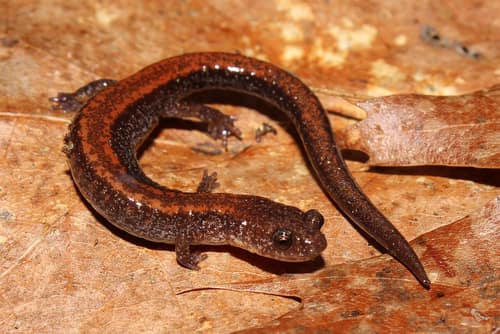
Co-occurring Salamander Alex Karasoulos / CC BY-SA 4.0 · cc-by-sa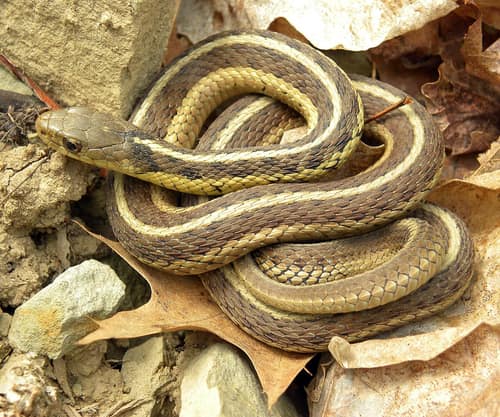
Predator Wilson44691 / Public domain · cc0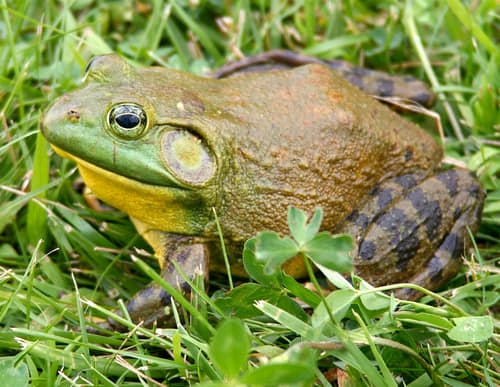
Pond Neighbor Carl D. Howe / CC BY-SA 2.5 · cc-by-sa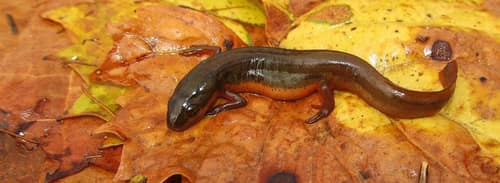
Close Relative Glenn Bartolotti / CC BY-SA 4.0 · cc-by-sa
Keep collecting in Fauna
Found in Collections
Ecosystem chain
Wetland Territory
Eastern Newt is found in this collection. Identify it in Fauna to fill this slot and continue your progress.
—/12
Help improve the field guideSomething wrong?
Checking your Fauna account…Report a name, category, or profile issue for review.