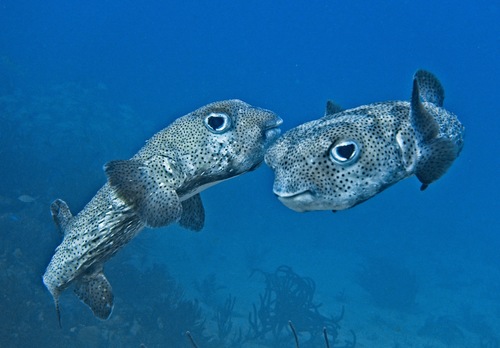
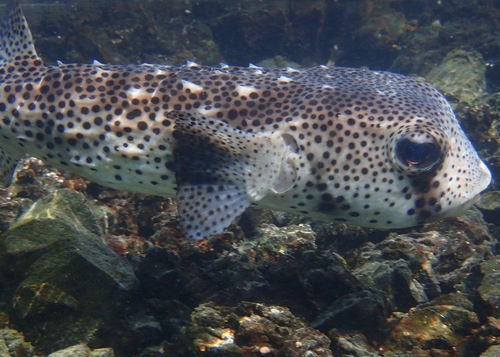
Also known as Balloonfish, Freckled Porcupinefish, Porcupine Puffer, Porcupine Pufferfish
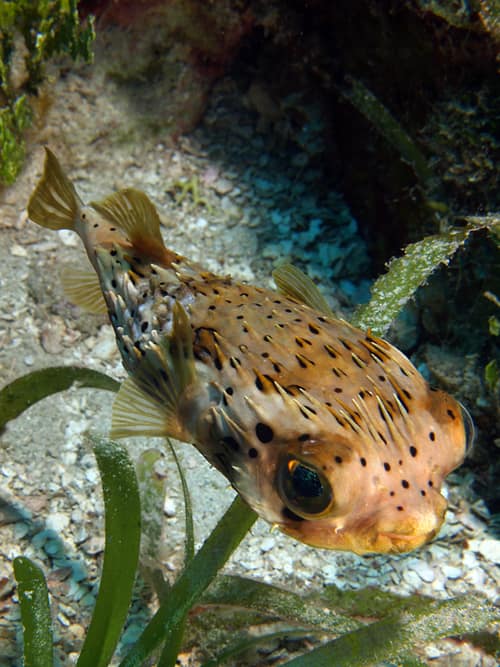
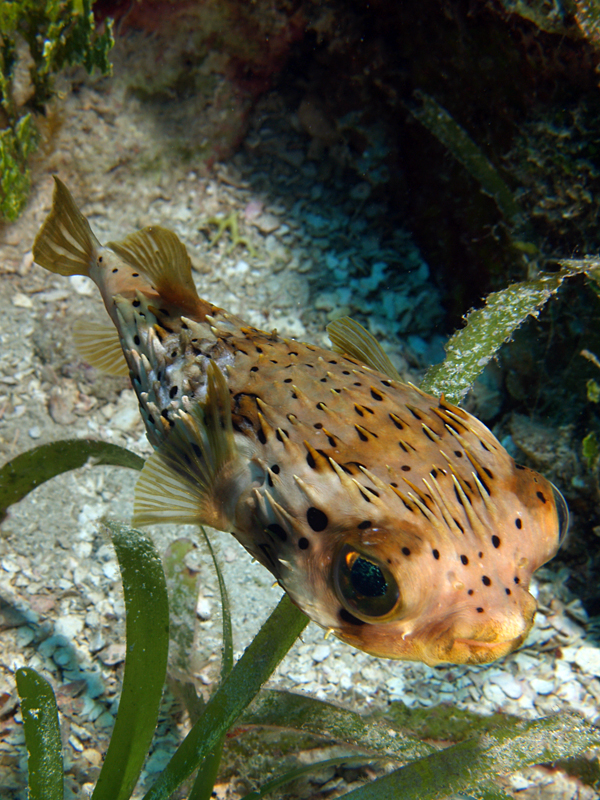
Longspined porcupinefish navigate shallow reefs and lagoons using their pectoral fins for precise, hovering movements rather than rapid bursts of speed. When threatened, they rapidly ingest water to swell into an intimidating, spine-bristling sphere that prevents most predators from swallowing them. Powerful fused dental plates allow them to crush hard-shelled invertebrates under cover of darkness, while daytime hours are spent tucked into cave crevices.
ThreatsCoral reef degradation, accidental fishing bycatch, and collection for the curio trade
HabitatsCoral reefs, seagrass beds, mangrove estuaries, and coastal rocky ledges
Life span10–15 years
Classification
OrderTetraodontiformes
FamilyDiodontidae
GenusDiodon
SpeciesDiodon holocanthus
Range & activity
Range data is not available yet.
Safe observation
Interaction riskHigh
Low
Moderate
High
Very high
Why interaction risk is high
Internal organs contain lethal tetrodotoxin; never consume wild-caught fish or provoke them into defensive puffing.
Why it is dangerous
Internal organs, particularly the liver and ovaries, concentrate tetrodotoxin, a potent neurotoxin that causes paralysis and respiratory failure if eaten.
How to recognize a risky encounter
Recognized by long, movable spines that lie flat when relaxed, large expressive eyes, and dark blotches across the back.
What to do
Never touch or harass porcupinefish into inflating, as the process causes extreme physiological stress and can be fatal.
Responsible observation
Dive Etiquette: Maintain neutral buoyancy and keep a respectful distance without cornering or prodding the fish.
Night Spotting: Scan shallow coral ledges and sandy patches after sunset when individuals emerge to forage.