
Species
Tomato Clownfish
Amphiprion frenatusAlso known as Blackback Anemonefish, Bridled Anemonefish, Fire Clown, Red Tomato Clown
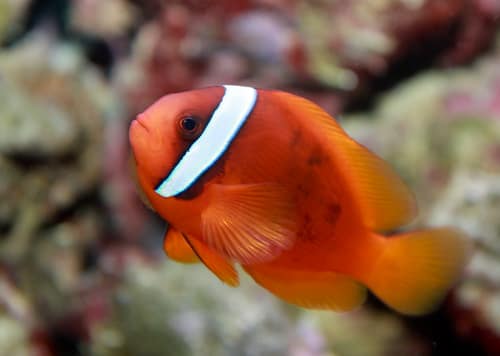
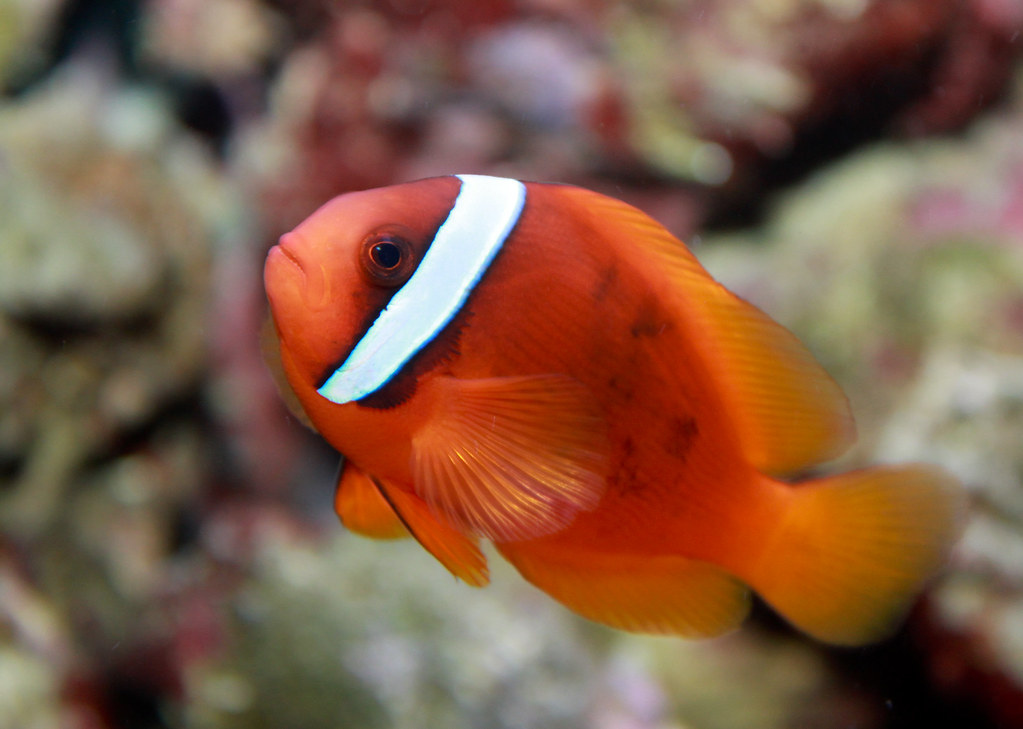
Tomato clownfish live in strict, female-dominated pairs or small groups within the protective tentacles of bubble-tip anemones. These bold damselfish aggressively defend their host anemone from intruders, charging and even biting divers or larger fish that venture too close. Young fish display a bright red-orange color with multiple white bars, which fade to a single white head bar and a darker, blackish body as they mature into dominant females.
MarineTerritorialSymbiotic
—observations
—countries
—peak records
Least ConcernConservation statusIUCN Red List categoriesLCNTVUENCREWEXLeast ConcernRed List categories, explained →
Diet & preyCopepods, Algae, Tunicates
Predators
- Groupers
- Snappers
- Moray eels
ThreatsCoral reef degradation, ocean warming, and overcollection for the aquarium trade
HabitatsCoral reefs, lagoons, and seaward reefs hosting bubble-tip anemones
Life span6 to 10 years in the wild
Classification
- FamilyPomacentridae
- SpeciesAmphiprion frenatus
Range data is not available yet.
Interaction riskLow
- Low
- Moderate
- High
- Very high
- Why interaction risk is low
- Boldly defends its host anemone and may nip at fingers or hands if approached too closely.
- Why it is dangerous
- Aggressively defends its territory and will fearlessly bite fingers, hands, or diving gear to protect its host.
- How to recognize a risky encounter
- Look for a single prominent white vertical bar behind the eye on a bright orange to dark reddish-black body.
- What to do
- Maintain a respectful distance of at least one meter from the host anemone and do not attempt to touch the fish.
Responsible observation
- Observe the host: Look for the bulbous tentacles of bubble-tip anemones on shallow reefs to locate these fish.
- Keep your distance: Avoid placing hands near the anemone to prevent defensive nips from the resident pair.
- Watch the hierarchy: Observe how the larger, darker female dominates the smaller, brighter male.
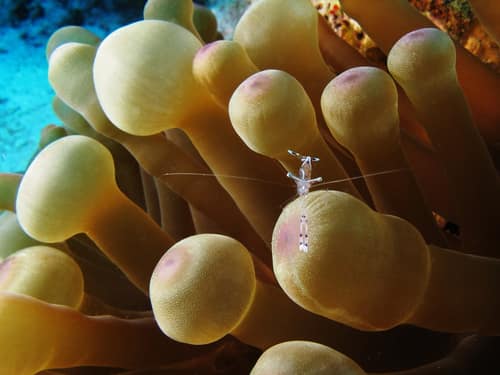
Symbiont Host (c) Alexander Vasenin, some rights reserved (CC BY-SA) · cc-by-sa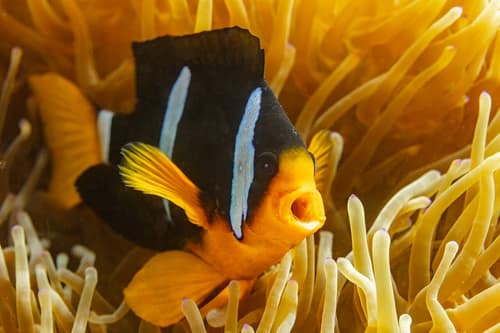
Close Relative Diego Delso / CC BY-SA 4.0 · cc-by-sa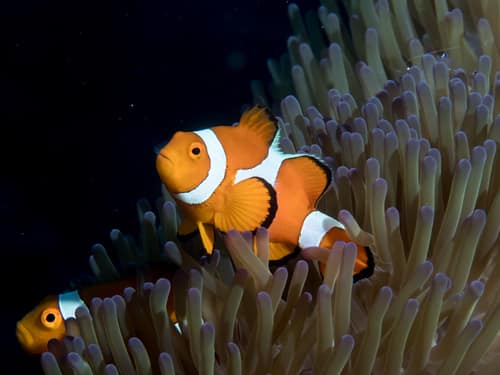
Close Relative "Ocellaris clownfish (Amphiprion ocellaris)" by krokodiver is licensed under CC BY 2.0. To view a copy of this license, visit https://creativecommons.org/licenses/by/2.0/. · cc-by Image unavailable
Close Relative
Help improve the field guideSomething wrong?
Checking your Fauna account…Report a name, category, or profile issue for review.