
Species
Short-snouted Seahorse
Hippocampus hippocampusAlso known as Mediterranean Seahorse, Short-nosed Seahorse
Short-snouted seahorses anchor themselves to seagrasses and seaweeds using their prehensile tails, blending seamlessly into their marine backdrops. These masters of camouflage rely on ambush tactics, snapping up tiny passing crustaceans with a rapid, vacuum-like strike of their tubular snout. During the breeding season, females deposit eggs into the male's specialized brood pouch, leaving him to carry, nourish, and eventually give birth to the tiny independent offspring.
MarineCamouflagedBrooding Male
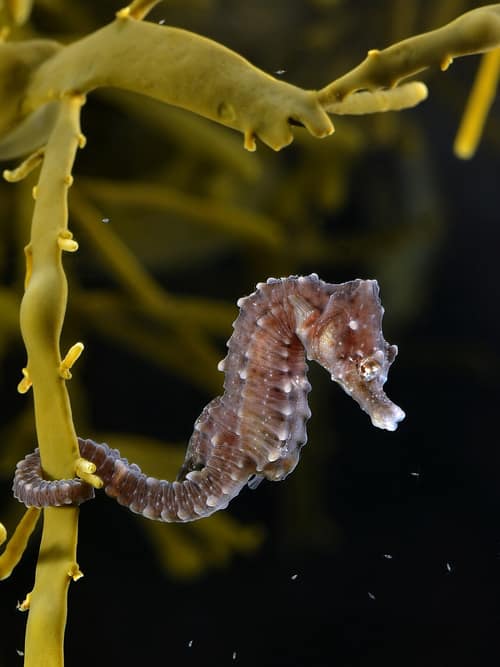
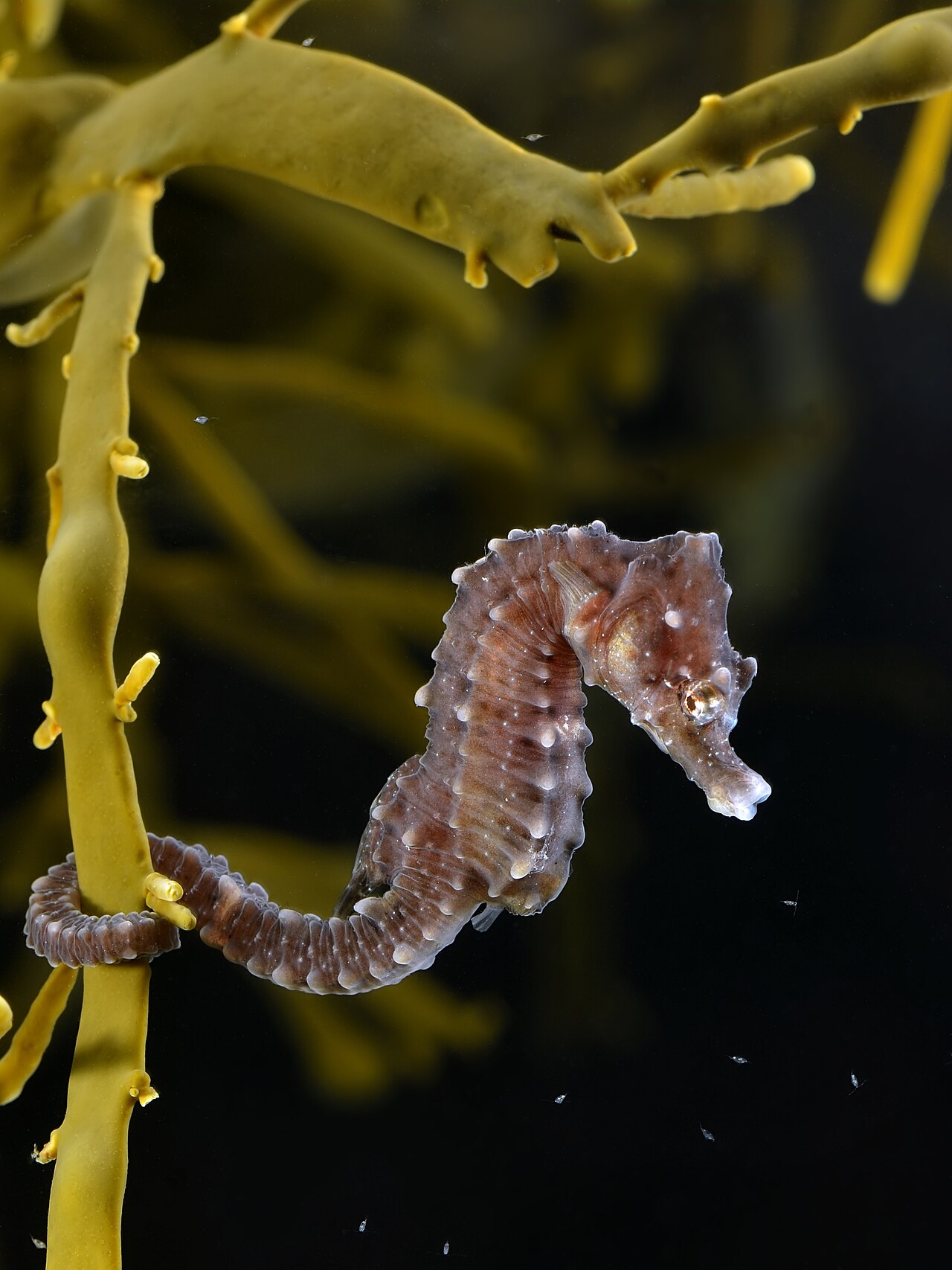
—observations
—countries
—peak records
Least ConcernConservation statusIUCN Red List categoriesLCNTVUENCREWEXLeast ConcernRed List categories, explained →
Diet & preyCopepods, Amphipods, Mysid shrimp
Predators
- Crabs
- Rays
- Larger predatory fish
ThreatsHabitat destruction, coastal development, bycatch in trawling nets, and illegal collection for the aquarium and traditional medicine trades
HabitatsSeagrass meadows, muddy estuaries, rocky reefs, and shallow coastal waters
Life span3 to 5 years
Classification
- FamilySyngnathidae
- SpeciesHippocampus hippocampus
Range data is not available yet.
Interaction riskLow
- Low
- Moderate
- High
- Very high
- Why interaction risk is low
- Safe to observe at a normal distance.
- What to notice
- Look for a small, upright fish with a short snout, a coronet on its head, and a curled tail.
- Support conservation
- Never collect wild seahorses and maintain a respectful distance of at least one meter while diving.
Responsible observation
- Look closely at seagrass: Scan the edges of eelgrass beds where they use their prehensile tails to anchor.
- Keep your distance: Avoid touching or crowding them, as stress can cause them to release their grip and drift.
- Avoid using flash: Bright underwater strobes can startle these sensitive fish and disrupt their natural behavior.
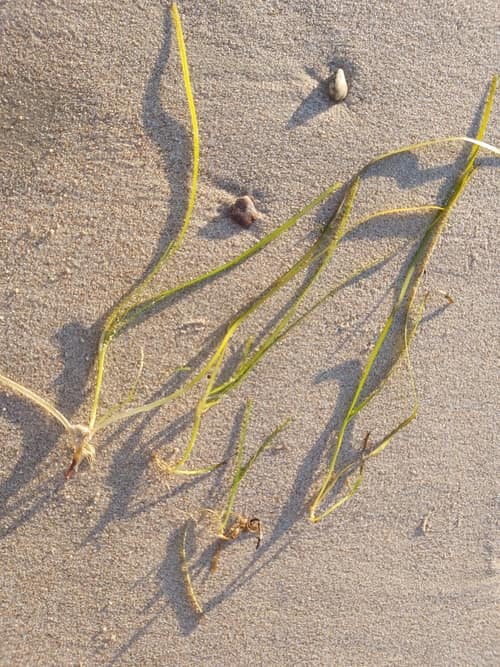
Host Plant no rights reserved · cc0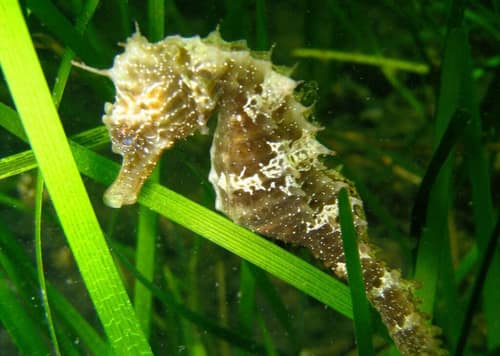
Close Relative (c) Mare Per Sempre, some rights reserved (CC BY-SA) · cc-by-sa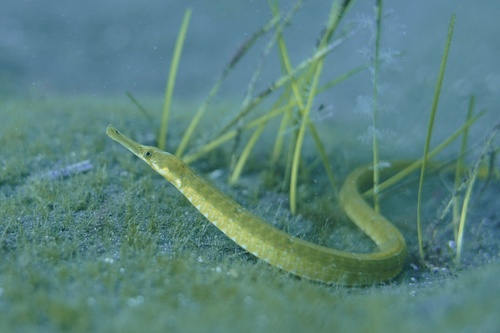
Close Relative (c) Michael Bommerer, some rights reserved (CC BY) · cc-by
Help improve the field guideSomething wrong?
Checking your Fauna account…Report a name, category, or profile issue for review.