
Species
Thorny Seahorse
Hippocampus histrixAlso known as Spiny Seahorse, Thorny-Spined Seahorse
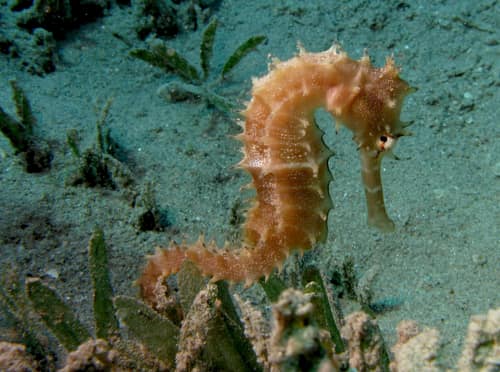
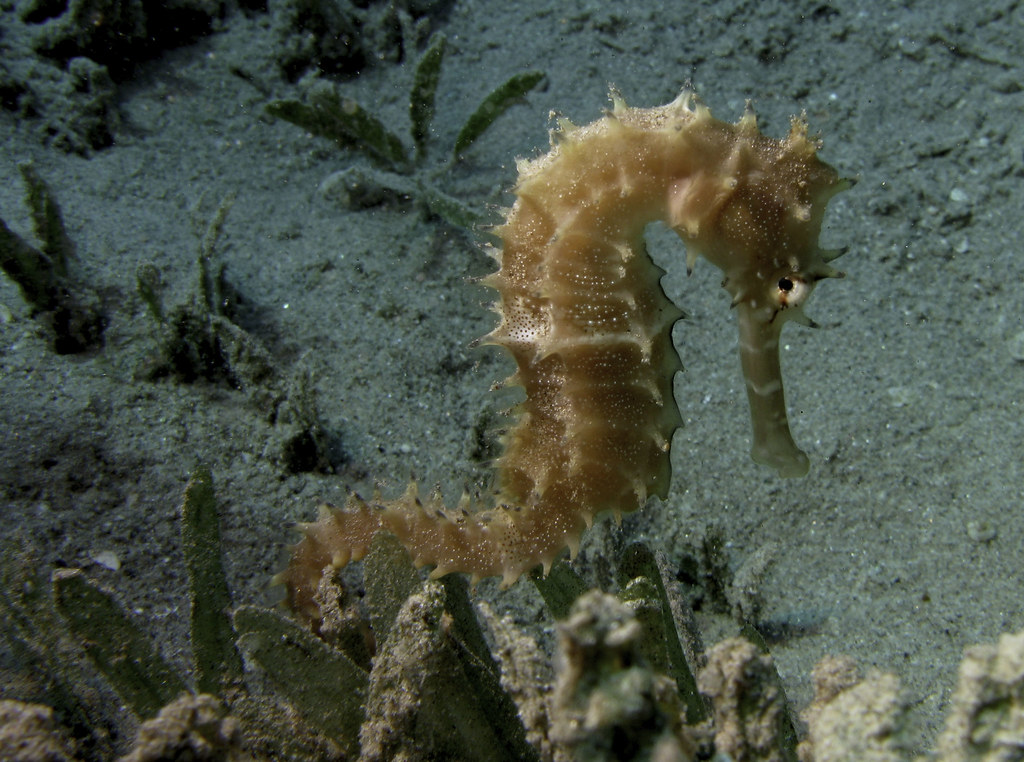
Thorny seahorses are easily recognized by the sharp, prominent spines covering their bodies and the long, slender snout they use to suck up tiny prey. These masters of camouflage cling to sea grasses, soft corals, and sponges using their prehensile tails, blending seamlessly into their reef habitats. Like other seahorses, males carry the developing eggs in a specialized brood pouch until they hatch as fully formed miniature seahorses.
MarineCamouflaged
—observations
—countries
—peak records
VulnerableConservation statusIUCN Red List categoriesLCNTVUENCREWEXVulnerableRed List categories, explained →
Diet & preyCopepods, Mysid shrimp, Larval fish
Predators
- Crabs
- Rays
- Larger predatory fish
ThreatsBycatch in commercial fisheries, habitat destruction, and overharvesting for traditional medicine and the aquarium trade
HabitatsCoral reefs, seagrass beds, and muddy estuaries in the Indo-Pacific
Life span2 to 4 years
Classification
- FamilySyngnathidae
- SpeciesHippocampus histrix
Range data is not available yet.
Interaction riskLow
- Low
- Moderate
- High
- Very high
- Why interaction risk is low
- Safe to observe at a normal distance.
- What to notice
- Look for a slender seahorse covered in long, sharp spines with dark tips and a very long snout.
- Support conservation
- Observe quietly without touching or disturbing the surrounding coral and seagrass where they anchor.
Responsible observation
- Maintain distance: Avoid touching or crowding seahorses, as stress can weaken their immune systems.
- Avoid flash photography: Bright flashes can startle these sensitive fish and disrupt their natural behaviors.
- Watch the tail: Look for their prehensile tails anchored to soft corals or seagrasses to spot them.
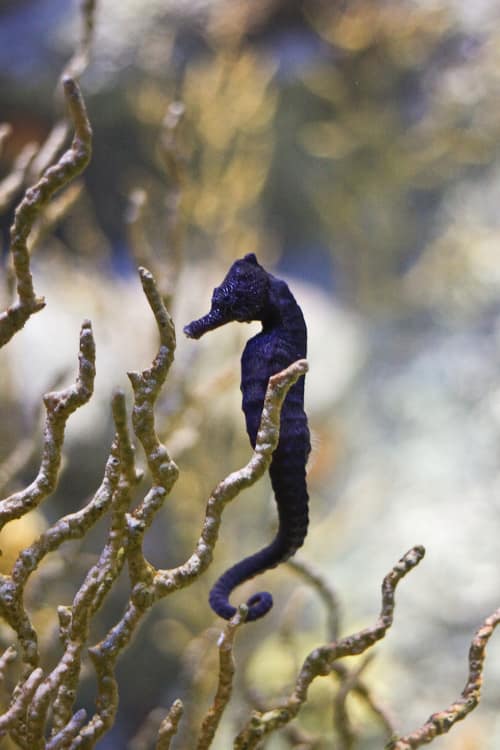
Close Relative "Common seahorse (Hippocampus taeniopterus)" by Lorèn is licensed under CC BY 2.0. To view a copy of this license, visit https://creativecommons.org/licenses/by/2.0/. · cc-by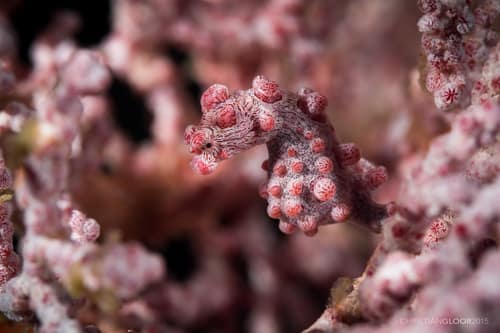
Close Relative "Pygmy seahorse" by Christian Gloor is licensed under CC BY 2.0. To view a copy of this license, visit https://creativecommons.org/licenses/by/2.0/. · cc-by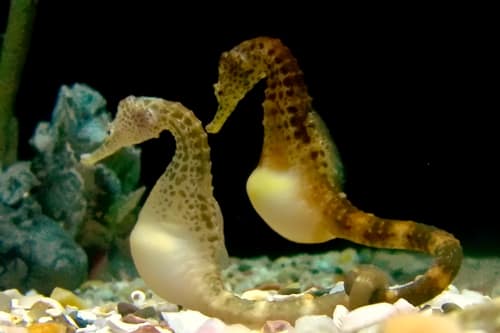
Close Relative Joanne Merriam / CC BY-SA 3.0 · cc-by-sa
Help improve the field guideSomething wrong?
Checking your Fauna account…Report a name, category, or profile issue for review.