
Species
Common Seahorse
Hippocampus kudaAlso known as Estuary Seahorse, Yellow Seahorse, Spotted Seahorse, Sea Pony
Common seahorses are master mimics of their underwater surroundings, dynamically shifting their coloration from bright yellow to dark brown to blend with seagrasses and sargassum. They use their prehensile tails to anchor themselves against currents while scanning the water column with independently moving eyes. During the breeding season, males carry fertilized eggs in a specialized brood pouch, eventually giving birth to hundreds of tiny, fully formed young.
MarineCamouflaged
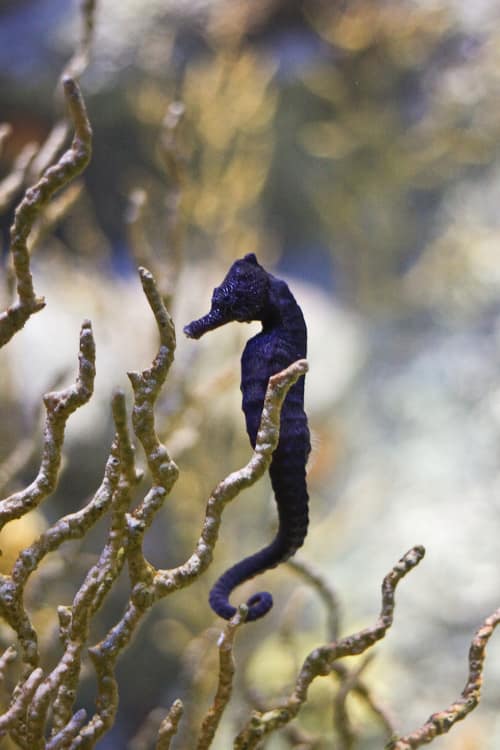
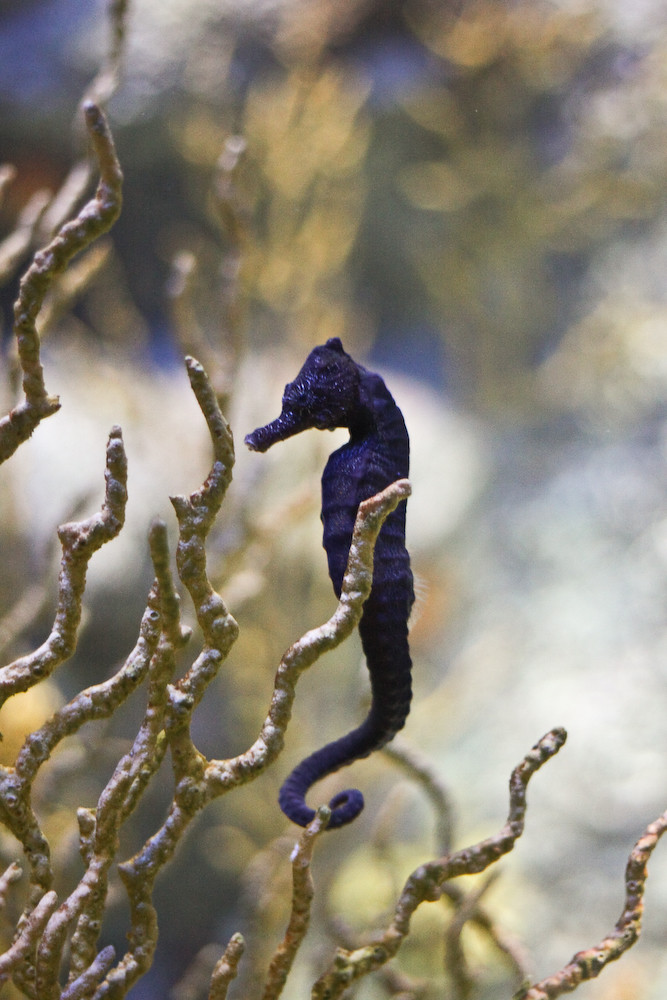
—observations
—countries
—peak records
VulnerableConservation statusIUCN Red List categoriesLCNTVUENCREWEXVulnerableRed List categories, explained →
Diet & preyCopepods, Mysid shrimp, Larval fish
Predators
- Crabs
- Rays
- Waterbirds
ThreatsHabitat degradation, accidental bycatch, and overharvesting for traditional medicine and the aquarium trade
HabitatsSeagrass beds, estuaries, mangroves, and shallow coral reefs
Life span3 to 5 years
Classification
- FamilySyngnathidae
- SpeciesHippocampus kuda
Range data is not available yet.
Interaction riskLow
- Low
- Moderate
- High
- Very high
- Why interaction risk is low
- Safe to observe at a normal distance.
- What to notice
- Look for a robust body with a relatively low, rounded coronet on the head and a smooth, fleshy appearance.
- Support conservation
- Never collect wild seahorses or purchase dried specimens, and support marine protected areas that preserve seagrass habitats.
Responsible observation
- Maintain Distance: Avoid touching or crowding seahorses, as stress can weaken their immune systems.
- Watch the Tail: Observe how they wrap their prehensile tails around seagrass blades to anchor themselves.
- No Flash Photography: Bright flashes can startle these sensitive fish and disrupt their feeding behavior.
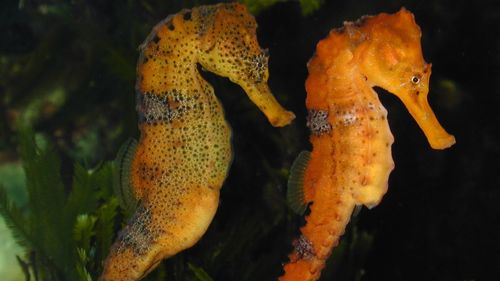
Close Relative (c) Andreas März, some rights reserved (CC BY) · cc-by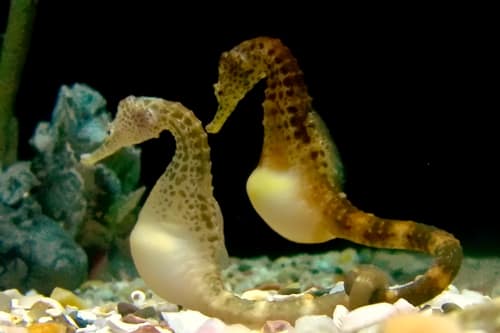
Close Relative Joanne Merriam / CC BY-SA 3.0 · cc-by-sa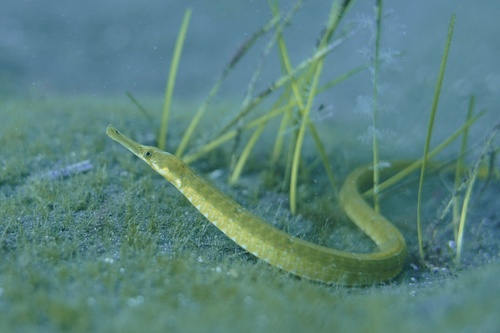
Close Relative (c) Michael Bommerer, some rights reserved (CC BY) · cc-by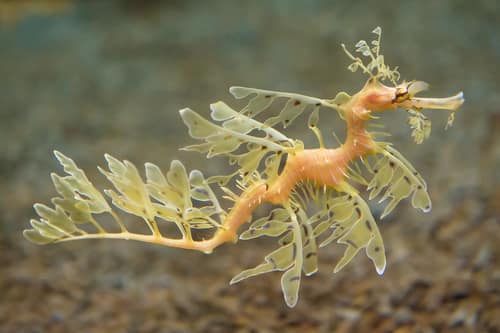
Close Relative "Phycodurus eques (Leafy seadragon)" by mark6mauno is licensed under CC BY-SA 2.0. To view a copy of this license, visit https://creativecommons.org/licenses/by-sa/2.0/. · cc-by-sa
Help improve the field guideSomething wrong?
Checking your Fauna account…Report a name, category, or profile issue for review.