
Invertebrate
Sea Swallow
Glaucus atlanticusAlso known as Blue Dragon, Blue Sea Slug, Blue Angel, Glaucus
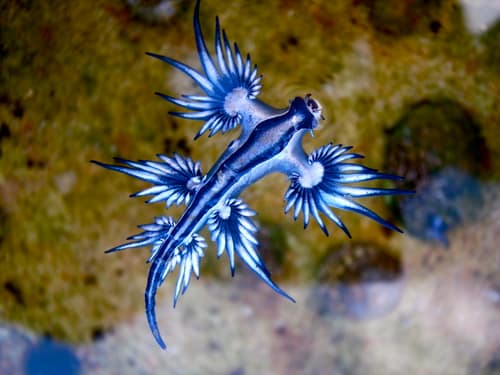
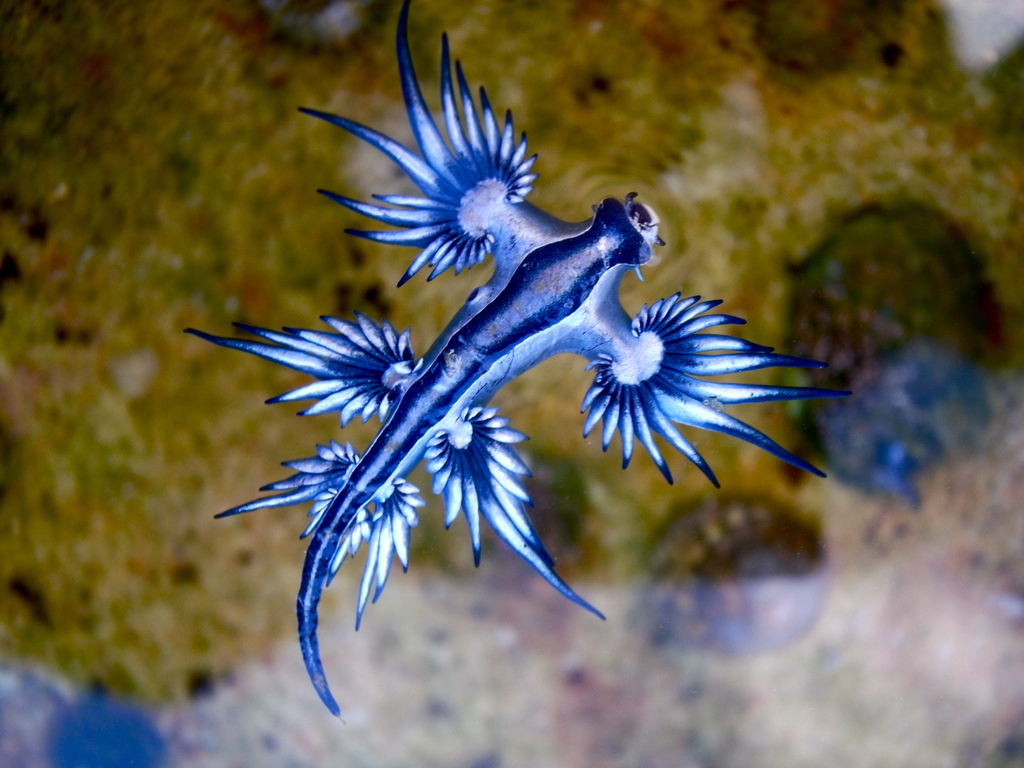
Sea swallows float upside down on the ocean surface, using a gas filled sac in their stomachs to stay afloat amidst pelagic winds and currents. Their dark blue underside faces upward toward the sky to blend in with the water, while their silvery backs face downward to camouflage against marine predators below. When feeding on colonial hydrozoans like the Portuguese man o' war, these tiny nudibranchs concentrate the prey's stinging cells into finger-like cerata to deploy as an intense defense.
PelagicVenomousColorful
—observations
—countries
—peak records
Not EvaluatedConservation statusIUCN Red List categoriesLCNTVUENCREWEXNot Evaluated — not placed on the risk ladderRed List categories, explained →
Diet & preyPortuguese Man o' War, By-the-Wind Sailor, Blue Button
Predators
- Loggerhead Sea Turtle
ThreatsMarine pollution, oil spills, and ocean acidification
HabitatsPelagic open ocean surface waters
Life spanUp to 1 year
Classification
- OrderNudibranchia
- FamilyGlaucidae
- GenusGlaucus
- SpeciesGlaucus atlanticus
Range data is not available yet.
Interaction riskVery high
- Low
- Moderate
- High
- Very high
- Why interaction risk is very high
- Delivers a severe, painful sting by concentrating nematocysts from its prey; do not handle.
- Why it is dangerous
- Stores concentrated unfired stinging cells (nematocysts) from its hydrozoan prey, delivering a painful sting more potent than a Portuguese man o' war.
- How to recognize a risky encounter
- Look for a bright metallic blue and silver body with finger-like branching cerata floating upside down at the surface.
- What to do
- Never touch stranded or swimming specimens with bare hands; observe using a container or photograph from above without contact.
Responsible observation
- Observe in water: Look for tiny blue and silver forms floating upside down near siphonophore colonies.
- Never touch: Avoid handling stranded or swimming specimens because their concentrated sting is severe.
- Check onshore winds: Search coastal beaches after strong offshore storms push surface life ashore.
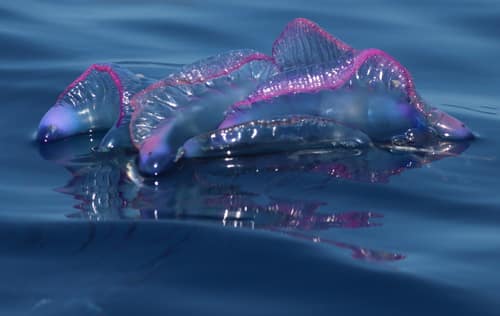
Prey (c) Jan Ebr & Ivana Ebrová, some rights reserved (CC BY), uploaded by Jan Ebr & Ivana Ebrová · cc-by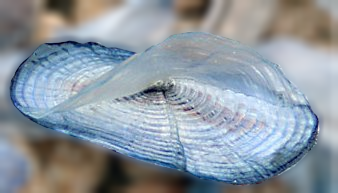
Prey (c) yakafaucon, some rights reserved (CC BY-SA) · cc-by-sa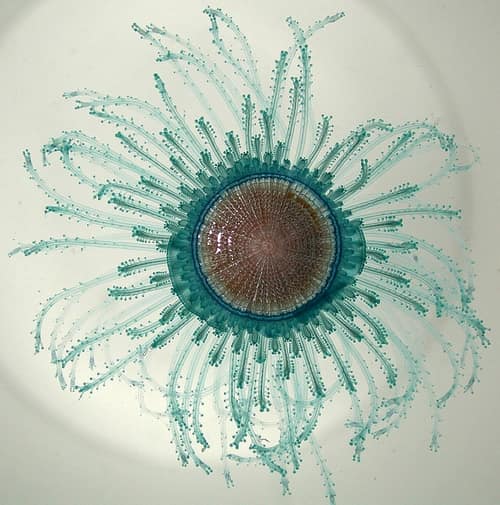
Prey Bruce Moravchik (NOAA) / Public domain · cc0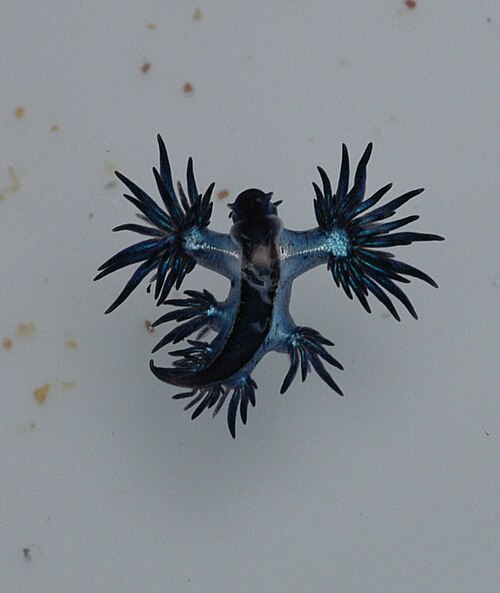
Close Relative Doug Beckers from Macmasters Beach, Australia / CC BY-SA 2.0 · cc-by-sa
Keep collecting in Fauna
Found in Collections
Species set Pro
Shore Life
Sea Swallow is found in this collection. Identify it in Fauna to fill this slot and continue your progress.
Unlock to track progress
Help improve the field guideSomething wrong?
Checking your Fauna account…Report a name, category, or profile issue for review.