Long-spined sea urchins act as vital lawnmowers of the Caribbean, grazing night and day on turf algae that would otherwise smother fragile coral reefs. Their exceptionally long, needle-sharp spines pivot in all directions to deter predators while providing a safe nursery habitat for tiny juvenile fish. During the day, they squeeze into dark reef crevices, emerging at sunset to forage across the seafloor.
Not EvaluatedConservation statusIUCN Red List categoriesLCNTVUENCREWEXNot Evaluated — not placed on the risk ladderRed List categories, explained →
Key facts
Diet & preyTurf Algae, Seagrass, Detritus
Predators
Queen Triggerfish
Caribbean Spiny Lobster
King Helmet Snail
ThreatsWater pollution, climate change, and epidemic diseases
HabitatsCoral reefs, rocky shores, and seagrass beds
Life span4 to 6 years
Classification
FamilyDiadematidae
SpeciesDiadema antillarum
Range & activity
Range data is not available yet.
Safe observation
Interaction riskVery high
Low
Moderate
High
Very high
Why interaction risk is very high
Long, brittle spines easily puncture skin and inject mild venom; avoid touching or stepping on them.
Why it is dangerous
The long, hollow spines easily pierce wetsuits and skin, breaking off inside the wound and releasing a mild toxin that causes burning pain and swelling.
How to recognize a risky encounter
Look for extremely long, needle-thin black spines radiating from a small, dark central body in shallow reef crevices.
What to do
Never attempt to touch or handle this animal, and maintain careful buoyancy control when swimming near reef structures.
What to notice
Recognized by its exceptionally long, dark spines, often found clustered in reef crevices during the day.
Support conservation
Avoid disturbing surviving individuals and report any sightings of sick or bald urchins to local marine conservationists.
Responsible observation
Observe from a distance: Maintain neutral buoyancy to avoid drifting into reef crevices where they hide.
Watch for spine movement: Notice how the spines actively pivot toward shadows or nearby movement as a defensive reflex.
Look for companions: Search the spine canopy for tiny, commensal shrimp or juvenile fish seeking shelter.

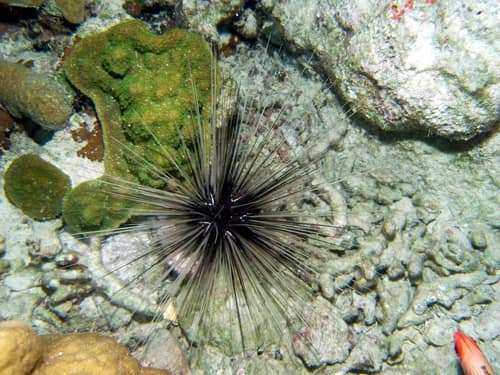
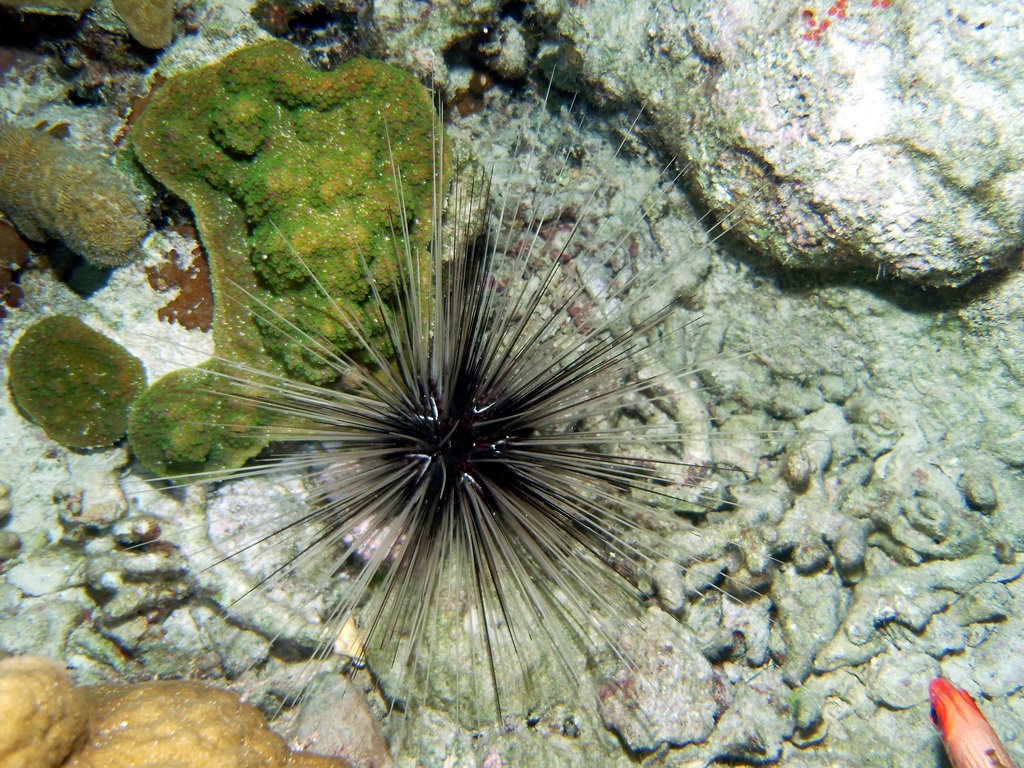

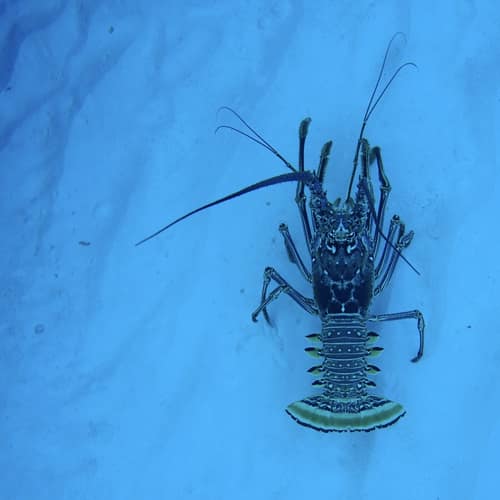
 Image unavailable