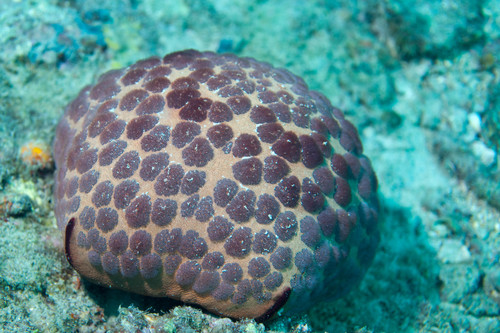
Also known as Horned Starfish, Chocolate Chip Starfish, Horned Sea Star, Nodose Sea Star
Chocolate chip sea stars are striking echinoderms recognizable by the dark, blunt horn-like spines that dot their thick, cushiony bodies. They inhabit shallow, sandy seagrass beds and coral reefs, where they slowly crawl across the seafloor to graze on organic matter and small invertebrates. These slow-moving creatures play a vital role in their ecosystems by recycling nutrients and keeping seagrass beds healthy.
ThreatsOverharvesting for the curio and aquarium trades, habitat destruction, and coastal development
HabitatsShallow sandy lagoons, seagrass meadows, and coral reef flats
Life spanUp to 17 years
Classification
FamilyOreasteridae
SpeciesProtoreaster nodosus
Range & activity
Range data is not available yet.
Safe observation
Interaction riskLow
Low
Moderate
High
Very high
Why interaction risk is low
Safe to observe at a normal distance.
What to notice
Look for a thick, five-armed body with distinct dark brown, cone-shaped nodules resembling chocolate chips on a tan or orange background.
Support conservation
Never remove them from the water or rearrange them for photos; observe them undisturbed in their natural sandy or seagrass habitats.
Responsible observation
Look but do not touch: Avoid lifting them out of the water, as exposure to air can trap bubbles inside their water vascular system and cause fatal damage.
Watch for commensals: Look closely between their spines to spot tiny commensal shrimps or crabs that use the sea star for protection.
Boycott dried curios: Refuse to purchase dried sea stars in souvenir shops to help curb destructive overharvesting.