
Monarch
Danaus plexippusAlso known as Milkweed Butterfly, Wanderer, Common Tiger, Black-Veined Brown
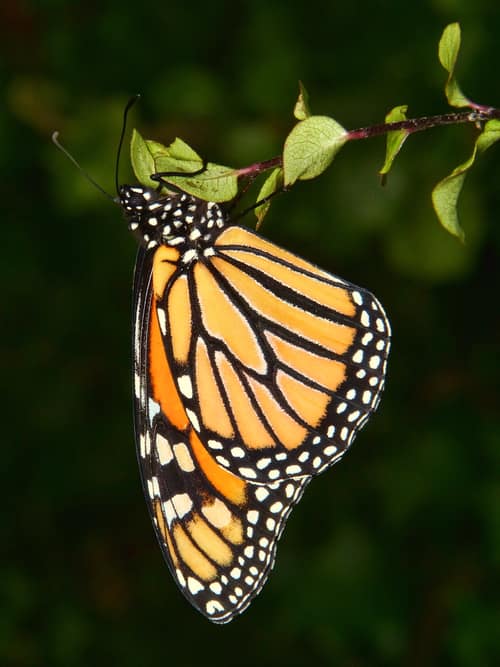
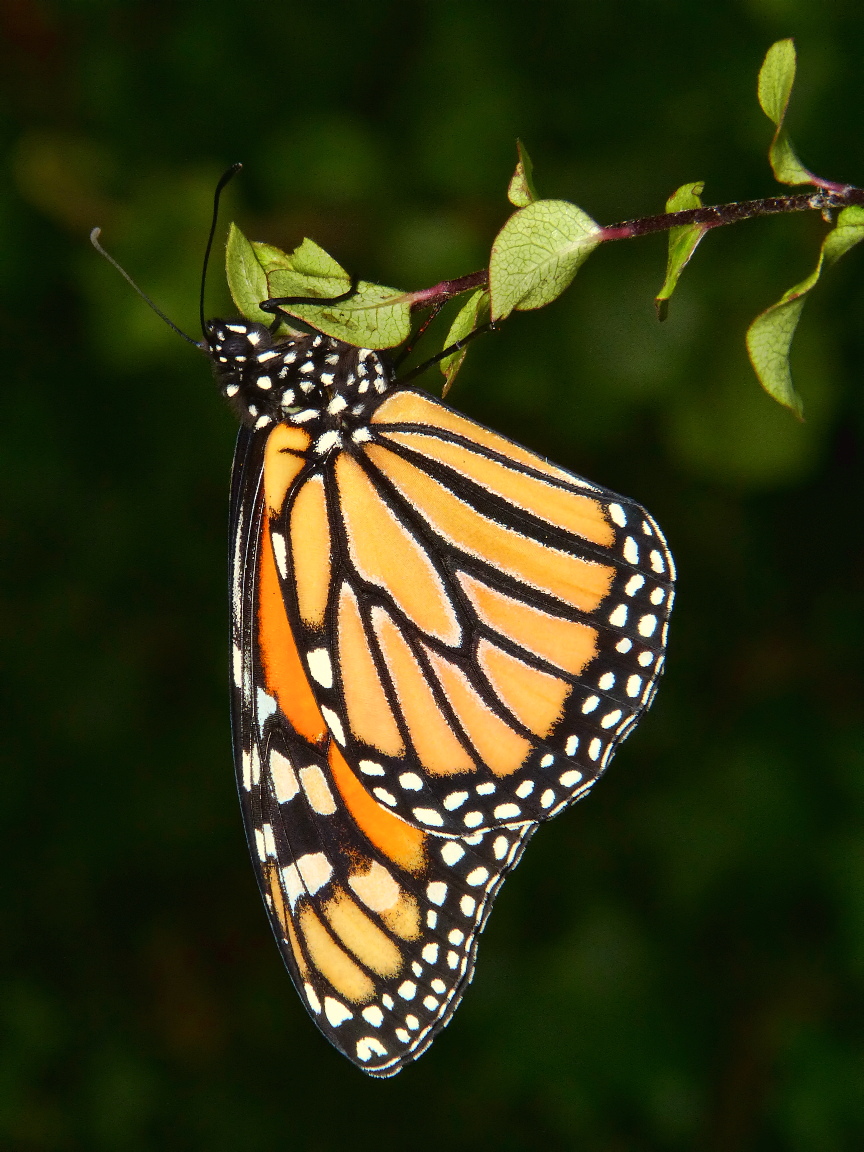
Monarchs complete one of the most remarkable insect migrations on Earth, with late-summer generations traveling thousands of kilometers to overwintering sites in central Mexico and coastal California. Caterpillars feed exclusively on milkweed foliage, sequestering toxic cardiac glycosides that render both larvae and adult butterflies distasteful to predators. Adults feature striking orange wings laced with black veins and dotted with white spots along the margins, signaling their toxicity to potential threats.
- Grosbeaks
- Orioles
- Spiders
- OrderLepidoptera
- FamilyNymphalidae
- GenusDanaus
- SpeciesDanaus plexippus
- Low
- Moderate
- High
- Very high
- Why interaction risk is high
- Contains cardiac glycosides sequestered from milkweed; safe to observe but toxic if ingested by pets.
- What to notice
- Recognized by vibrant orange wings with thick black veins and white-spotted black borders.
- Support conservation
- Observe from a respectful distance without touching delicate wings or disturbing roosting clusters.
- Plant Native Milkweed: Grow local milkweed species to supply essential larval food and egg sites.
- Avoid Pesticides: Eliminate garden chemicals that poison caterpillars and foraging adults.
- Maintain Nectar Sources: Plant late-blooming flowers to fuel adult butterflies during autumn migration.
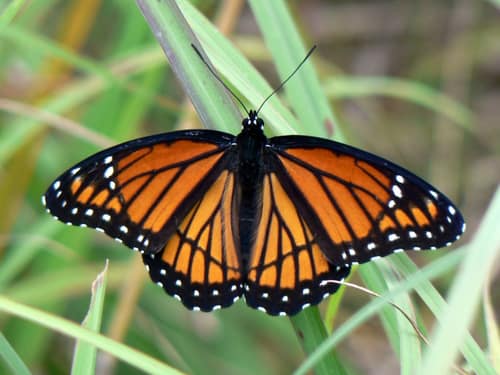
Mimic (c) Benny Mazur, some rights reserved (CC BY) · cc-by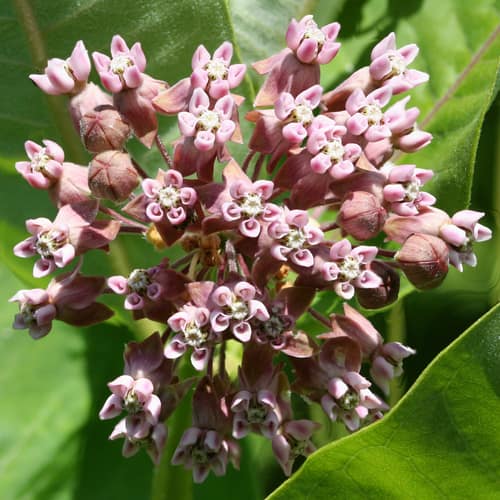
Host Plant (c) Randy Nonenmacher, some rights reserved (CC BY-SA) · cc-by-sa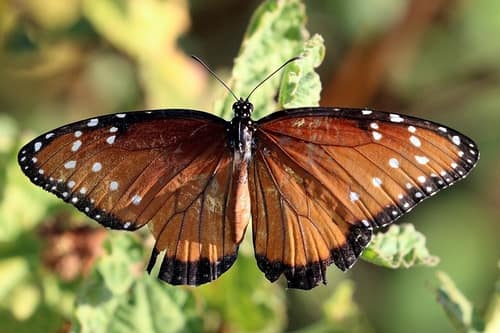
Close Relative Charles J. Sharp / CC BY-SA 4.0 · cc-by-sa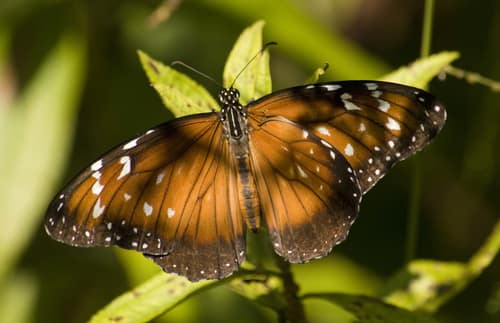
Close Relative (c) Nicolas Olejnik, some rights reserved (CC BY), uploaded by Nicolas Olejnik · cc-by
Found in Collections
Mystic Meadows
Monarch is found in this collection. Identify it in Fauna to fill this slot and continue your progress.
Unlock to track progress
Report a name, category, or profile issue for review.