
Insect
Ebony Jewelwing
Calopteryx maculataAlso known as Black-winged Damselfly
Iridescent emerald bodies and velvety black wings distinguish these striking damselflies as they flutter along shaded woodland streams. Unlike most dragonflies, males hold their smoky wings folded vertically over their metallic green abdomens when resting on bankside foliage. Females sport smoky brown wings with a conspicuous white spot near each tip, flitting between sunny patches to deposit eggs into aquatic vegetation.
Metallic GreenStream DwellerShade-loving
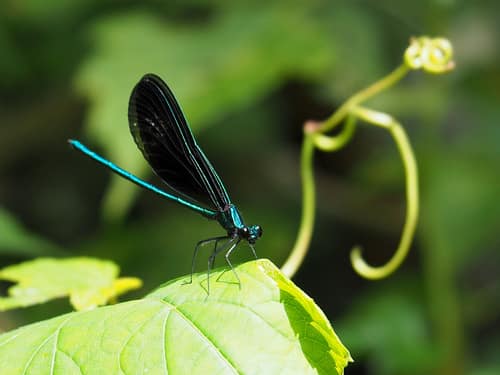
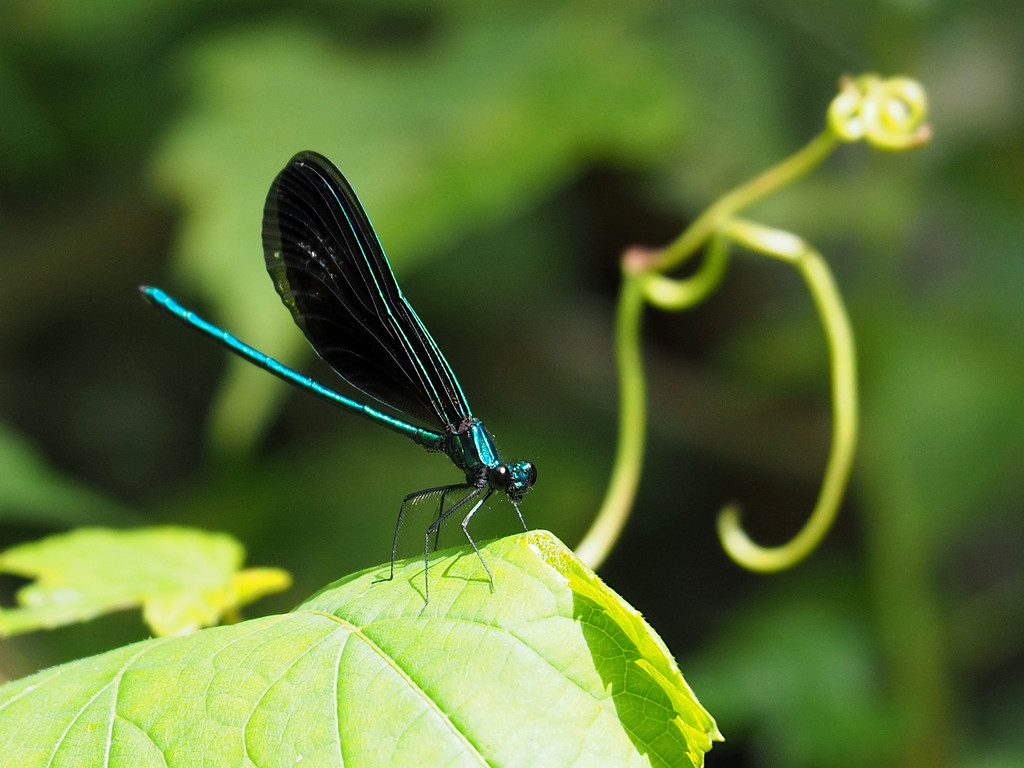
—observations
—countries
—peak records
Least ConcernConservation statusIUCN Red List categoriesLCNTVUENCREWEXLeast ConcernRed List categories, explained →
Diet & preyMosquitoes, Midges, Mayflies
Predators
- Songbirds
- Frogs
- Fish
ThreatsWater pollution, removal of riparian vegetation, and agricultural runoff
HabitatsShaded woodland streams, slow-moving creeks, and forested riverbanks
Life span1–2 years (mostly as aquatic nymphs; adults live 2–6 weeks)
Classification
- OrderOdonata
- FamilyCalopterygidae
- GenusCalopteryx
- SpeciesCalopteryx maculata
Range data is not available yet.
Interaction riskLow
- Low
- Moderate
- High
- Very high
- Why interaction risk is low
- Safe to observe at a normal distance.
Responsible observation
- Approach slowly: Move gently along stream banks to watch males defend territories without scaring them.
- Look in shade: Search low vegetation along forest creeks where light filters through the canopy.
- Observe egg-laying: Watch females submerge parts of their body into floating plants to deposit eggs.
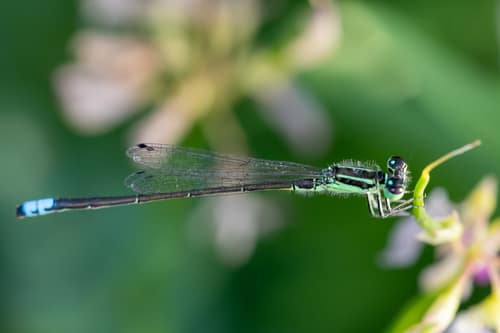
Co-occurring Odonate (c) Patrick Hanly, some rights reserved (CC BY), uploaded by Patrick Hanly · cc-by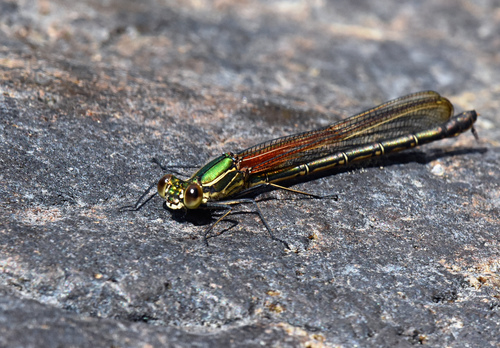
Close Relative (c) Jimmy Dee, some rights reserved (CC BY-SA), uploaded by Jimmy Dee · cc-by-sa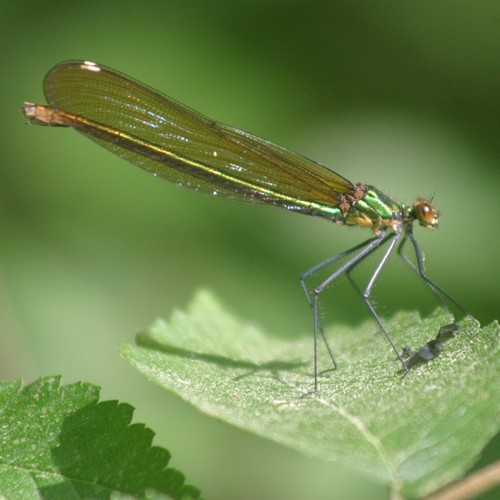
Genus Relative (c) Mark Apgar, some rights reserved (CC BY), uploaded by Mark Apgar · cc-by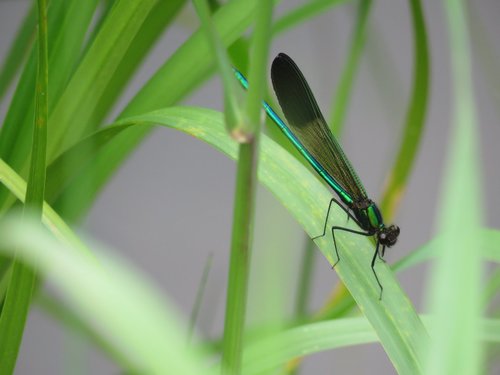
Look-alike Relative (c) Blair Dudeck, some rights reserved (CC BY) · cc-by
Keep collecting in Fauna
Found in Collections
Ecosystem chain
Wetland Territory
Ebony Jewelwing is found in this collection. Identify it in Fauna to fill this slot and continue your progress.
—/12
Help improve the field guideSomething wrong?
Checking your Fauna account…Report a name, category, or profile issue for review.