
Invertebrate
Noah's Giant Clam
Tridacna noaeAlso known as Teardrop Giant Clam, Noah's Clam
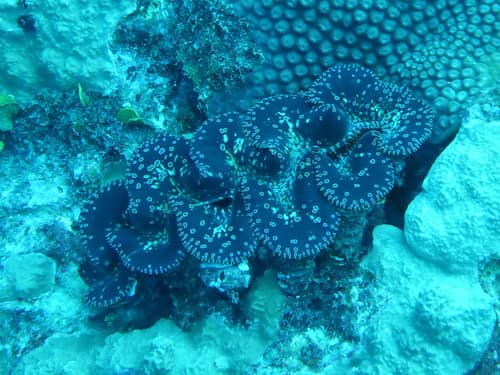
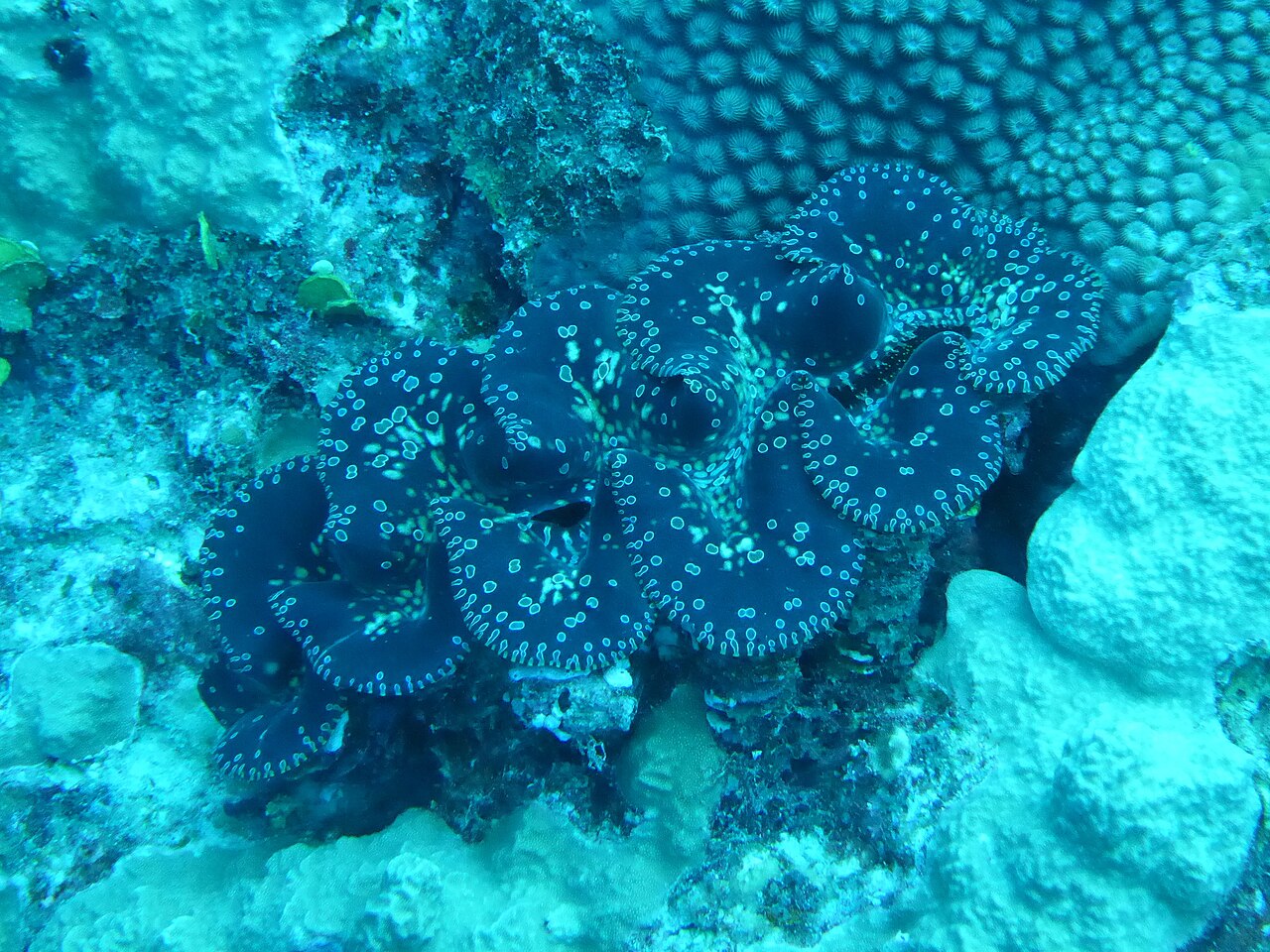
Noah's giant clams showcase stunning, vibrant mantles adorned with distinctive teardrop-shaped spots outlined in gold or white. These marine bivalves anchor themselves securely to shallow coral reefs, where they expose their colorful tissues to the sun to nourish their symbiotic algae. While long mistaken for the small giant clam, they are distinguished by their unique mantle patterns and discrete genetic lineage.
MarineReef DwellerSymbiotic
—observations
—countries
—peak records
Least ConcernConservation statusIUCN Red List categoriesLCNTVUENCREWEXLeast ConcernRed List categories, explained →
Diet & preyMicroalgae, Plankton, Dissolved organic matter
Predators
- Triggerfish
- Octopuses
- Crabs
ThreatsOverharvesting for the aquarium trade, habitat degradation, and ocean warming
HabitatsShallow coral reefs, lagoons, and reef flats
Life spanUp to 50 to 100 years
Classification
- FamilyCardiidae
- SpeciesTridacna noae
Range data is not available yet.
Interaction riskLow
- Low
- Moderate
- High
- Very high
- Why interaction risk is low
- Safe to observe at a normal distance.
- What to notice
- Look for the distinctive teardrop-shaped spots ringed with white on its colorful mantle.
- Support conservation
- Never touch, step on, or attempt to pry the clam from its coral substrate.
Responsible observation
- Do not touch: Avoid touching the sensitive mantle tissue, which causes the clam to snap shut.
- Maintain distance: Keep a respectful distance while snorkeling to prevent casting a shadow that triggers defensive retraction.
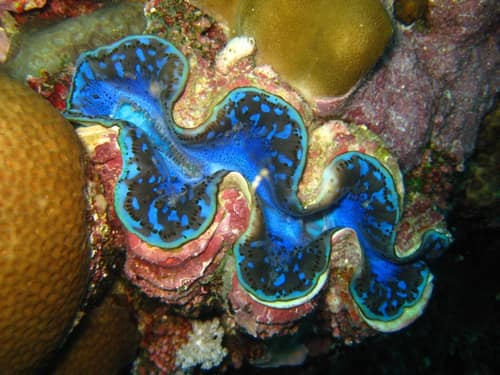
Close Relative (c) Micha Baum, some rights reserved (CC BY-SA), uploaded by Micha Baum · cc-by-sa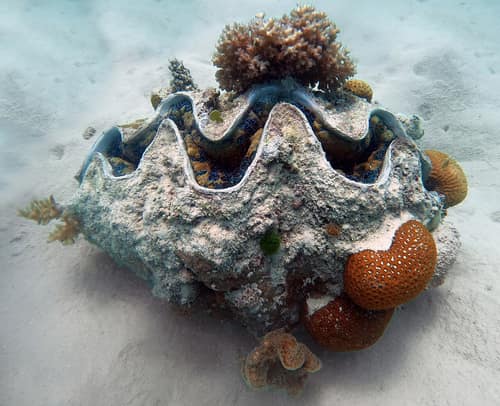
Close Relative Charles J. Sharp / CC BY-SA 4.0 · cc-by-sa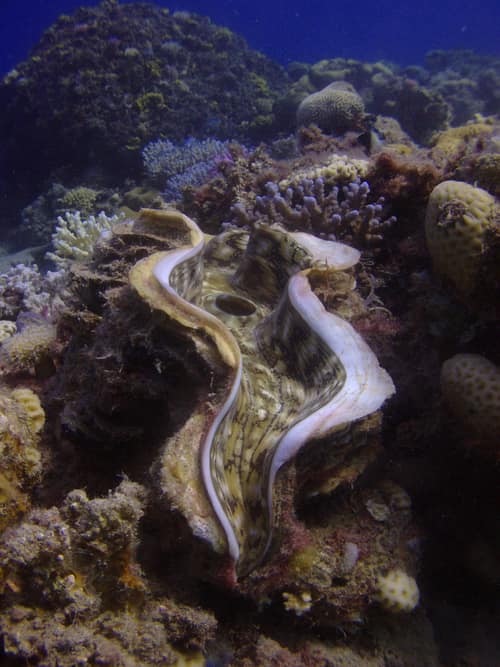
Close Relative "Fluted giant clam #3" by Tim Sheerman-Chase is licensed under CC BY 2.0. To view a copy of this license, visit https://creativecommons.org/licenses/by/2.0/. · cc-by
Help improve the field guideSomething wrong?
Checking your Fauna account…Report a name, category, or profile issue for review.