
Invertebrate
Maxima Clam
Tridacna maximaAlso known as Small Giant Clam, Rugose Giant Clam
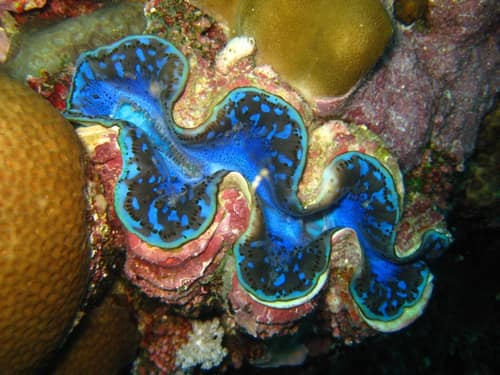
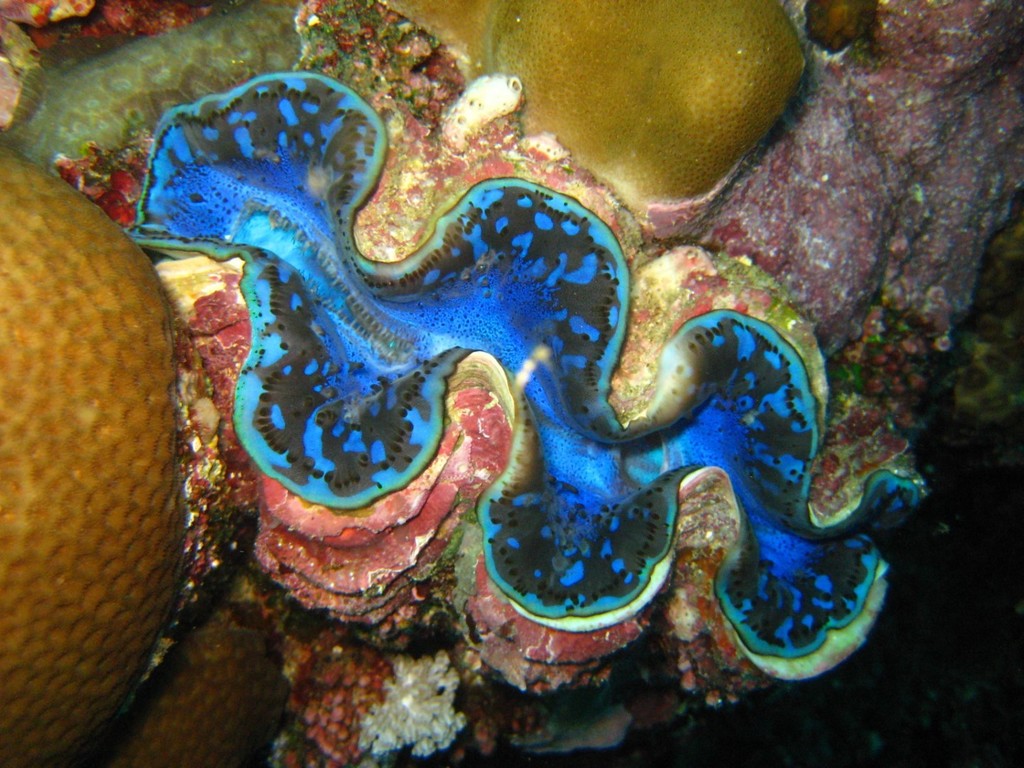
Maxima clams display a stunning array of electric blues, greens, and purples on their fleshy mantles, which they extend to capture sunlight for their symbiotic algae. These bivalves anchor themselves firmly to coral reefs using strong byssal threads, often boring slightly into the limestone substrate to secure their position. Over time, their colorful mantles and wavy shell margins have made them highly sought after by marine aquarists and reef divers alike.
MarineColorfulSymbiotic
—observations
—countries
—peak records
Least ConcernConservation statusIUCN Red List categoriesLCNTVUENCREWEXLeast ConcernRed List categories, explained →
Diet & preyPhytoplankton, Dissolved organic nutrients
Predators
- Pyramidellid snails
- Triggerfish
- Octopuses
ThreatsOverharvesting for the aquarium trade, habitat destruction, and ocean warming
HabitatsShallow coral reefs, lagoons, and reef flats
Life spanUp to 100 years
Classification
- OrderCardiida
- FamilyCardiidae
- GenusTridacna
- SpeciesTridacna maxima
Range data is not available yet.
Interaction riskLow
- Low
- Moderate
- High
- Very high
- Why interaction risk is low
- Safe to observe at a normal distance.
- What to notice
- Recognizable by the elongated shell, closely spaced scutes, and an extremely colorful, undulating mantle.
- Support conservation
- Never attempt to pry a clam from the reef, as this tears their vital byssal gland and kills them.
Responsible observation
- Avoid touching: Gently waving a hand over the clam triggers its light-sensitive eyespots, causing it to retract.
- Maintain distance: Keep fins clear of the reef to avoid damaging the delicate mantle or breaking the shell.
- Observe the mantle: Look closely at the mantle edge to spot the tiny, pinhole-like eyespots that detect shadows.
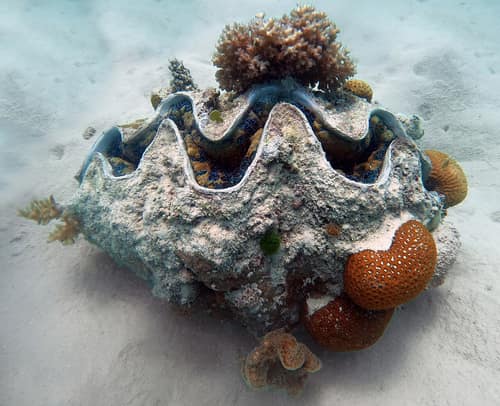
Close Relative Charles J. Sharp / CC BY-SA 4.0 · cc-by-sa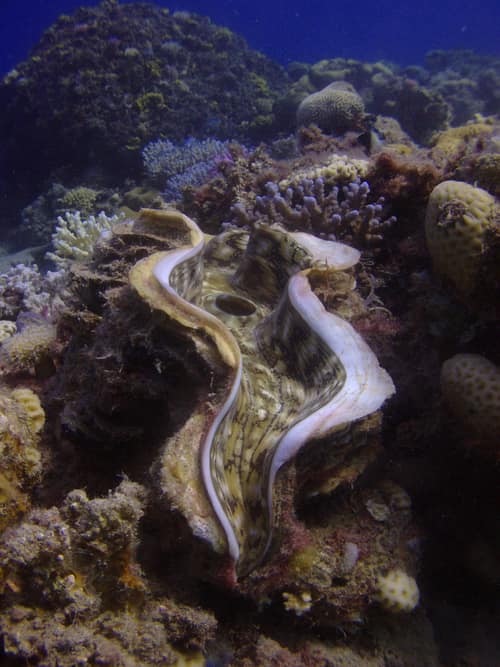
Close Relative "Fluted giant clam #3" by Tim Sheerman-Chase is licensed under CC BY 2.0. To view a copy of this license, visit https://creativecommons.org/licenses/by/2.0/. · cc-by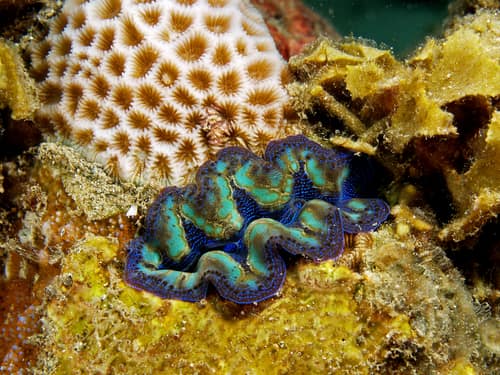
Close Relative (c) Nhobgood, some rights reserved (CC BY-SA) · cc-by-sa
Keep collecting in Fauna
Found in Collections
Ecosystem chain Pro
Coral Currents
Maxima Clam is found in this collection. Identify it in Fauna to fill this slot and continue your progress.
Unlock to track progress
Help improve the field guideSomething wrong?
Checking your Fauna account…Report a name, category, or profile issue for review.