Also known as Pacific Fire Urchin, Elusive Sea Urchin, Variable Fire Urchin, Electric Sea Urchin
Fire urchins display a mesmerizing array of pulsing colors, with bright red, orange, and yellow bands flowing across their flexible, balloon-like bodies. These nocturnal echinoderms slowly crawl over sandy lagoons and rubble flats, using their lower tube feet to graze on algae and organic debris. They frequently host specialized symbionts, such as tiny Coleman's shrimp and zebra crabs, which find safe harbor among the highly toxic canopy of spines.
Not EvaluatedConservation statusIUCN Red List categoriesLCNTVUENCREWEXNot Evaluated — not placed on the risk ladderRed List categories, explained →
Key facts
Diet & preyBenthic algae, Detritus, Sponges
Predators
Triggerfish
Pufferfish
Large sea snails
ThreatsHabitat destruction, ocean acidification, and water pollution
HabitatsSandy sea bottoms, coral reef flats, and rubble zones
Life span10 to 15 years
Classification
FamilyEchinothuriidae
SpeciesAsthenosoma varium
Range & activity
Range data is not available yet.
Safe observation
Interaction riskVery high
Low
Moderate
High
Very high
Why interaction risk is very high
Venomous spines cause a severe, burning sting; avoid touching or stepping on them.
Why it is dangerous
Spines are tipped with venom glands that deliver a painful, burning sting upon contact, causing localized swelling and throbbing pain that lasts for hours.
How to recognize a risky encounter
Look for a vibrant red, orange, or purple coloration and distinctive balloon-like swellings just below the tips of the spines.
What to do
Never touch or handle this urchin; maintain a safe distance while diving or snorkeling over sandy reefs.
Responsible observation
Observe from above: Maintain neutral buoyancy and float well above the reef to avoid accidental contact.
Look for symbionts: Peer closely between the spines to spot tiny, colorful crabs and shrimp hiding in safety.
Watch for movement: Observe the slow, coordinated pulsing of the venom-tipped bulbous spines.

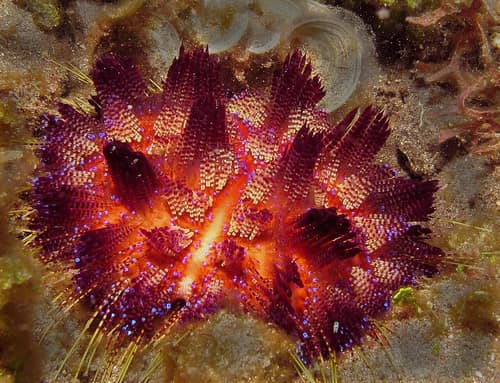
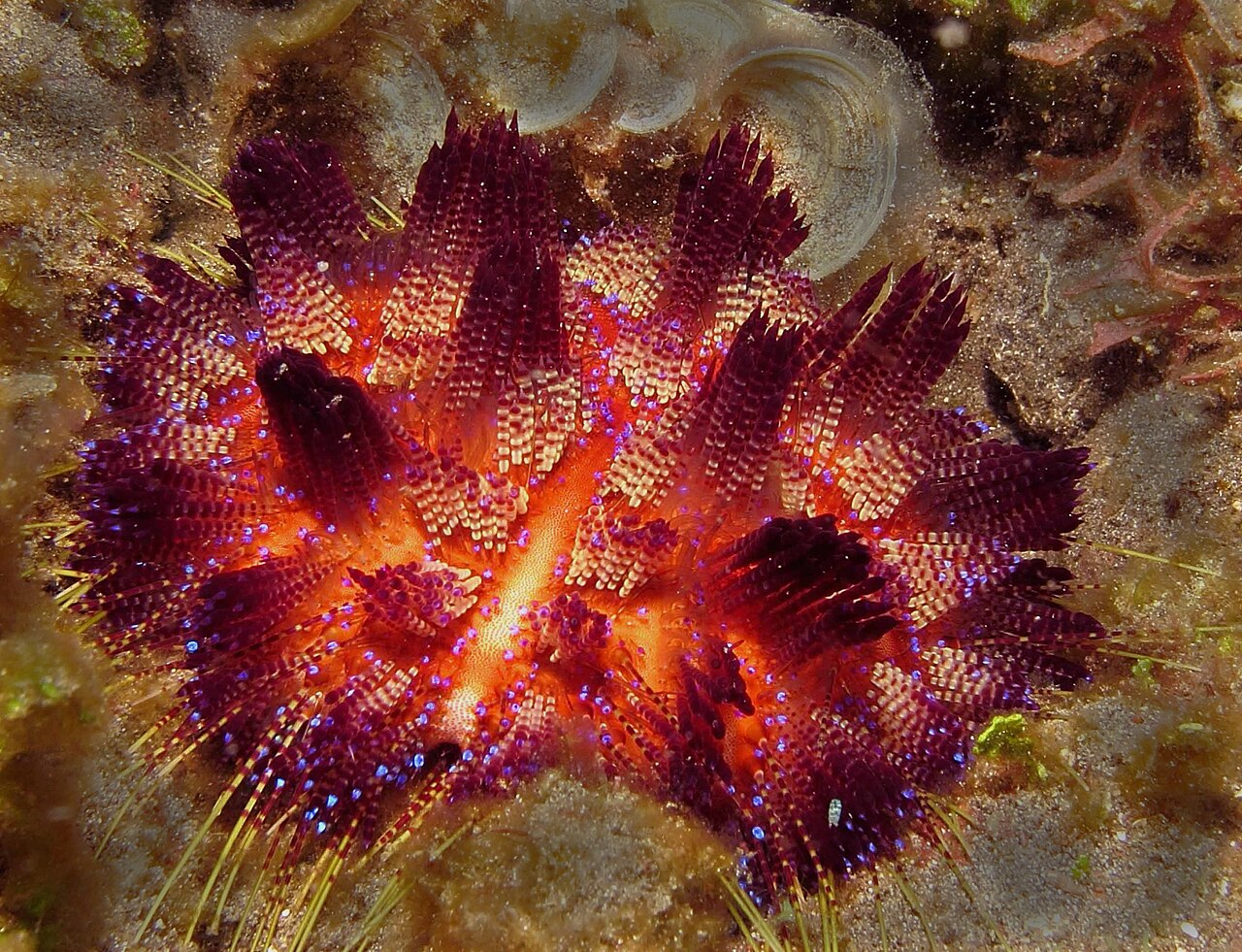
 Image unavailable